
IN THIS LONG OVERDUE EDITION:
CONGESTION PROBLEMS:’COULD DO BETTER’ TOURISM MARKETING AND BUS MATTERS FUTURE RAIL OPPORTUNITIES AND PAST FAILURES, PLUS, CAN GREAT BRITISH RAIL STANDARDISE GOOD PRACTICE? MAIL BY RAIL TRIALS EASTBOURNE AIR QUALITY CAN WE CHALLENGE EVER INCREASING VEHICLE SIZE? EASTBOURNE BUS PRIORITY PROGRESS HOSTILE ENVIRONMENTS FOR PEDESTRIANS AND CYCLISTS, INCLUDING ROUNDABOUTS and THE CASE FOR 20MPH LIMITS WHERE PEOPLE LIVE TOO MANY CAR DEPENDENT DEVELOPMENTS – STOP! EASTBOURNE AND HASTINGS AREA BUS USER GROUPS SET UP DAMAGING BUS CUTS IMMINENT MIDDLE EAST CRISIS:ROLE FOR PUBLIC TRANSPORT RAIL 200 CELEBRATIONS TRAVELOG LEWES NEWS BUSES COULD IMPROVE ROAD SAFETY – HERE’S HOW EAST SUSSEX HOSPITALS TRANSPORT GROUP DISCUSSIONS AND ACTIONS WORLD PUBLIC TRANSPORT DAY
Here’s one obstacle – Birling Gap, 9th August 2025:
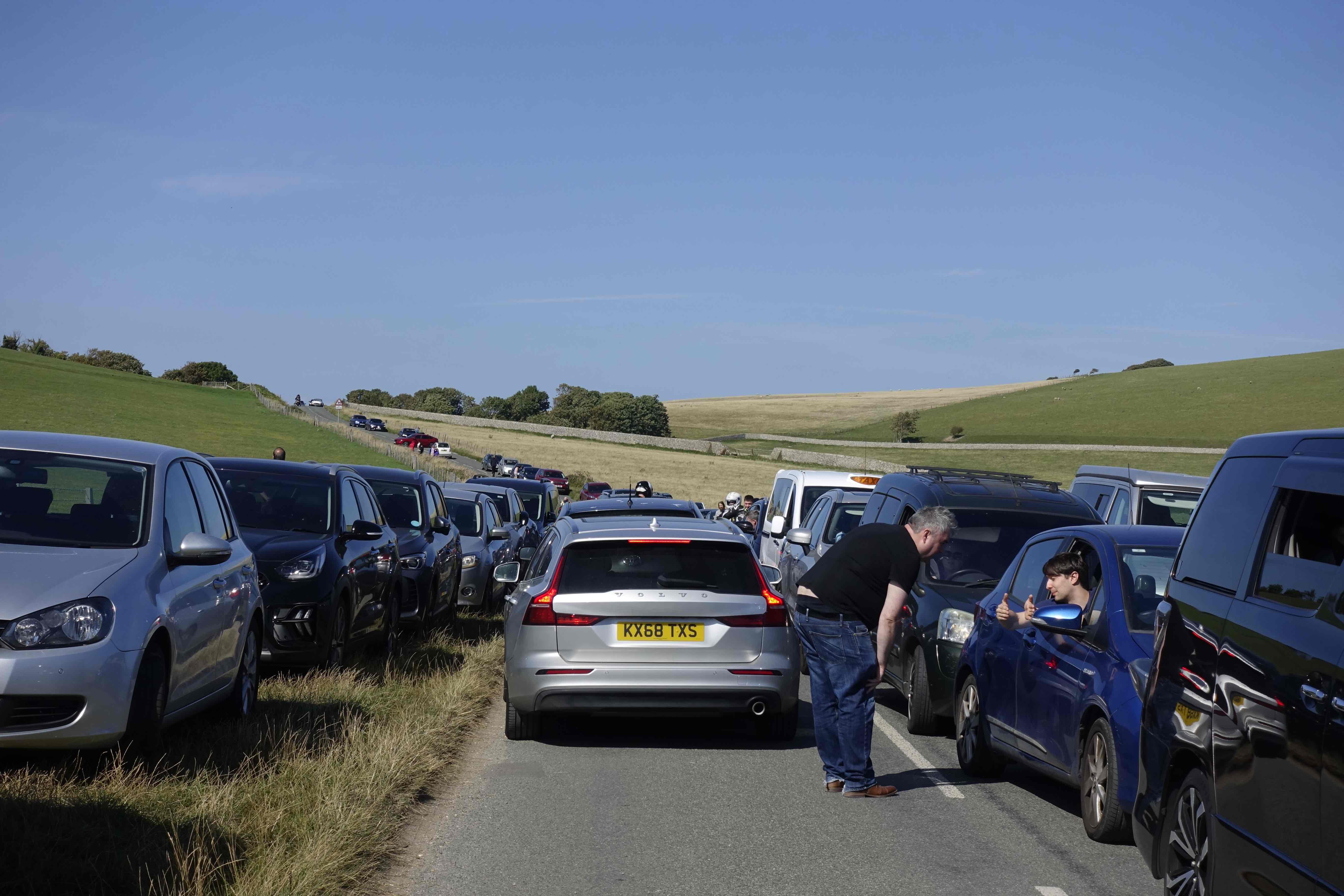
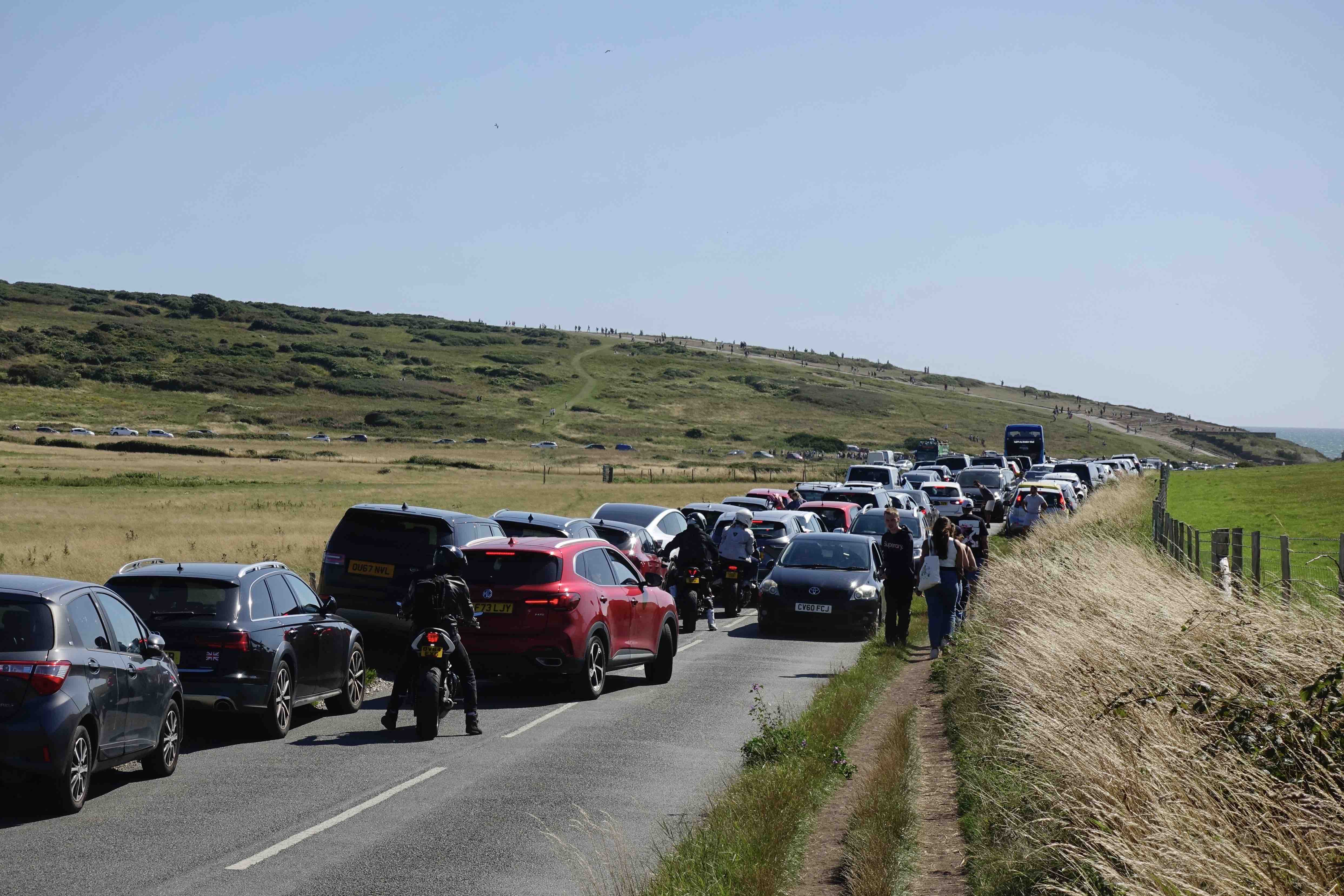
The 13X Brighton and Hove service in the middle distance is stuck in the jam taking 1hour 15 minutes on its journey from Seaford to Eastbourne town centre.
On this summer Saturday, among the helpless majority, a minority of angry and aggressive drivers and motorcyclists made it an unpleasant part of the South Downs National Park (SDNP) to attempt to visit – and a far from attractive landscape. This situation is good for no-one, and some honest and creative thinking is required to avoid repeats.
The road continues to Beachy Head. It is often the scene of speeding and noisy two and four wheeled vehicles. The volume and behaviour (noise included) of traffic is an obvious obstacle to the enjoyment of this special and protected part of the SDNP. The walkers in the above photo are unlikely to be enjoying their day at this point – or to feel safe. There’s a strong case for a traffic ‘demand management’ appraisal of all possible measures and potential benefits.
According to the SDNP Annual Report, 81% of visitors arrive by private transport (car). Any attempt to reduce that figure year by year would be welcome and necessary if we are to improve the visitor experience and protect our ‘special places’ – a key environmental, health and economic asset. Our SDNP hosts one third of all businesses in the UK’s National Parks and attracts 19m visitors a year. The Lake District is also wrestling with negative impacts of traffic and is considering a visitor charge, with popular support: (Poll shows broad support for Lake District visitor charge.) We must do something to reduce the sheer numbers of vehicles!
At the eastern end of the road and north of Beachy Head, a planned development of Black Robin Farm with education, arts workshops and interpretive functions – and limited accommodation – is expected to attract up to 100,000 visitors a year. There is a stated aspiration to provide good quality public transport visitor access with a 13X service east and west and good connections to/from Eastbourne town centre. Some of course would choose to walk/cycle – but not likely in the current hostile environment.
Last tried in the year 2000, with limited success, a ‘Tourism Without Traffic’ approach to improving accessibility in the eastern South Downs could again be strengthened and adopted to avoid the situation pictured. Unrestricted access isn’t working and protection of a nationally important and treasured landscape is urgently needed.
Measures for consideration could include:
*Shuttle buses to and from Eastbourne (already suggested) together with increased 13X services between Eastbourne and Brighton.
*Access for ‘Blue Badge’ holders/Specially adapted vehicles
*Cycle access, including by cycle carrying vehicles/buses
*Closure of the road to private motorised vehicles between Birling Gap and Beachy Head
*Road User Charging with varied charges according to vehicle size/type
*Time limited access arrangements for certain vehicles
*Noise and emission limits applied compatible with Eastboutne Borough Council’s objectives to improve air quality
*More frequent rail services with Seaford/Berwick connections and Ashford/Hastings on Sundays (in this last case, two trains an hour leave Hastings within 10 minutes. There followsa 50 minute gap with no trains).
*Advertised ‘car free’ and ‘motorcycle free’ days. These could demonstrate the joy of sensing peace and tranquillity.
*Wealden District Council (WDC) – unlike other Districts and Boroughs in East Sussex- have not adopted a ‘decriminalised parking’ regime, so will play no part in solving the problem. They expect Sussex Police to act to control the dangerous chaos. The police have no resources to deal with the problem as they are concentrating on investigating more serious criminal offences. Result: no commitment, no resolution, continued chaos.
East Sussex County Council’s response to a query on the matter from Eastbourne Eco Action Network – Transport Group can be seen here:
All of the above options should be considered with nothing ruled out: continuation of such disruptive and polluting traffic chaos cannot be an option.
The stranded 13X bus in the photo above is part of the recently improved tourist oriented service part funded via the government’s Bus Service Improvement Plan (BSIP).
This makes car free trips possible for those with or without cars, and a comprehensive and reliable bus offer with affordable fares gives a chance to ensure that everyone who wishes to enjoy and preserve the special places in the National Park can do so. Clearly, this can’t be achieved without restrictions on access by private vehicles. Some BSIP services are under threat – we need to be more, not less ambitious.
A broader perspective on sustainable transport, supporting East Sussex tourism and leisure travel, would be highly likely to bring benefits widely across the community. It would deliver options and choices for all – currently unavailable – and for multiple journey purposes. There’s a continuing dialogue to be had and jobs to be created.
SEATS FOR BUMS TO BE ON – BUS AND TRAIN…COULD MARKETING AND TRANSPORT TICKETING OFFERS FILL THEM? WITH EUROSTAR BACK AT ASHFORD, ‘NEAR CONTINENT’ ADVERTISING WOULD PAY OFF.
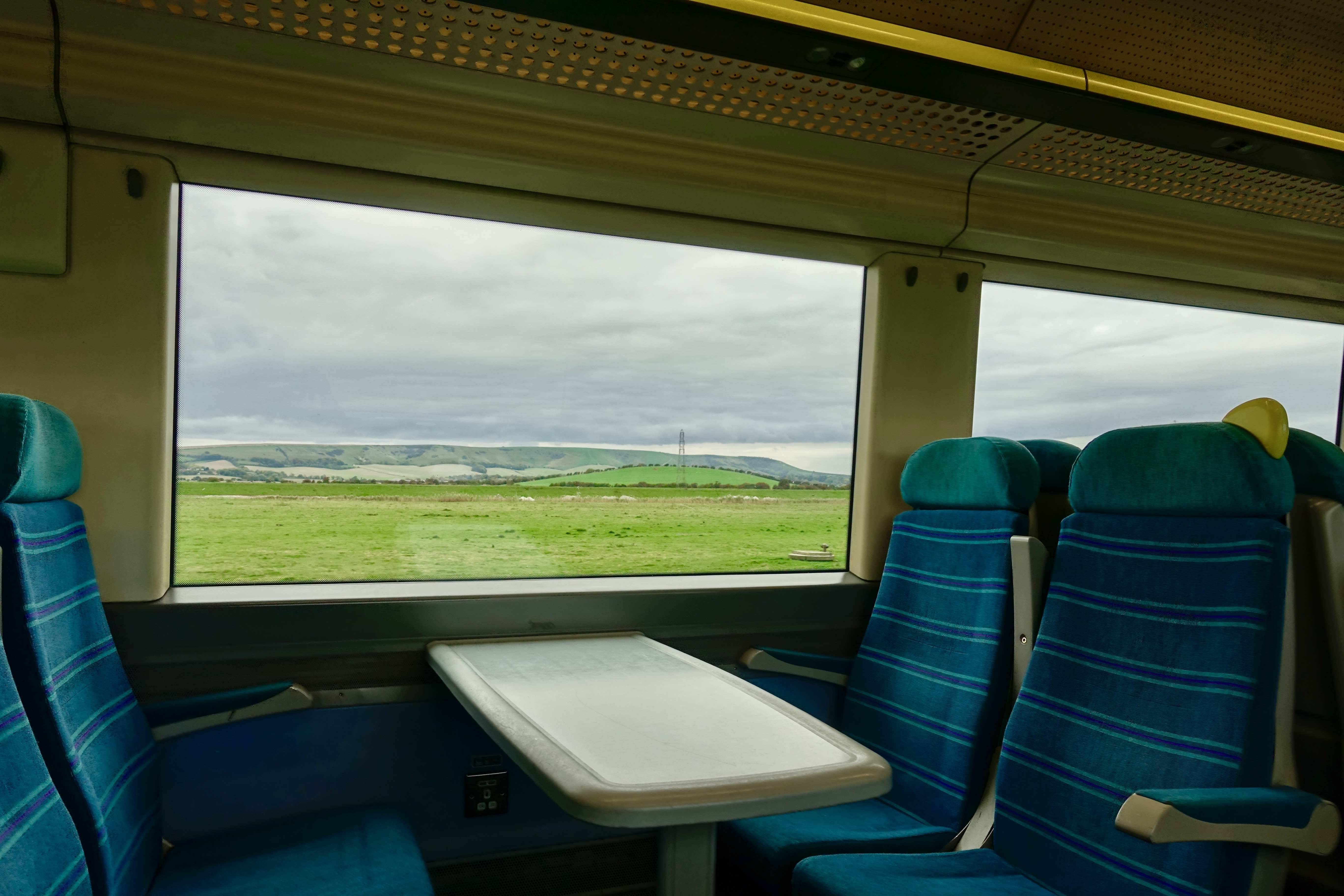
The above vacant seats are on the Southern Seaford – Lewes – Brighton train with a view to the west across the Ouse valley and the South Downs beyond. The valley can be walked and cycled and Southease station offers access to the South Downs Way.
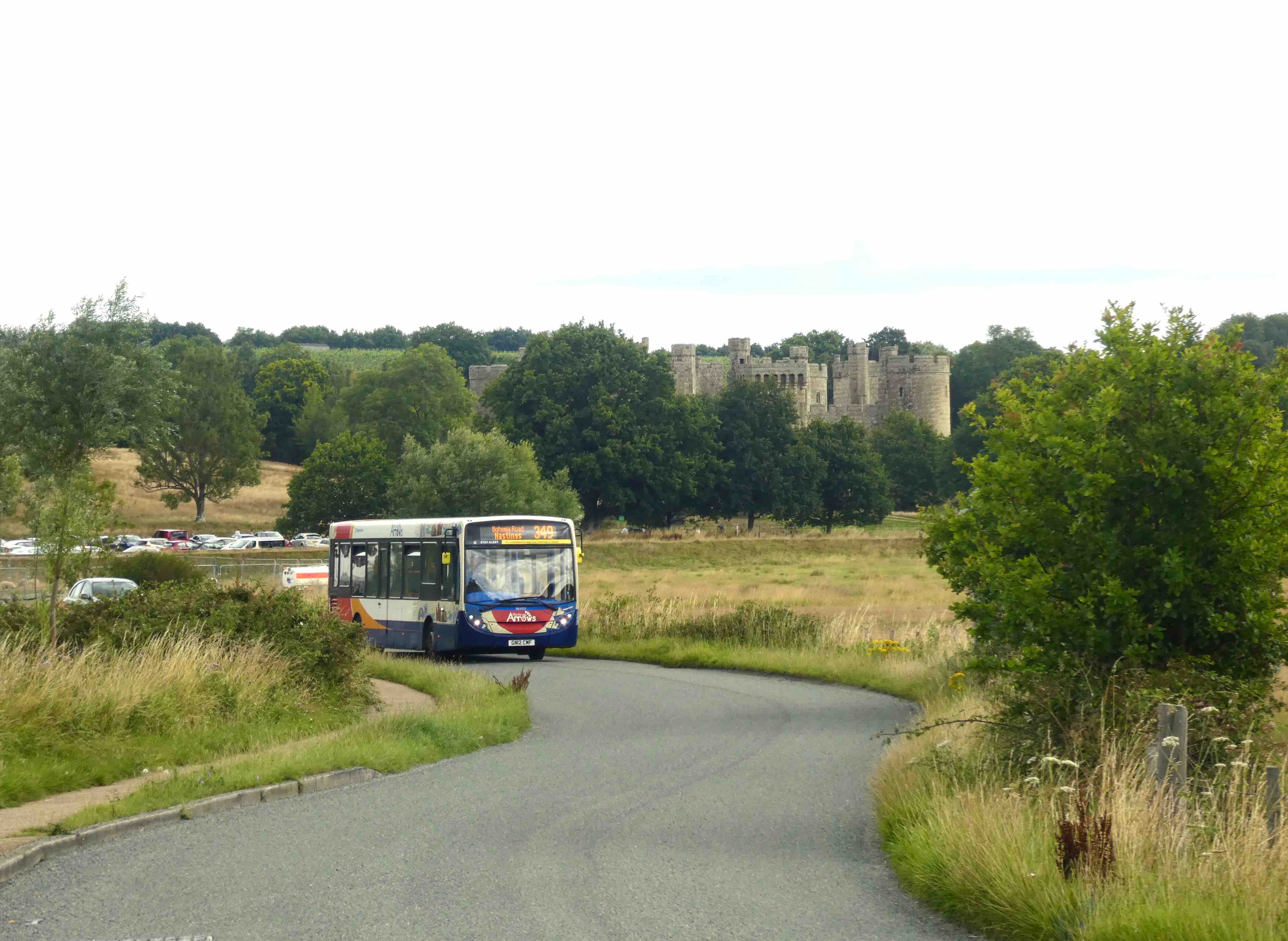
Below: there are always seats available on the 7 days a week Stagecoach service:349 (Hastings station – Hawkhurst and to and from Bodiam Castle and the Kent and East Sussex Railway).
ESCC BSIP SUCCESS – BUT LACKING STABILITY
The Bus Service Improvement Plan certainly led to creative thinking, delivering new routes and extended services, notably on Sundays and in evenings. Many services are to contine and there are some additional ones, but some Sunday and evening services are about to cease – and the cuts to the Stagecoach 51: Eastbourne – Hailsham – Heathfield – Tunbridge Wells have been part of the picture now for some months. It’s less than hourly with an unpopular and confusing ‘off clock face’ departure time with 75 minute intevals.
The success? Well, East Sussex came 3rd in England in terms of ‘ridership increases’ – then fares went up, though the £3. maximum stayed – for now. This increase, and cuts, may reverse the recovery – and worsening congestion affects reliability. On the basis of ‘polluter pays’ lets deal with congestion:
Stephen Bishop of consultant ‘Steer’ reported:
The best- performing bus areas and some key patterns
Here is Stephen Bishop’s commentary on the analysis
First column: % Growth (from pre-Covid, 2019); Second column: Bus trips per head of population
Southampton 2% 84
Portsmouth 7% 56
East Sussex 4% 31
We welcome the re-invented Brighton and Hove 54 (to become the ‘500’ – more on that from our Uckfield correspondent, and further comments below:
‘I’ve noticed in the new issue of the magazine Buses comments on ESCC’s changes which, as well as the cuts, include advances I’ve not seen elsewhere. They are funding extension of the 54* to become an hourly service through to Gatwick; hourly buses between Uckfield and East Grinstead were cut back in 1971! I had seen the withdrawal of the present hourly (with gaps) section to Manor Park estate in the NE of Uckfield, which ESCC always funded, due to lack of use, though some journeys looked busy. The Sunday service there of the 28 (commercially run by Brighton & Hove Buses) went for the same reason when BSIP started in 2023 and the 28 stopped serving Uckfield. Of course, it would be feasible to divert Compass’s 31 through the estate, but that probably won’t happen and there will now be 4 buses an hour along London Road next to the estate.
The article also mentioned “modest funding” for Brighton & Hove Buses to run new night buses into the county, with no further details. The N29 journey to Uckfield certainly didn’t survive lockdown and may have finished earlier: I only used it once. So, there are some intriguing improvements as well’.
*New 24hr service replacing 54. The ‘500’ Eastbourne to Gatwick Airport!
Service number 500 Route: this is a big positive change for better access to Gatwick Airport. It also gives an opportunity to right a long standing wrong: Blackberry Farm, on the A22, is a ‘family atttraction’, open 7 days a week all year. The bus passes by the entrance, but, there’s no bus stop! To be able to get there by bus would be a universal benefit! We have repeatedly asked councillors and bus operators who offer sympathy, but so far, to no avail! Trying again now!
Eastbourne – Hailsham – Uckfield – East Grinstead – Gatwick Airport.
New 24hr, daily service to Gatwick Airport. Hourly, Mon-Sat and 2 hourly on Sundays. Largely replacing and improving the B&H Buses 54 and 261 Service provided by Brighton & Hove Buses/Metrobus Supported by Gatwick Airport, ESCC, WSCC and development contributions. Date of change 9 May 2026
Sunday cuts include: Stagecoach 312/313 serving Rye, Rye Harbour, Northiam and Tenterden and Stagecoach 329, Hastings to Tenterden. We note that from April 12th, Sussex Wildlife Trust’s Rye Harbour nature reserve will now have no Sunday bus service on what is one of its busiest days. We have appealed to ESCC to retain this service. Our note to ESCC is here – it also raises the question: ‘are these urban-rural service links to wonderful places sufficiently well publicised?’ How much of ‘the wonder’ is diminished by too much traffic?’
Reduced daytime frequency of 1066 services Hastings – Battle – Robertsbridge – Hurst Green – Hawkhurst -Tunbridge Wells is also a blow…..Sunday service remains two hourly. We think the 1066 is undersold and should be doubled in frequency and could be reinforced by a Hurst Green – Etchingham station link as part of the 231 Heathfield service. Our comments to ESCC (including on Stagecoach 1066):
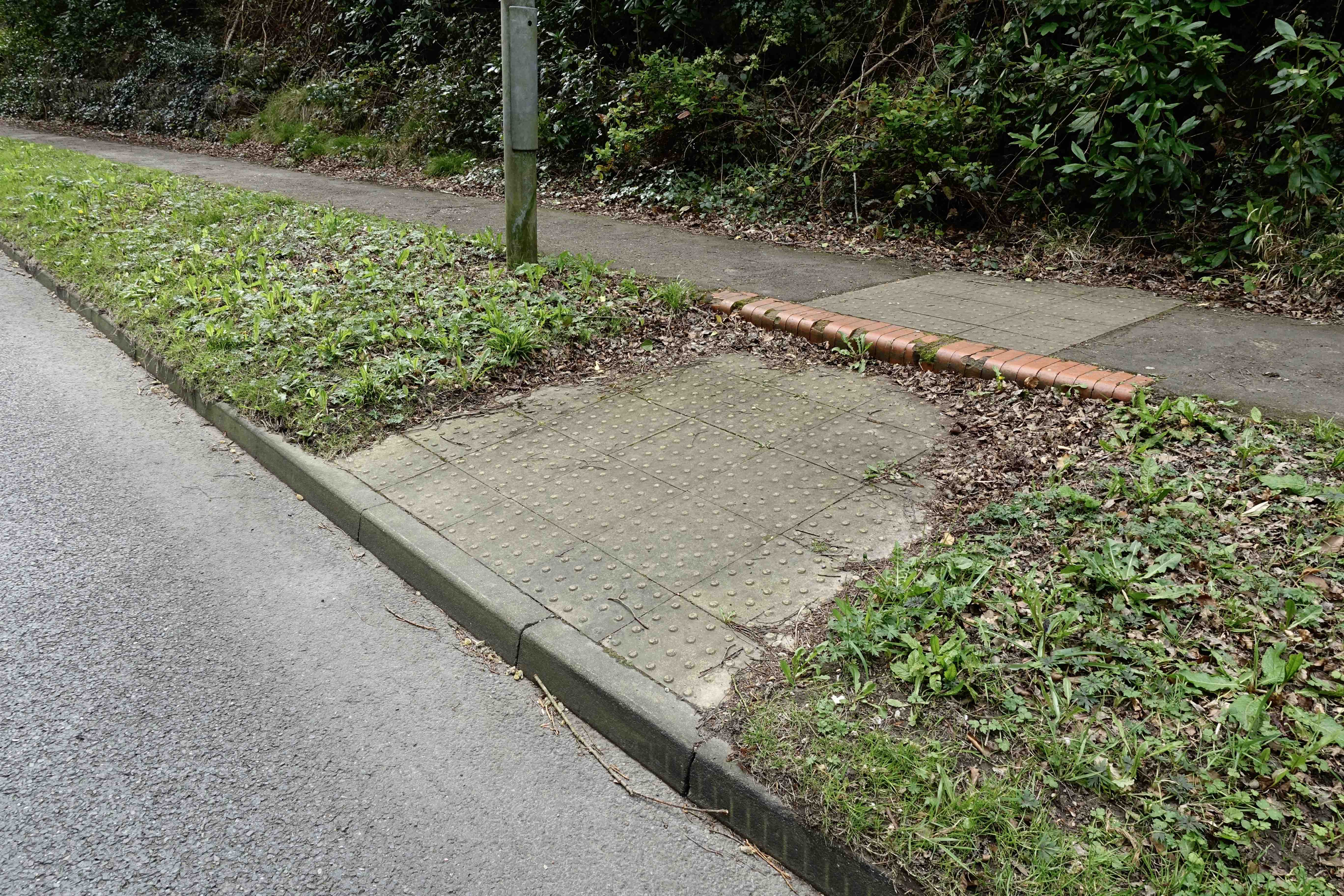
The 1066 bus stop just south of The Ridge is opposite an estate (Washington Avenue) which also includes the ‘Sussex Edwardian Hotel’ housing vulnerable residents. For town buses (to most of the services they need, plus meeting recreational needs – a walk on the seafront?) they have to cross the B2159 (no formal crossing, no refuge, speeding traffic no shelter, and a dodgy ‘dropped kerb’ – and now fewer buses proposed. We think this is a bad move.
Better double the frequency south of Hawkhurst . Most traffic towards Hastings in the morning peak originates from south of Tunbridge Wells.
A bus link (231) from Hurst Green to Etchingham station would boost 1066 and 231patronage. This service from Uckfield, via Heathfield and Burwash (for National Trust Batemans site) once ran through to Hawkhurst and that link could be restored or, alternatively, could run to Robertsbridge and turn there.
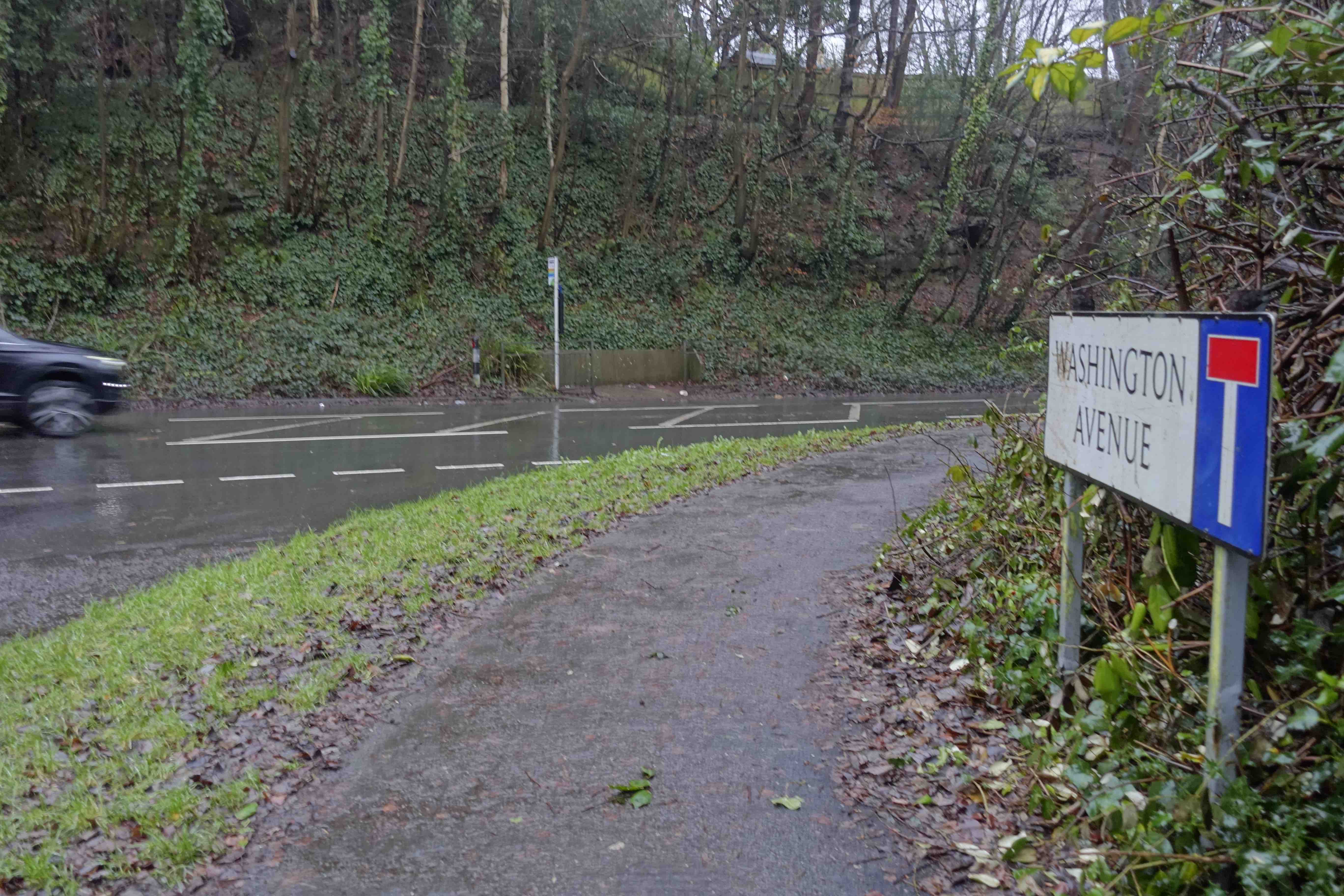
Above top: Stop, no shelter, no central refuge.
Above, lower: Not the best ‘dropped kerb’.
Details here: https://www.eastsussex.gov.uk/roads-transport/public/journeyplan/changes-to-bus-services.
WHAT HAPPENED TO THE RAIL/BUS ‘DOWNLANDER’ TICKET? TOURISM MATTERS
For a brief period from the early 2000s, a bus/rail ticket called the ‘Downlander’ was available giving tourists and residents a chance to enjoy by train and bus the eastern South Downs. It could have been expanded to include the entire South Downs National Park and the High Weald AONB (now the High Weald Special Landscape area). A weekly/long weekend version ‘Rover’ ticket might have been and still could be designed.
There is currently a ‘Day Save’ ticket available which has to be ordered on-line three days in advance in the form of a paper ticket collected at a station. It is valid on all Southern ‘off peak’/Weekend/ Bank Holiday services.
Perhaps it’s time to look again at 7 day rail and bus ‘Rover’, and ‘Runabout’ tickets…..
In a Great British Railways (GBR) future, we no longer have to be bound by current or former rail franchise areas so a ‘Coast to Capital or ‘East to West Coastway’ could be a basis for an attractive offer for the tourism/leisure market, especially with reactivated Ashford International services and creative BSIPs and their successors. Could this happen more easily under GBR and our soon to be recast local government structures?
FUTURE RAIL ENHANCEMENTS – INTERNATIONAL
We have written to all coastal MPs seeking support for reinstatement of International train services from Ashford. This was met with a favourable response and a lot of media coverage – but although current and potential train operators are sympathetic, no firm commitments have been made. For a truly sustainable rail hub at Ashford, the line must be upgraded with sufficient double track to allow two trains per hour and through services between Ashford and Brighton to allow access to and from the near continent – Germany, Benelux and France/ Kent and East Sussex. In Europe, there has been a renaissance of international rail services, including ‘sleeper services’.
We might remember that with the start of Eurostar services, a future beckoned with overnight services from Edinburgh/Manchester to Paris, Brussels, Cologne, Frankfurt and beyond. The sleeper carriages were sold off years back to Canada and the dreams faded. Surely it’s time to wake up. At least we now have Rotterdam and Amsterdam…..
Kent and Sussex would welcome tourists from the near continent. The coastal towns particularly would welcome the extra boost to their economies: from Ashford, the journey time would be an hour or two to Rye, Hastings, Bexhill and Eastbourne – allowing for formalities at Ashford International. Currently, via St Pancras, it would take three to four hours.
LOCAL
Below: Glyne Gap-Ravenside (Bexhill)/
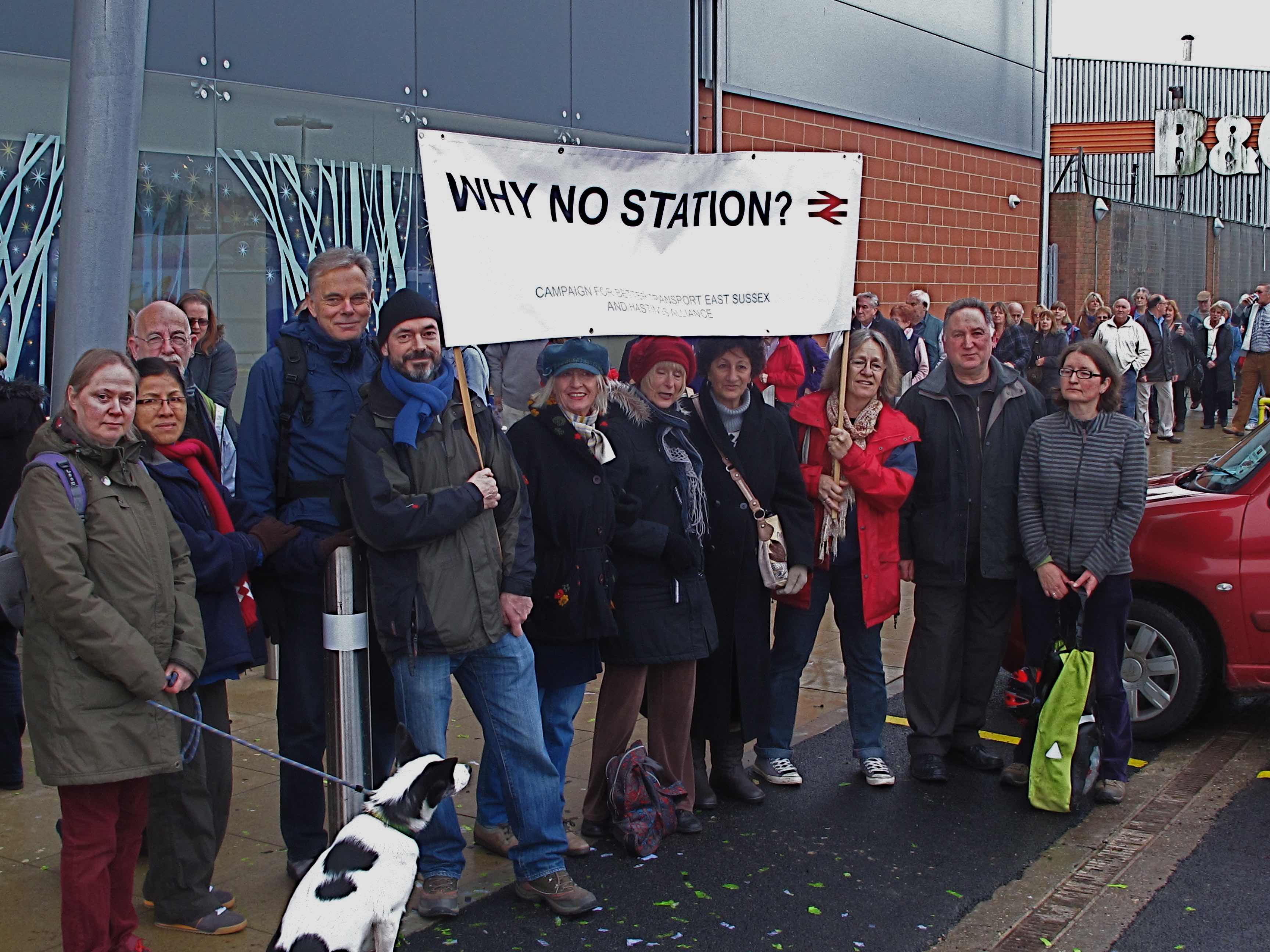
M&S Store right next to the tracks (see the train?) – “perfectly feasible” – Network Rail.
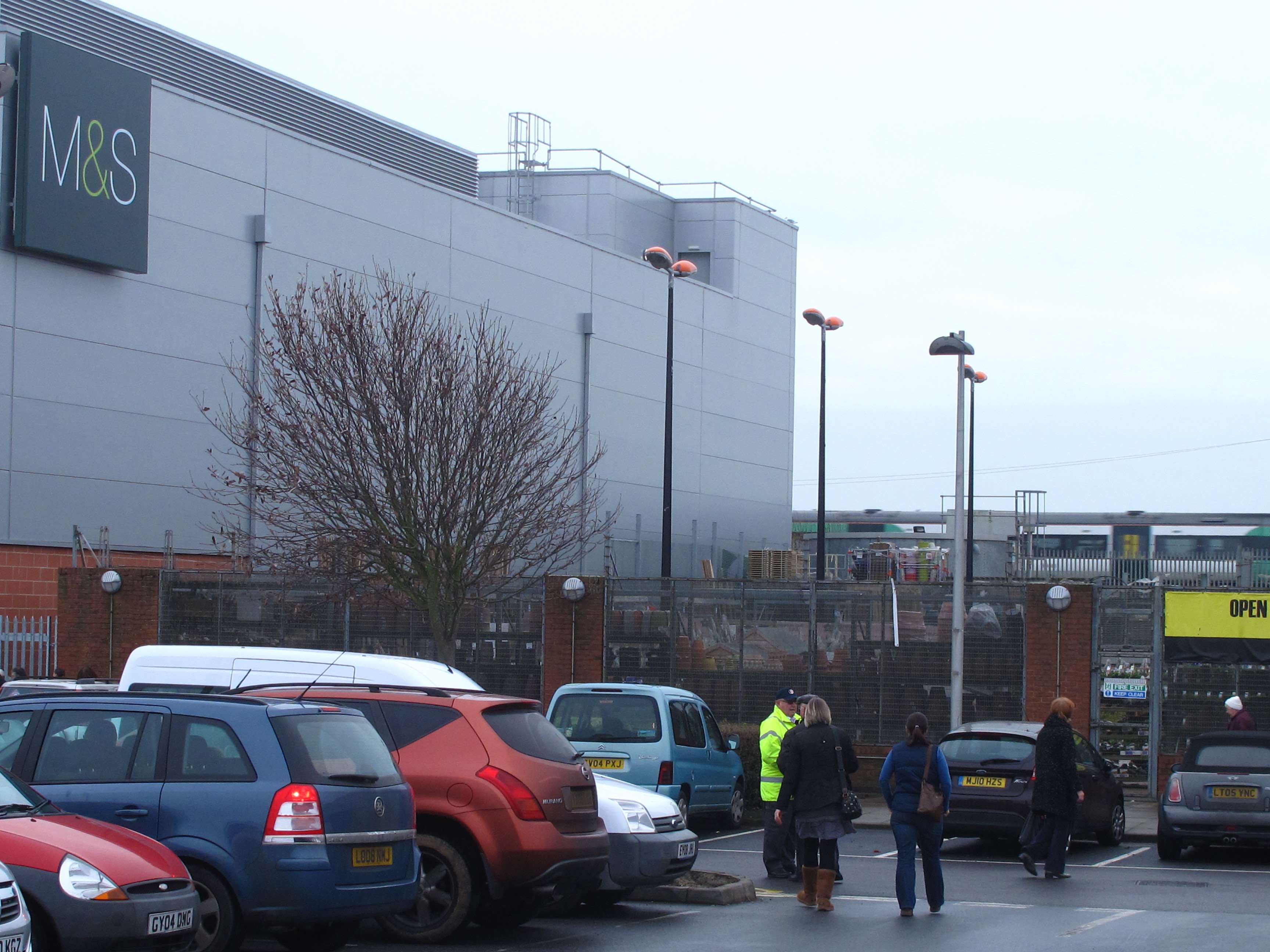
The recent £5m cost overrun for the Queensway Gateway road would have seen us well on the way to funding Ravenside station. A train service of two trains per hour would have had a positive impact on traffic levels on the Bexhill Road.
Outside Eastbourne amidst residential developments, the much talked about and potentially very useful Stone Cross station remains undelivered with all three local authorities over 30 years missing the fruits of collaboration, these including a huge reduction in traffic through residental streets between Eastbourne, Pevesney and Westham, Langney and the Hailsham area, and the benefits that would have flowed from that.
For the last 50 years, we have had the very sensible ‘trackbed protection policy’ of East Sussex County Council to prevent any building on the former line from Lewes to Uckfield, Crowborough, and Tunbridge Wells. The Wealden Line. Here’s a basic and informative plan:
More information is available on the Wealden Line website but put simply, the reopenening would change so many people’s lives, give real meaning to ‘sustainable planning’ policies, be accessible to all for so many ‘car free’ journeys, and be a very good use of public funds. There are also so many journey interruptions on the overcrowded Brighton Main Line (more to come in the certainty of emergency closures and periodic blockades for engineering works next February) that reopening shold be pursued now. Remember, the trackbed is protected! Reopenings are happening around the UK: urgency required please…..and how about an ‘opportunity/cost’ exercise on the Lower Thames Crossing (LTC) project. In other words, ‘What else could you do with the (£11bn and counting) money? It’s a very valid question. Some ideas above – and let’s not forget the typically very high value for money returns on (much delayed) ‘active travel’ schemes – walking and cycling!
OTHER RAIL MATTERS…MAIL BY RAIL?
In our previous post, we mentioned efforts to expand ‘mail by rail’. Trans Pennine Express have begun a trial on services between Middlesborough, Leeds and Manchester Victoria. Northern Rail, Network Rail and InterCity Railfreight and rail Trade Unions are partners – read more here (Railnews, December 2025):
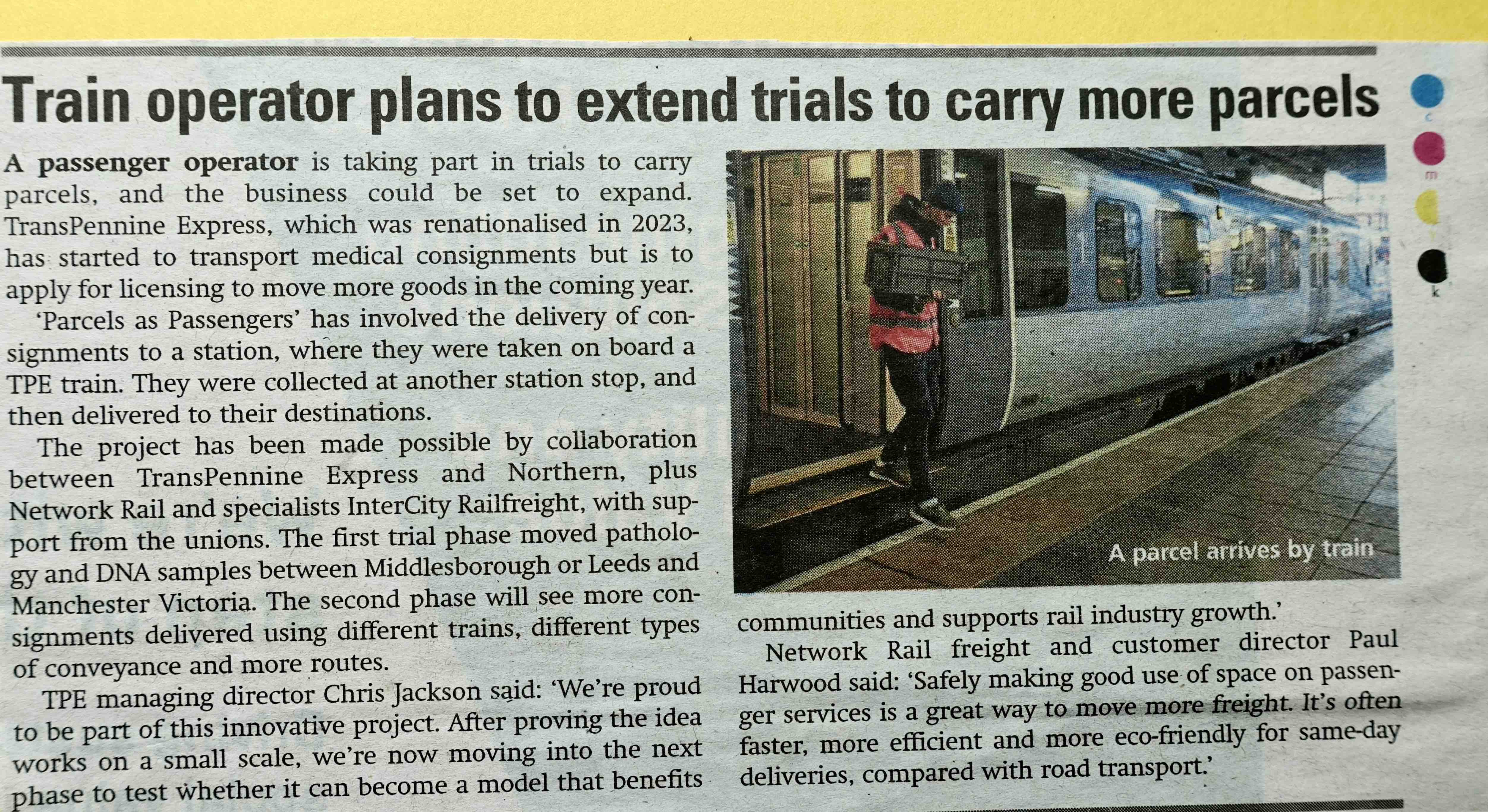
Rail could offer a serious challenge to Light Goods Vehicles (LGVs) which dominate the parcels market and every street in the UK. White vans are the fastest growing – and very conspicuous, intrusive component of our traffic. Rail seriously under-performs and could deliver major carbon reduction, social, environmental, economic and health benefits to the UK with every white van trip removed and every ‘last mile’ delivery by electric vehicle/cargo bike completed.
PLATFORM 18 FOR THE VICTORIA – BATTLE EXPRESS?
Possibly! Expecting large crowds wishing to attend ‘celebrations’ of the 960th anniversary of the Battle of Hastings, Southeastern Trains are planning to lay on three fast services on each day of the weekend of the10-11 October. Engineering works on the south east London lines mean that the trains will run via Redhill and Tonbridge.
NEW FOOTBRIDGE AT HAMPDEN PARK TAKING SHAPE; LIFTS COMING TO BATTLE, BUT NEEDED AT HAMPDEN PARK AND ST LEONARDS WARRIOR SQUARE
These facilities are needed to improve accessibility for all and we are seeking clarification. Hampden Park footbridge is scheduled to be reinstated in mid April; since the 2024 announcement confirming lifts at Battle station, there have been no updates on when work will commence.
ENGINEERING WORKS – DIFFERENT FORMAT IN ADVANCE WARNINGS FROM SOUTHEASTERN AND SOUTHERN, AND INTER-AVAILABLE TICKETS FROM COAST TO CAPITAL AT ALL TIMES: CAN GREAT BRITISH RAILWAYS (GBR) STANDARDISE THE RULES?
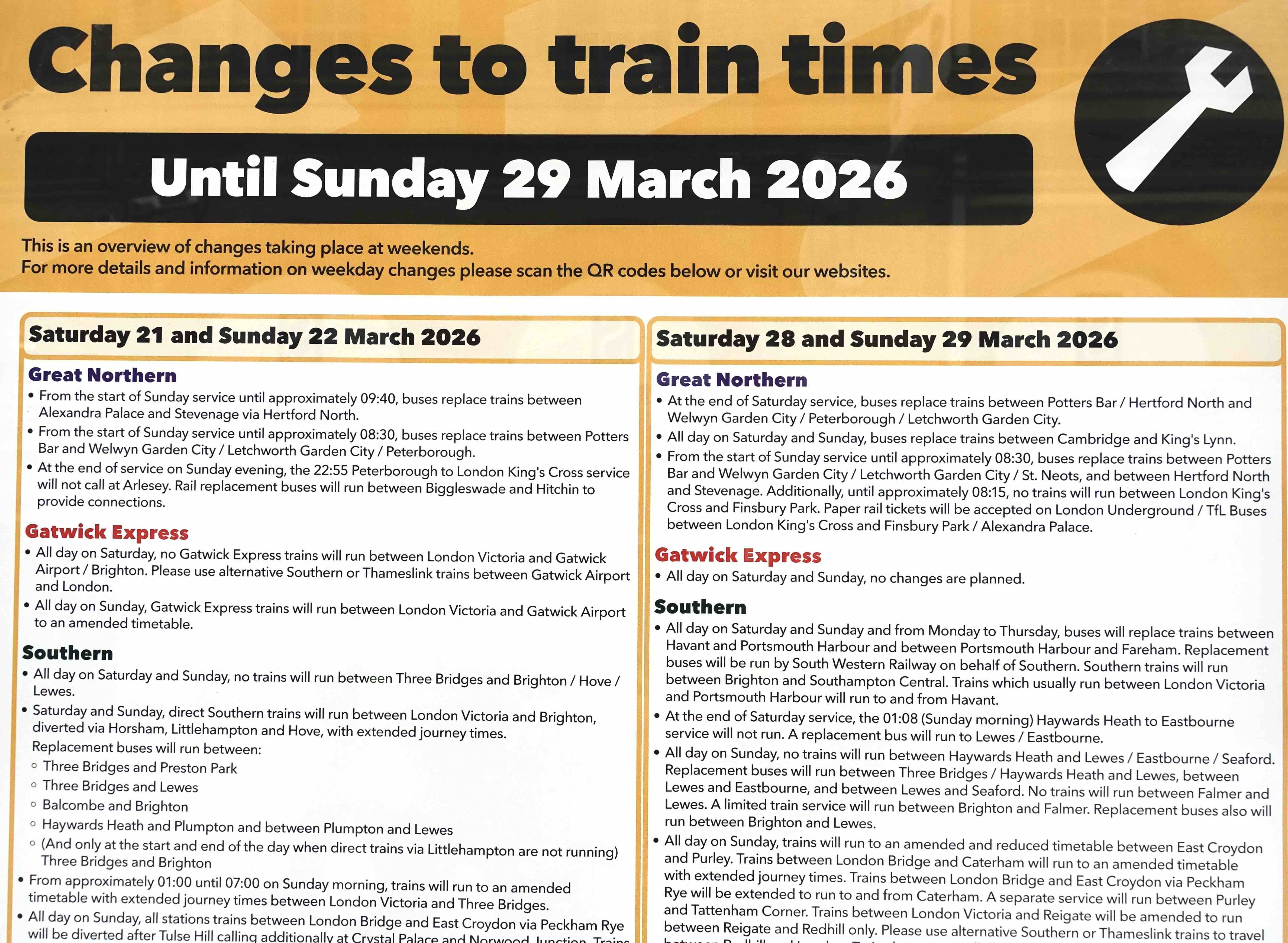
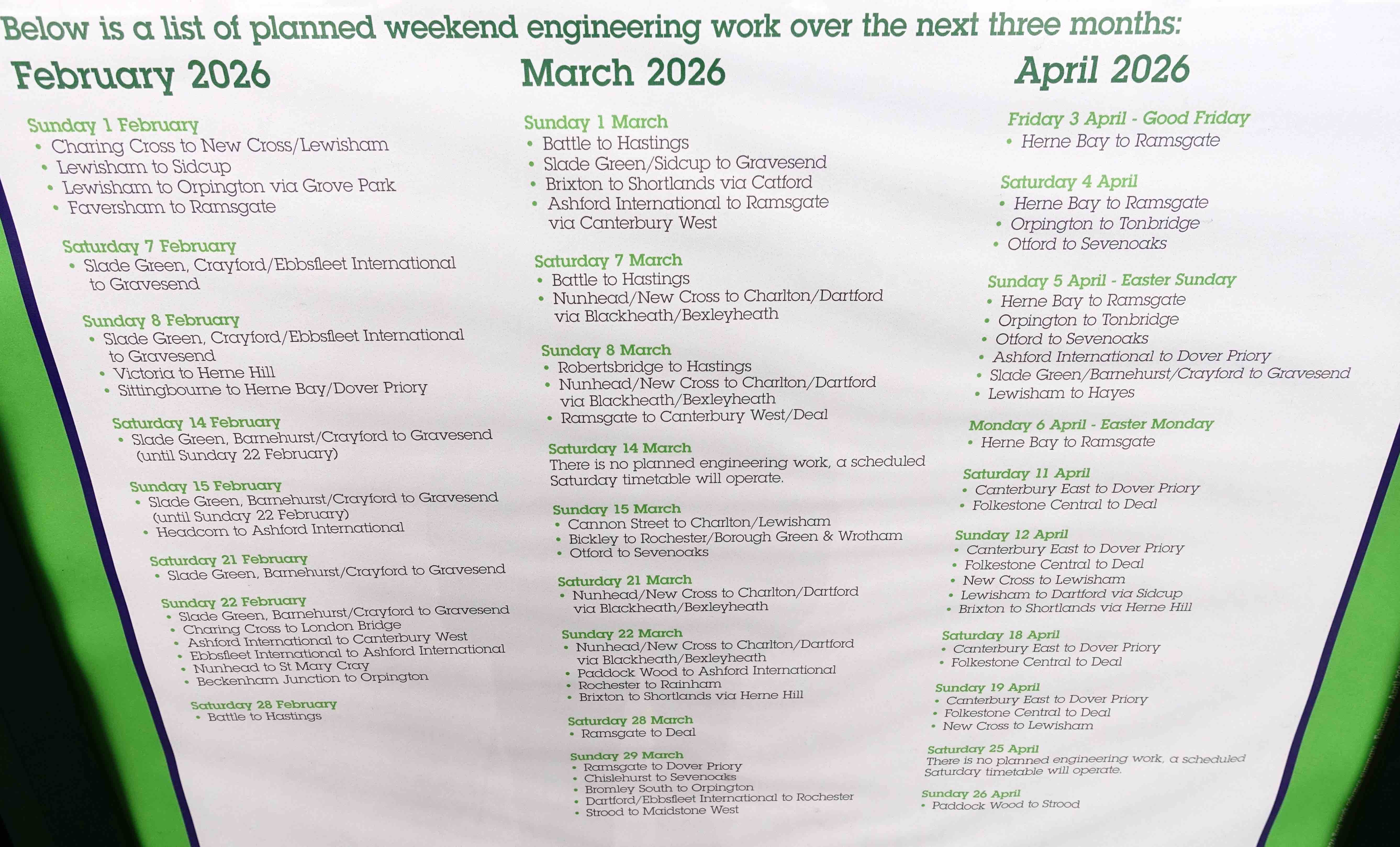
Southern Trains provide two weeks’ advance notice of changes due to engineering works. The posters diminish in usefulness from day one until the day before the end of the two weeks, when they effectively give one day’s notice. Southeastern Trains give up to three month’s warning on their detailed and updated poster displays.
We also need inter-availability for tickets to and from Eastbourne/Hastings and Victoria/Charing Cross (coast to capital) so that at any time passengers (NOT customers!) can have the choice. It would certainly help leisure travellers and make things simpler for all. Below, first Southern’s poster (photo taken two days before expiry of the two week currency) and, beneath that, Southeasterns more helpful alternative:
TIMETABLE DISPLAYS ON STATIONS? DO WE MISS THEM?
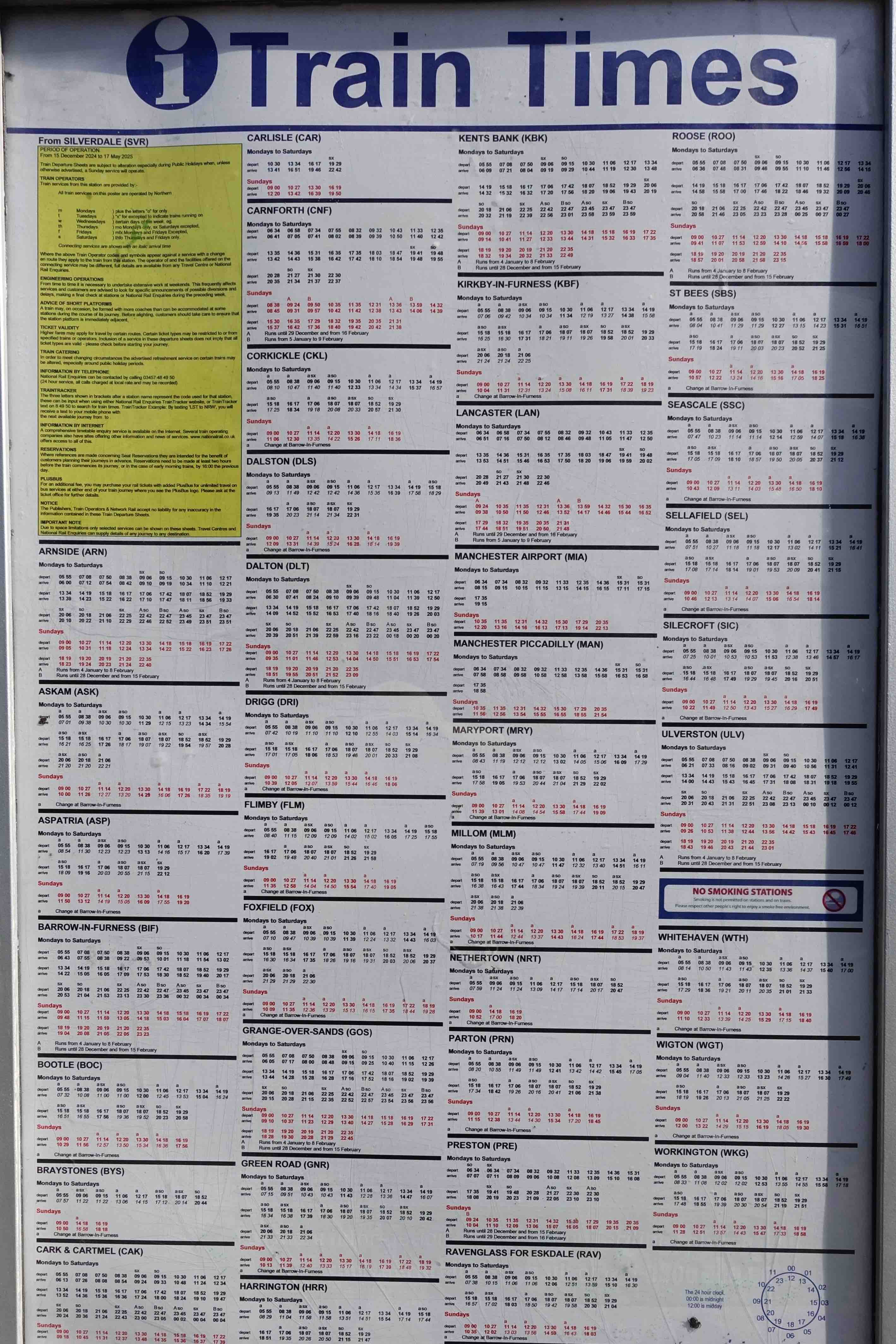
Above Silverdale, Lancashire timetable: You are not obliged to have an electronic device to find your train times, and the electronic displays on the station give an immediate but limited amount of information. It would be great to have these paper displays back and maybe, reduce queues of ‘inquirers’ in the ticket office.
EASTBOURNE AIR QUALITY STRATEGY CONSULTATION
Eastbourne Borough Council published for consultation its ‘Air Quality Strategy’ here (now closed):
Our response, here:
CARDIFF TO CHALLENGE EVER INCREASING VEHICLE SIZES – LET’S JOIN THEM1
Cardiff is to become the first city in the UK to increase parking charges for larger vehicles. Cardiff Council is introducing a parking surcharge for vehicles over 2.4 tonnes, which includes SUVs and 4x4s, to encourage drivers to switch to smaller vehicles and active travel. A public consultation was held in which 66% of respondents agreed that people should pay more for larger vehicles, in order to reduce congestion and improve safety on the roads. Increasing car sizes, known as ‘carspreading’, means that 52% of new cars cannot fit into a standard size parking space. Cardiff is following the example of Paris, which introduced more expensive parking for large vehicles through a public referendum.
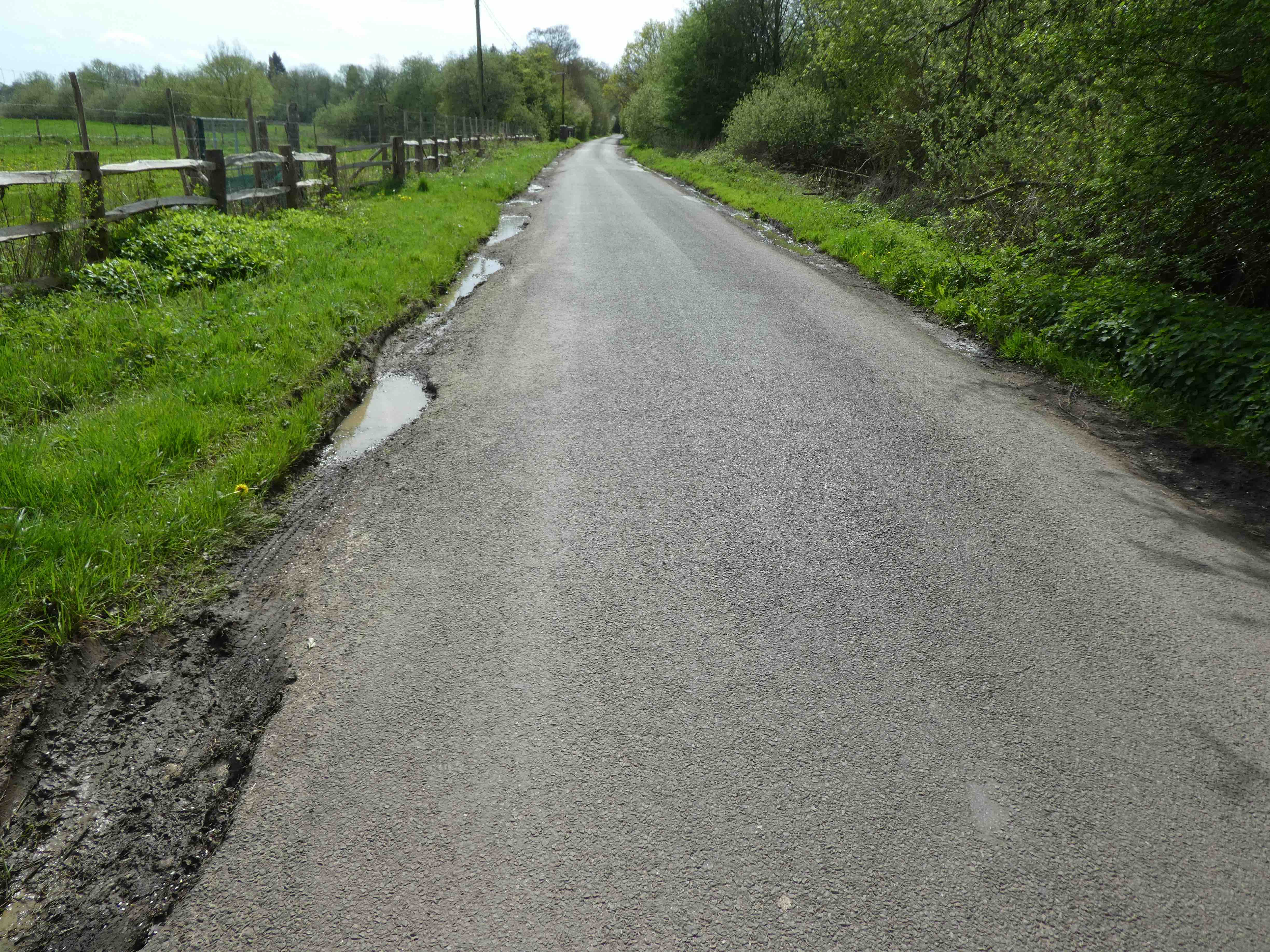
Large SUVs and also wider saloon cars make life difficult on both urban and rural bus routes, with drivers having to deal with both the constriction in the carriageway with space taken up by the vehicles, but also the speed at which they attempt to pass the bus. Larger, wider vehicles also chew up verges – see below.
I watched a bus driver dealing with the sudden appearance of such a vehicle travelling too fast in a lane in the High Weald. In effect, the car driver left no margin for his error and only avoided a collision thanks to the skill of the bus driver. “The ‘fore and aft’ cameras fitted to each bus are rarely consulted” the driver told me. He suggested that a ‘camera trigger’ on the steering wheel would be a useful tool to record incidents of all too common poor driver behaviour. (See item below on the ‘Role of the Bus in improving road safety)
Support is growing for speedlimits on country lanes. A report for CPRE showed public support for this
Public Back Lower Speed Limits On Country Lane
Image: larger vehicles=rutted lanes:
EASTBOURNE BUS LANES: ‘GREEN LIGHT’ FROM ESCC
With many consultations and revisions to the schemes since 2005, and against a backdrop of increasing congestion – and an explosion in sales of larger SUVs – bus lane plans have been approved by ESCC.
Funded by government, these are to be installed in St Anthony’s Avenue and Seaside and are anticipated to improve journey time reliability throughout routes to and from Hailsham, Stone Cross – North Langney and town centre/railway station. Improved conditions for the bus will give a more attractive offer, help reduce congestion and give a real incentive to bus operators for investment in more and better buses.
Here is our statement to the Planning Committee on decision day:
Other urgently needed and planned bus lanes/priority measures for our ever growing population include:
Upperton Road – station (agreed but under further study )
Polegate – Willingdon (A2270/2021)
Rodmill Drive – DGH Roundabout (suggested)
Cross Levels Way – Kings Drive (suggested busway between college and DGH offering route addition)
North Harbour to South Harbour (busway offering new route)
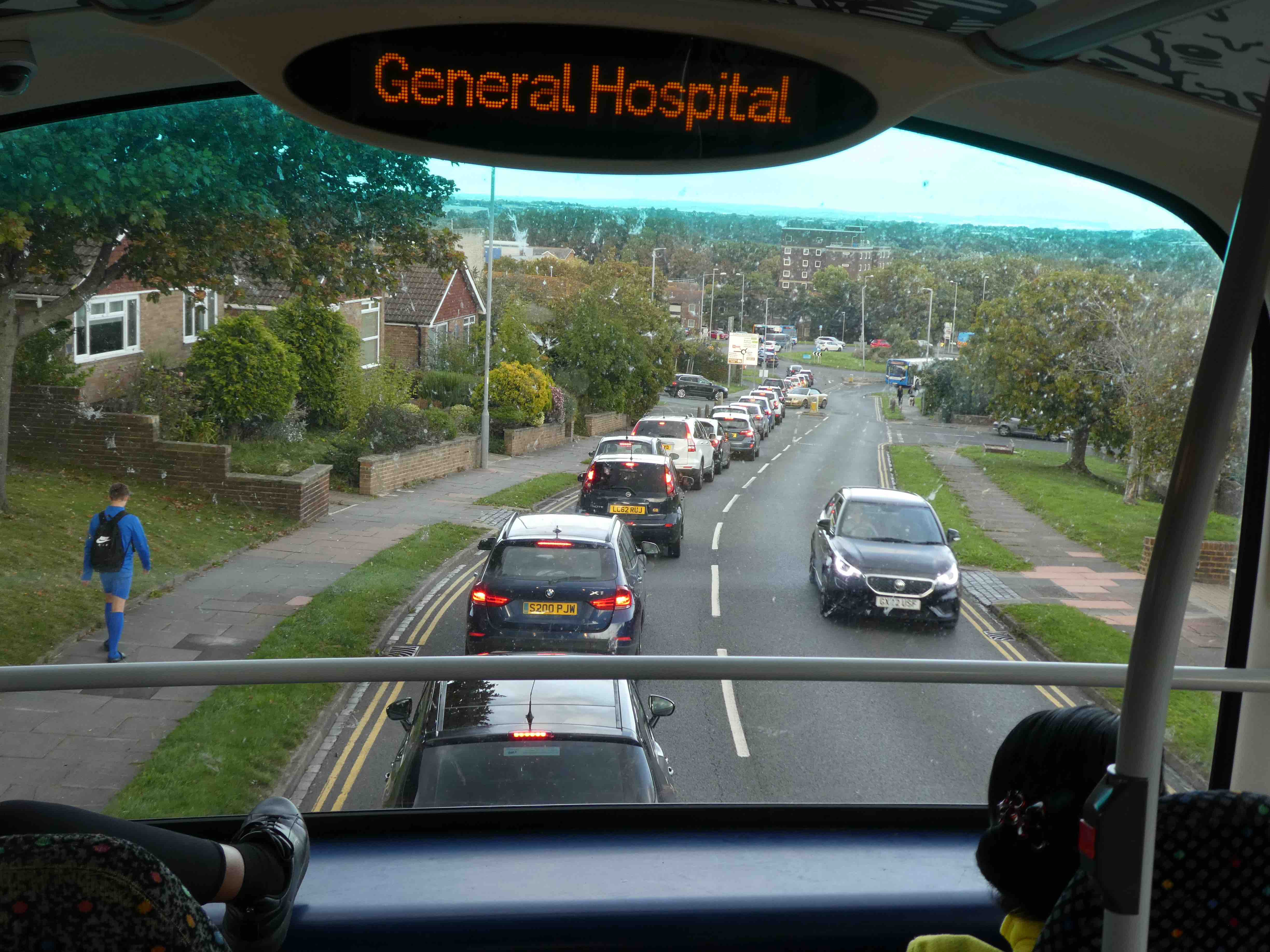
Pictured below: Rodmill Drive congestion: bus transit to the District General Hospital frequently takes takes anything up to 10 minutes but can be as quick as two. This trip on the Brighton and Hove service 28 Eastbourne to Brighton via Hailsham and Lewes took place at 08.25 am.
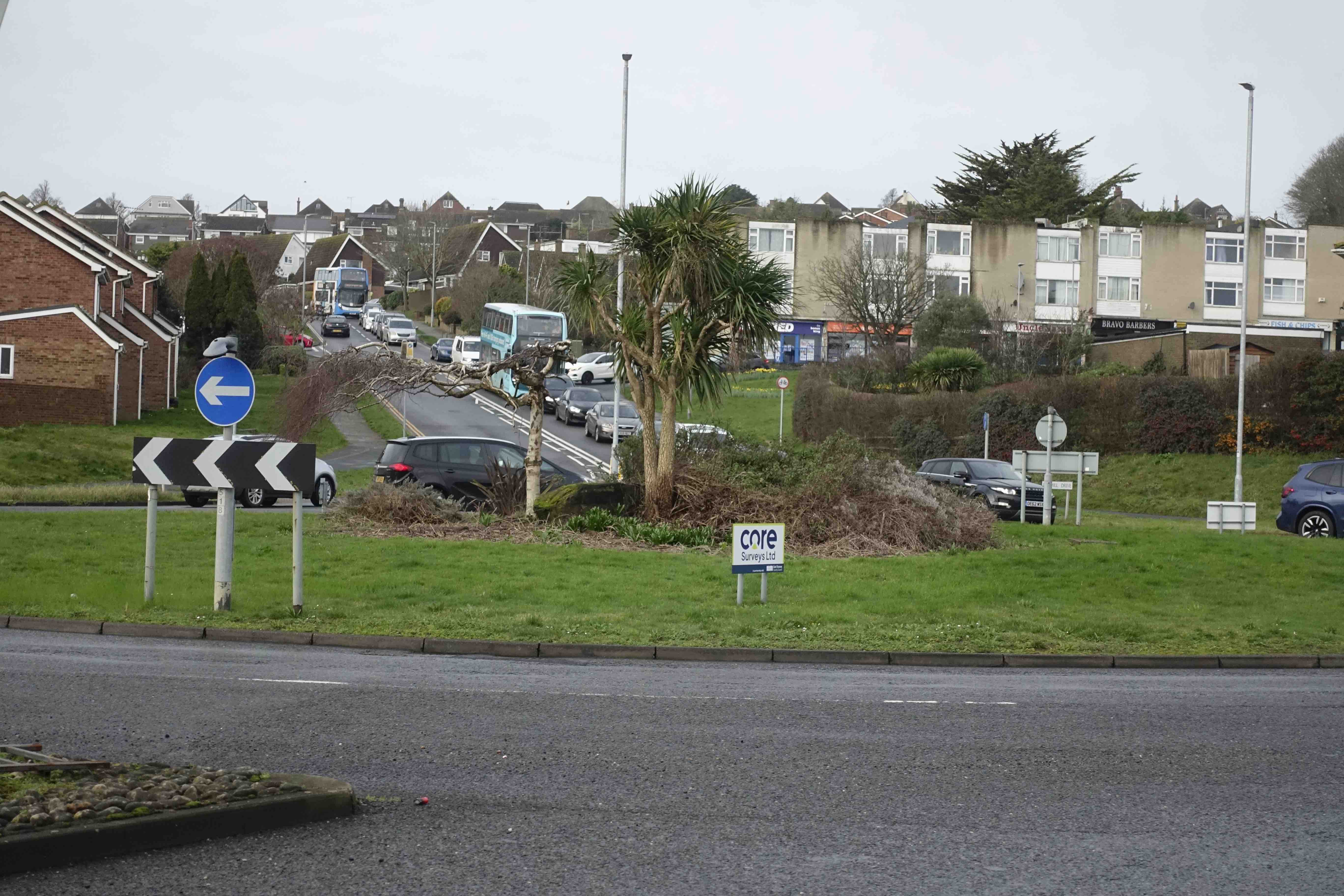
Above: A further image from the roundabout – months later and looking up the hill – shows a similar mix of traffic coming down. Two buses can be seen in a similar situation at 08.20 am.
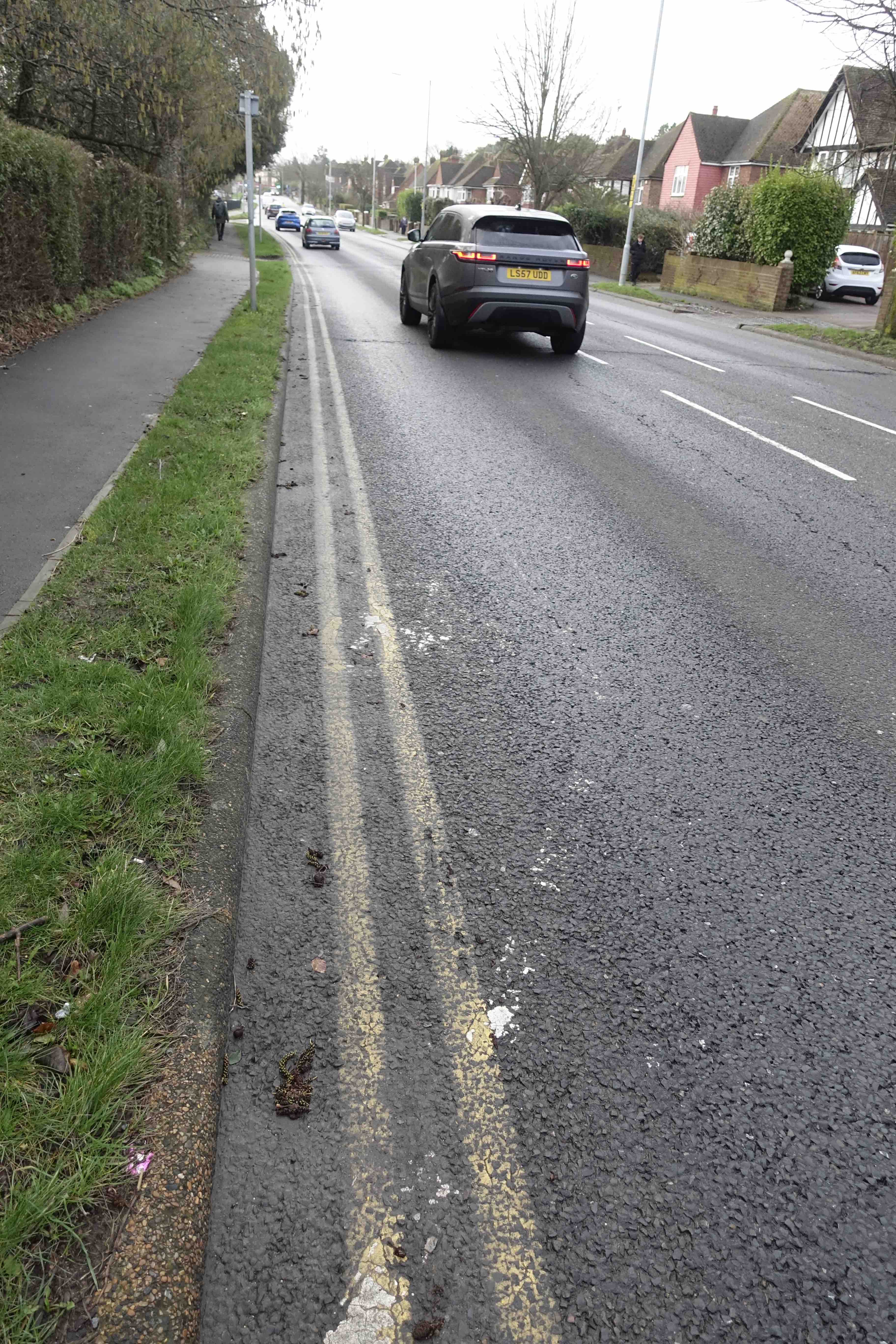
Below: The A2021 in and out of town is also a busy route for students on foot or cycle. The District General Hospital roundabout is a hostile environment for these modes – with high entry/exit speeds – and in our view needs a re-design. supportive of pedestrian, cyclists and bus services.
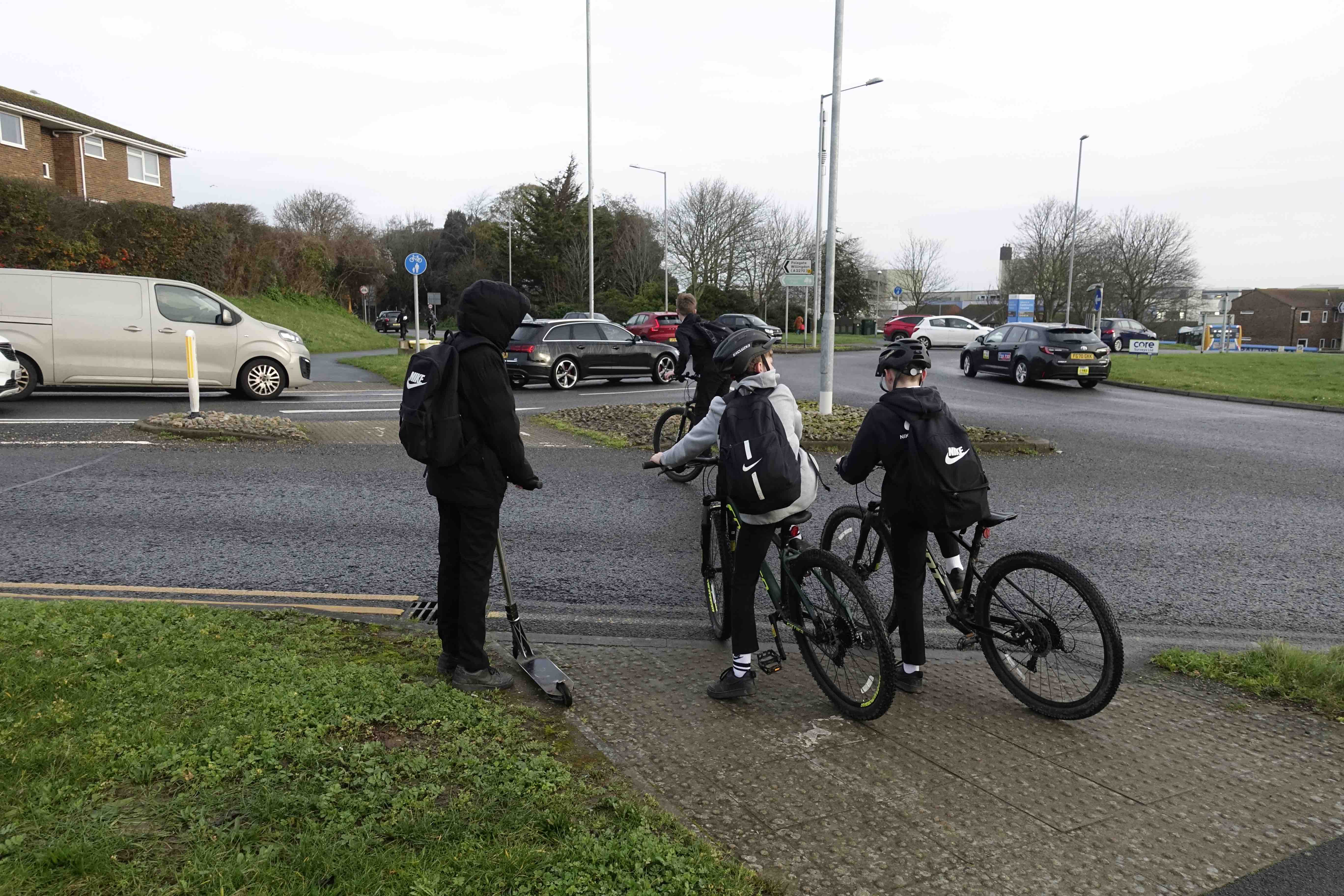
The same stretch of highway once had clearly marked margins for cycles. Over years and withoiut maintenance these have faded or disappeared altogether. They were not ideal but at least placed in the minds of drivers the likelihood of a presence of cyclists. Example below:
TALKING OF ROUNDABOUTS…
Below, Upper Avenue.
The roundabout as it stands –
Upper Avenue roundabout would benefit from a re-configuration. It is characterised by high entry and exit speeds, demand from pedestrians and cyclists and for some is a route to primary school. It is also programmed to become part of the Ring Road (currently Ashford Road, adjacent to the station). Funding is agreed for the A259 improvements.
In our post – January 2023, we have suggested that increases in traffic will exacerbate the current conflicts with vulnerable road users. Multiple housing development sites within half a mile will create further pressures with short car trips – unless all sustainable modes of transport are prioritised with appropriate measures built in to design. That essential characteristic has been starkly absent from local developments around Eastbourne and in East Sussex in general. Also in that post is an alternative roundabout design that could work for all. (Cyclops).
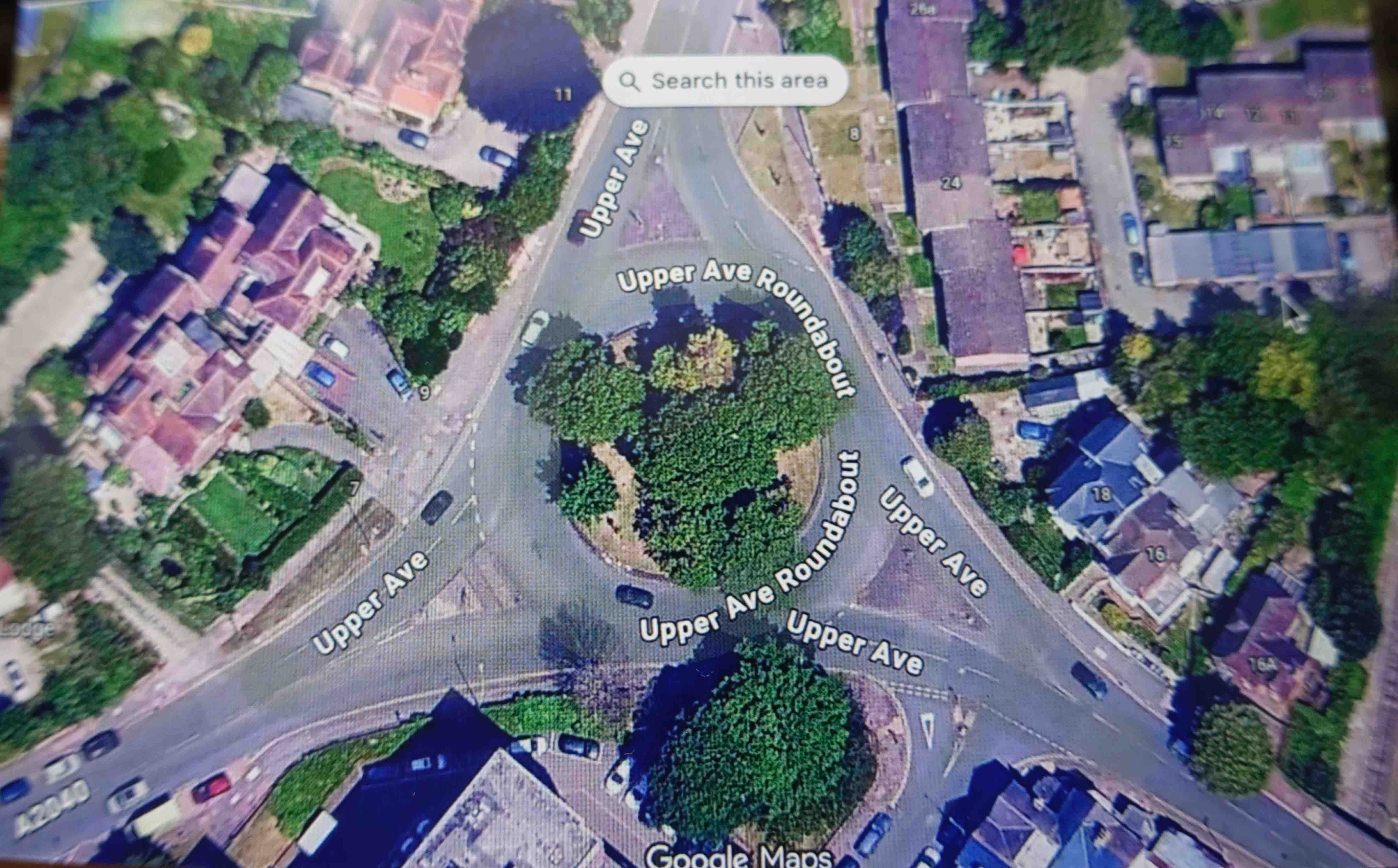
All traffic going ‘through’ the roundabout and not ’round’ it is able to transit at anything up to 30-40 mph. This conflicts with and deters cyclists, and makes crossing any arm of the roundabout hazardous for pedestrians. These include parents with pushchairs and toddlers making the twice a day trip to and from school. Further hazards currently await at Bedfordwell Road to the north, with future prospects of more traffic. Children will learn that in Eastbourne, ‘the car comes first’.
At Ratton School – 2 miles to the north – residents and parents are currently (End March 2026) discussing traffic issues and we wish to feed in ideas, along with Eastbourne Eco Action Network.
Issues are around traffic speeds, anti-social driver behaviour, traffic reduction , and incentives to walk, wheel, cycle and to use the bus (and train where appropriate). A very popular outcome of a any successful resolution would be a reduction of congestion. Stationary queues of traffic are now widespread in Hailsham/Polegate/Eastbourne and occur outside of peak hours. Badly planned ‘car dependent’ developments, a limited public transport offer and poor pedestrian and cycling environments contribute to worsening road conditions, degraded living spaces and poorer public health. Ratton School is a good place to start a dialogue as young people will suffer for the rest of their lives unless the ones with the power to sort it get a move on: that’s us!
This might help…
There are tried and tested strategies where measures are succeeding to significantly reduce death and injury on our residential streets and improve the quality of the places where people live. The achievements are real and lasting where 20mph speed limits now apply across Wales in all residential streets. See below the succes story. The benefits to the NHS of the fall in casualty numbers and to families and friends of lives saved are inestimable:
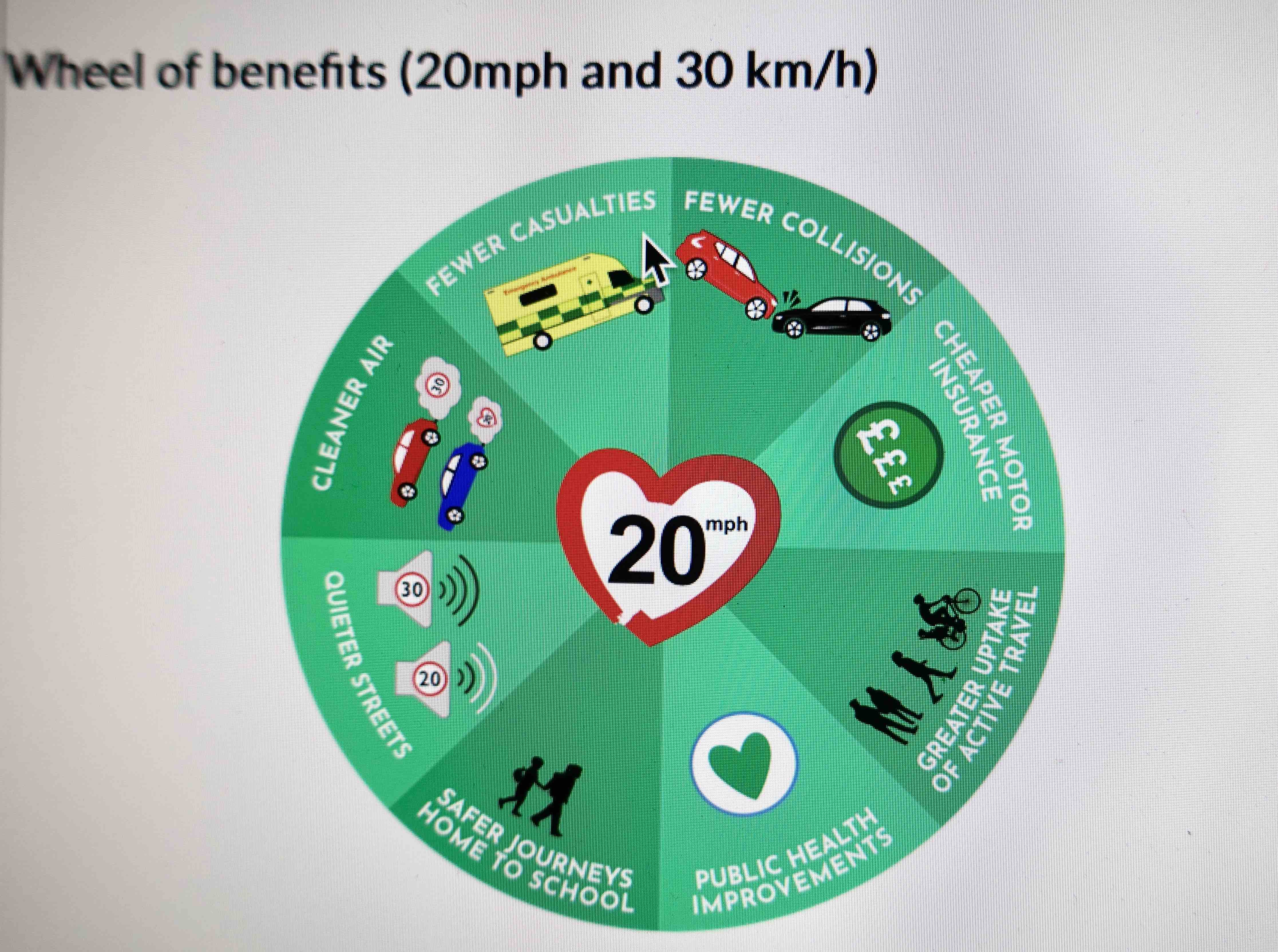
Among the benefits are the creation of conditions where children may play safely close to home, less traffic noise and better driver behaviour, safer ‘active travel’ and pedestrian and cyle routes to school, with more opportunities to ‘know the neighbours’. There is evidence that walking and cycle trips increase and this may be one route to reducing car use – at least for some trips. Below is evidence from Bristol:
Slowing speed limits from 30mph to 20mph has contributed to increasing cycling and walking by over 20%. 20mph increases physical activity and reduces traffic. Cyclist casualties fall
Bristol found of its 20mph limits, using a mean of a 23% increase in walking and a 20.5% increase in cycling that for each £1 spent the return on investment for walking is £24.72 and cycling is £7.47[i]. Cyclist casualty numbers fall by around 40% following wide area 20mph limits. The choice to walk or cycle is complex. It involves factors like access to a working bike, health, overcoming fear, distance, route knowledge, convenience, weather, topography and cycle parking. Traffic speeds are a major barrier to choosing to walk or cycle. Perception of risk is strongly involved in the “how shall I get there?” decision.
WHAT A DIFFERENCE THE TRAFFIC MAKES – LESS IS MORE!
Whether in San Francisco in 1969 (the original study by Professor Appleyard) or Bristol in 2008, fewer vehicle movements mean friendlier and safer streets as the diagrams show:
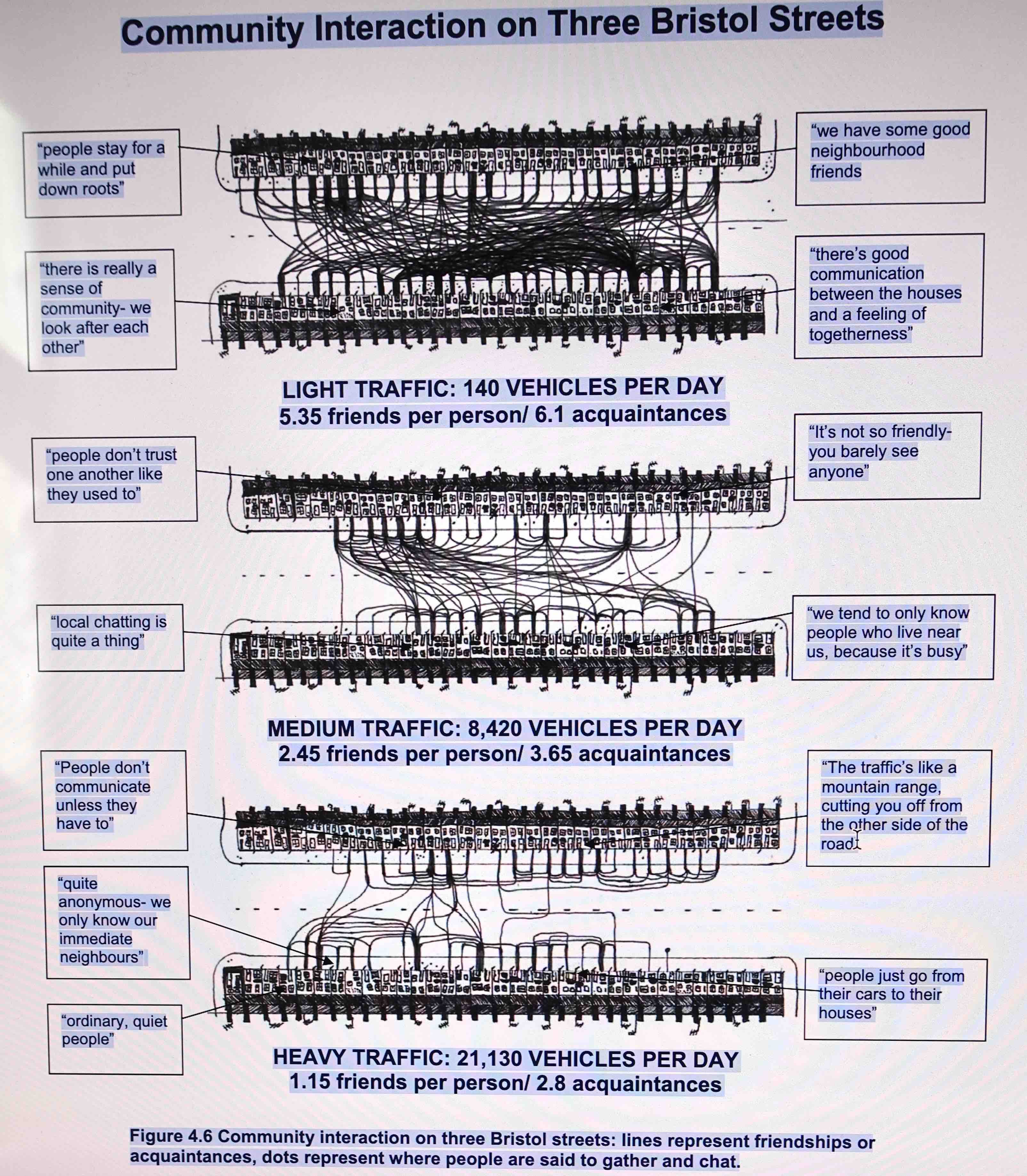
If the 20s Plenty strategy and measures can help deliver fewer vehicle movements, quieter, safer ,child friendly streets, greater social cohesion, and less congestion – along with all the other proven benefits – and appear to comply comprehensively with a whole range of policy objectives at all levels of government – then let’s have them ASAP!
CAR DEPENDENT DEVELOPMENTS ENCIRCLING EASTBOURNE UNDERMINE EFFORTS TO CREATE LOW-CARBON HOUSING – AND PERPETUATE CONGESTION AND POLLUTION
The developments create traffic mayhem, disrupt bus service reliability and secure the private car as the first choice of mode for those moving onto the new estates. Active travel take-up is disrupted by hostile ‘car dominated’ environments, so can’t ever achieve best ‘value for money’.
Improvements in public health which naturally flow from increased levels of walking and cycling are then far less likely. We are far from delivering policy objectives (health, economic, environmental) through integration of ‘transport’ and ‘planning’. This reality greatly reduces the likelihood of delivering truly ‘low-carbon’ developments, even moreso because in East Sussex we experienced first, rail line closures, and second, failed to reopen key rail routes: integrated bus/rail services could have been excellent and delivered ‘transport equity’, sustainable housing developments – and kinder, more civilised living spaces without endemic congestion.
Below, an ad for a new housing development (bus service cut just announced – but never mind, there’s’parking to all homes’):

RAIL AND BUS TOGETHER SHAPING DEVELOPMENTS?
That’d be nice. Perhaps ‘Transport for the South East’ could function more like ‘Transport for the North’!
For starters, let’s have: Lewes – Uckfield reopening – and restoring the Tunbridge Wells/Tonbridge link. Lewes and Tonbridge then performing a role of rail/bus ‘hub’. The latter link was closed as recently as the 1980s – no foresight there. *see Wealden Line link above
Double tracking more of the Hastings (Ore) – Rye – Ashford line using bi-mode trains and running two trains per hour through to Brighton. New stations at Glyne Gap (Ravenside, Bexhill) and Stone Cross (north Langney, Eastbourne). Bus interchange possibilities at Ashford/Rye/Hastings/Cooden Beach/Stone Cross/Eastbourne.
EASTBOURNE ECO ACTION NETWORK AND HASTINGS AREAS HAVE FORMED BUS USER GROUPS (EABUG AND HABUG) AT WHICH LOCAL ORGANISATIONS/COMMUNITY GROUPS, BUS OPERATORS AND ELECTED MEMBERS MEET QUARTERLY TO DISCUSS PROBLEMS AND OPPORTUNITIES FOR IMPROVEMENTS – AND CELEBRATE SUCCESSES.
Links below can give a flavour of matters discussed and plans announced……
EABUG:
- the notes of the October meeting and
- the presentations from the October meeting
- Notes from February 2026 meeting here
HABUG
Hastings MP Helena Dollimore called a public meeting around concerns expressed ove the quality of the local bus service. Stagecoach South East manager Joel Mitchell faced the music and described local difficulties around road works, potholes – and the lack of bus priority measures compared to Brighton and Hove. There, thirty years ago, decisions were made to introduce comprehensive bus priority measures across the city which saw a major reduction in car commuting. Lack of progress in Hastings, Bexhill and Eastbourne since 2000 – plus poor integration of transport simultaneous with housing developments has led to worsening congestion. Cancelling the planned Glyne Gap/Ravenside station can only have aggravated the traffic chaos: the case for the new station was supported by two consultants’ reports and remained in the Local Tranport Plan for years before being removed by East Sussex County Council.
Eastbourne Area Bus User Group invited Trevor Marchant from East Sussex County Council to describe difficulties in regulating road works ‘events’ which are often wrongly declared as ’emergencies’ by utility companies so as to avoid appropriate application procedures ahead of the works. Bus operators present appreciated the presentation and we joined calls for a parliamentary committee’s recommendations to prevent ‘false’ emergency claims. These events can severely disrupt bus schedules
RYE HARBOUR NATURE RESERVE – BUS CUTS
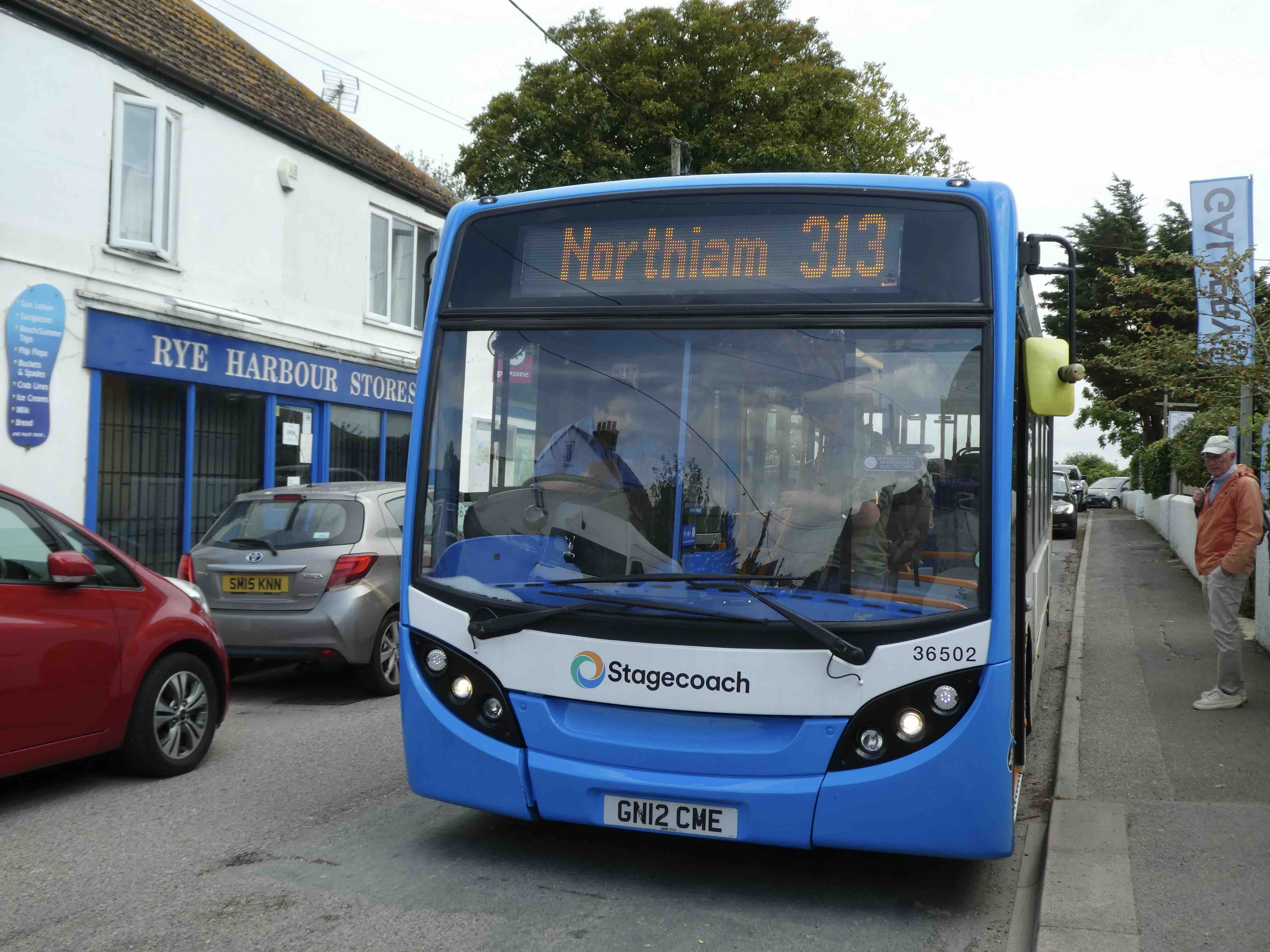
The Sunday bus from Rye station to the Sussex Wildlife Trust (SWT) Nature Reserve at Rye Harbour and seen here leving for Northiam via Rye Station, is being withdrawn from April 12th.
Sunday is a particularly busy day so this cut is something of a disaster. We have written to East Sussex County Council appealing for continuation. SWT, and Hastings Bus Users Group have also called for retention of the bus which also serves Northiam. Letters can be seen here:
ONE MORE CUT – 329 HASTINGS TO TENTERDEN – PASSENGER COUNT – WHAT WILL THEY DO NOW?
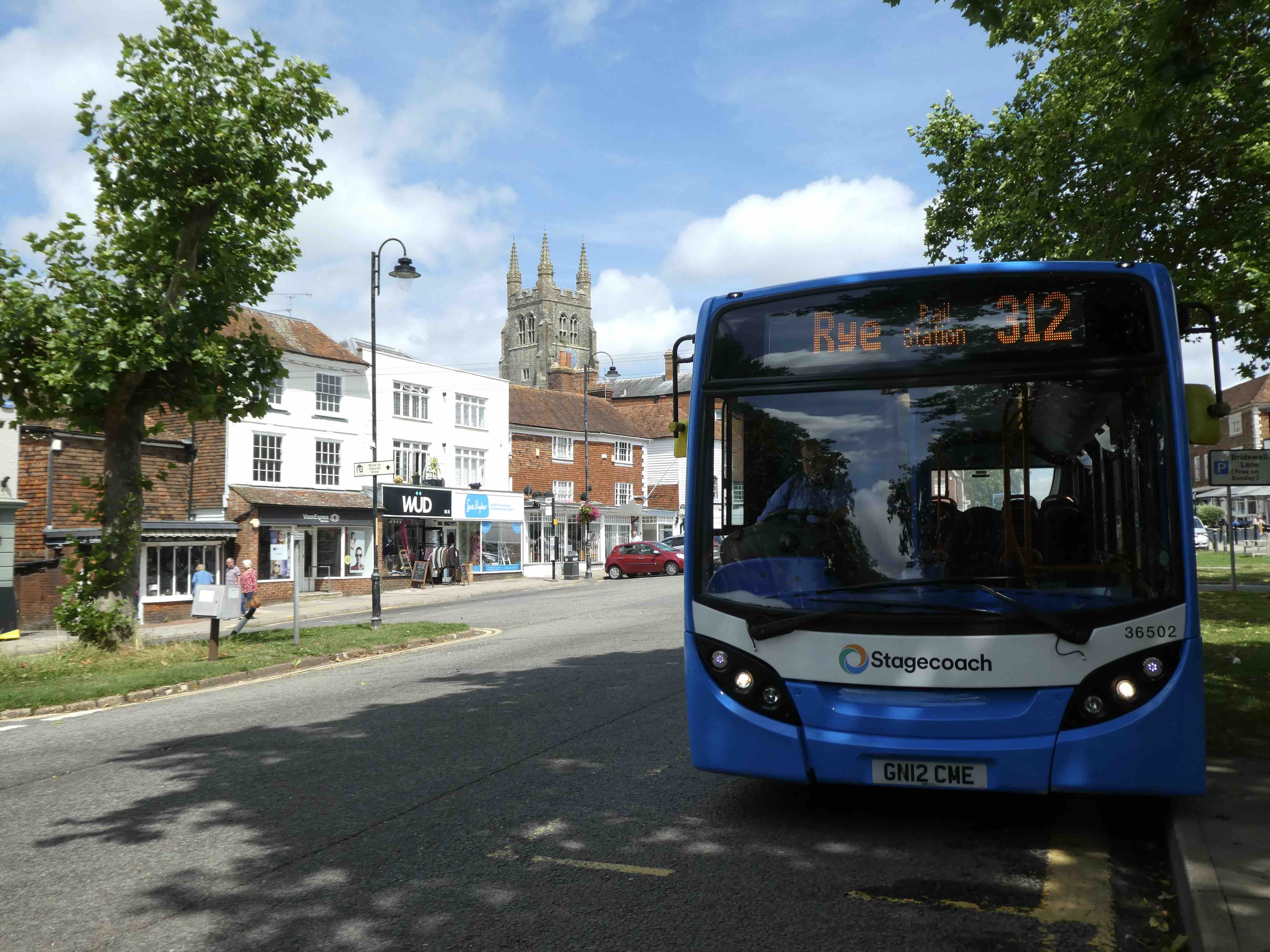
312 Tenterden to Rye Sunday service – gone. Steam train ride to this lovely town via Bodiam, and bus back to Rye – a grand day out no longer possible.
A recent trip on the 329:
Drizzly day. 15th February, 10.46 bus Hastings Station -Tenterden. This, and all Stagecoach 329 Sunday services to be cut…It traverses the county boundary between Kent and East Sussex. Twenty five passengers used the service on this Sunday, eight of whom travelled through to Tenterden and 12 beyond The Ridge. What will they do when the bus has gone? How many Sunday, and spring and summer trips will now not be made?
MIDDLE EAST CRISIS: KEY ROLE FOR PUBLIC TRANSPORT
We have written to ESCC/Transport for the South East (TFSE) asking that bus cuts be reversed in a time where fuel costs are rising. We suggested that the Secretary of State for Transport Heidi Alexander be approached by Regional Transport Authorities along with Local Government Associations and Association of County Councils to offer support for bus service funding when household budgets are under pressure from rising fuel costs and where the bus can play an important strategic role.
Our letter is here:
Reducing (and or enforcing) speed limits – and all the benefits that would flow from that course of action have been examined and analysed where 20mph limits have been applied, and CPRE have made a strong case for limiting speeds in rural settings. Rising fuel costs and anxieties around continuing fuel availability, conserving resources, febrile media speculation, etc, render a look at a 2006 publication by Professor Jillian Anable, now of Leeds university, of interest and prescient:
RAIL 200 CELEBRATIONS
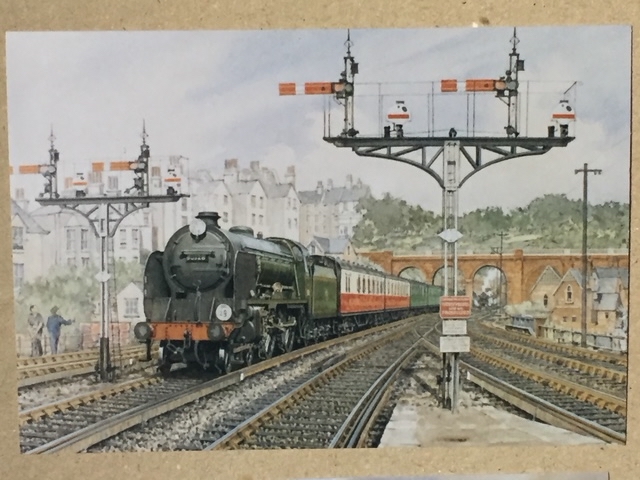
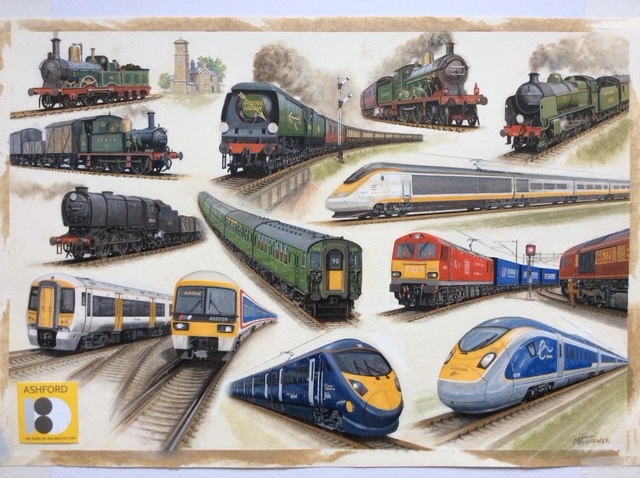
If you pass through Hastings Station, in the small waiting area you may see on the wall a display of trains and locomotives that have served the station and beyond before and through two world wars.
The artwork has been created by Hastings own railway artist Mike Turner, and is well worth a look…..
- Charing Cross – Hastings train approaching Hastings station
2. Locomotives and trains from Victorian times to the present day
TRAVELOG LEWES – please have a look at this (link below). Centred on Lewes but wider East Sussex issues and oppportunities examined and recommended:
There’s a wealth of information on available bus/rail services and current transport issues on the this website, including a critique of the Exceat Bridge scheme (see item ‘A Bridge Too F’ar?) :
We have carried out ‘bus transit’ time checks at the bridge on at least 20 occasions and found the ‘delays’ to be inconsequential with a maximum tining of 90 seconds and occasionally 0 (zero) seconds. Bus driver opinions are overwhelmingly positive about the current traffic signal controls. We agree that pedestrian/cycle passage (currently extremely poor) is in need of urgent improvement and should mirror the superior quality of the Highways England A27 cycleway.
ROAD SAFETY – AND THE ROLE OF THE BUS
Comment from a bus driver after observing a dangerous overtaking manoeuvre of a motorist. NB all buses have a ‘fore and aft’ camera:
‘I’d like to see a button on the steering wheel stick which, if activated, would record moving image, time, date of any incident that could then be used by the police in evidence of infringement of the law’.
Reckless driving alarms all road users but those who feel threatened in that instant are left feeling helpless. as offenders speed off. Even though the vast majority of motorists drive carefully and with consideration, such offensive driving is common. With appropriate publicity, use of the bus mounted cameras could deter such driving ‘styles’ and in severe cases, lead to prosecution. Here’s one such experience from a ‘rail replacement bus’ on the A27 at 10.07pm on March 31st:
The 9.58pm double decker bus left Lewes behind anothe double decker bus (operator: ‘Triangle’ ). On the Firle straight at 10.07pm, a saloon car overtook both buses at high speed on the wrong side of the road around a central reservation. Some minutes later, a 4X4 moved in between the buses, ‘tailgating’ the leading bus and persistently applying the brakes – a clear instance of ‘bad driving’ , possibly distracting the driver of the bus.
It’s clearly not possible for every incident involving poor or dangerous driving to be prevented, but the bus cameras could help – and are evidently a little used resource that could help to make our roads safer.
EASTBOURNE DGH and CONQUEST HOSPITAL (EAST NHS TRUST) TRANSPORT GROUP
The group has met quarterly since March 1999 to discuss transport issues and improvements. The objectives have always included the ‘delivery through strategies and measures of a ‘health dividend’ within East Sussex as well as promoting and supporting sustainable transport for staff and visitors’. It continues to meet with representatives from the Eastbourne District General and Conquest hospitals (both admin staff and professionals), Borough, District and County Councils (officers and members), bus operators, Sussex University, East Sussex College, Transport Futures East Sussex, Hastings Sustainable Transport Forum. For more information, contact: derrick.coffee@talk21.com
WORLD PUBLIC TRANSPORT DAY – FRIDAY, 17TH APRIL 2026
Eastbourne Eco Action Network – EEAN Transport Group intend to hold an information stall at Eastbourne Station on the 17th April to celebrate:
Check EEAN website for confirmation – ‘Shared Transport must play a bigger part in our transport future’
Information on the wider UK picture – including on the Lower Thames Crossing, LTC – can be gleaned from the Transport Action Network newsletter. It;s a great source with invaluable links and is available here: Transport Action Network
Thankyou for visiting the Website.
Best Wishes for a better Transport Future!


 Transport Futures East Sussex/Campaign for Better Transport / Hastings Alliance