BHLR – DECISION DEFERRED UNTIL MARCH

Secretary of State for Transport Justine Greening announced on Wednesday, 14th December, that the decision on the BHLR would be deferred until March. She had this to say in respect of the scheme:

“We recognise the critically important role that transport improvements could play in the regeneration of the Bexhill-Hastings area and the economic case underpinning the Bexhill-Hastings Link Road, though we are also aware of concerns regarding the proposed scheme, including its environmental impact.

Before we take a final decision on the scheme we want to be sure that it offers the best approach for regenerating the area and also to consider other transport options to achieve this, including local trunk roads such as the A21, A259 and local rail. We also want to consider whether further environmental mitigation measures could be deployed to address the impacts of the proposed Bexhill-Hastings scheme.

Over the next three months the Department will work alongside the scheme’s promoters and other local and regional partners to gather further evidence on the optimal solution for the area. We would intend to make a decision swiftly thereafter.”

For us this deferment was a huge relief and on its own, appears to justify our hard and constructive campaigning work over the last decade and a half.

We look forward to the dialogue in the months ahead and have already begun to explore the whole range of measures that we believe could contribute to the ‘optimal  solution’ for the area.

We are certain that the promoters’ long term singular focus on the BHLR has obscured the real potential for the showcase sustainable transport package that Bexhill and Hastings deserve. There are exciting opportunities to give the two towns an enviable integrated transport system equal to, or better than the best in the UK, and we look forward to playing a part in identifying these. We sincerely hope that the historic ‘BHLR mantra’ is a thing of the past, where it belongs.


Posted in Uncategorized | 2 Comments

BHLR – REVIEW BY KEITH BUCHAN OF THE ESCC ‘BEST AND FINAL BID’ TO DfT – OCTOBER 2011

Downplaying the environmental damage to Combe Haven, right on the doorstep of Bexhill and Hastings; failure to examine alternatives despite clear potential; a predicted failure to meet national carbon reduction targets; and a lack of consideration as to what better use of the public funds might have been made: these are just some of the conclusions flowing from Keith Buchan’s report for the Alliance. Read Keith’s  report:KEITH BUCHAN of MTRU BHLR BAFB

Posted in Uncategorized | Leave a comment

BHLR – REPORT FOR THE ALLIANCE ON ESCC’S ‘BEST AND FINAL FUNDING BID’ TO DfT, BY ALAN WENBAN-SMITH. OCTOBER 2011

Bexhill to Hastings Link Road, ‘Best & Final Bid’ by East Sussex County Council, September 2011


A Review of the Transport Business Case

for the Hastings Alliance


14 October 2011


Urban & Regional Policy


48 St Agnes Road

Birmingham

B13 9PN


Tel 07977 859411

Fax 0121 247 4601

e-mail alanwenbansmith@pobox.com


Bexhill to Hastings Link Road BAFB – Business Case Review

Contents

            Section            Title            Page

                        Overview            ii

            1            Introduction            1

            2            Strategic Case: fit with public policy             1

            3            Economic Case: value for money             4

4                                 Commercial Case: viability 9

5                                 Financial Case: affordability 9

6                                 Management Case: achievability 10

7                                 Conclusions 10

Appendix 1: Reports considered 11

Appendix 2: Carbon costs 12

Appendix 3: Benefit Cost Ratios 14


Urban & Regional policy


Urban & Regional Policy was established by Alan Wenban-Smith in 1996, and specialises in linking urban and regional economic, spatial and transport policies.  Recent projects relevant to the present project include chairing TfL’s Peer Review Group for the London Land-Use & Transport Integrated model, recommending complementary actions to increase regional economic benefit from High Speed Rail, and a study of the integration of regional transport with spatial strategies for DfT.


Alan Wenban-Smith was previously responsible for planning and transport policy for Birmingham City Council.  In this capacity he led Birmingham’s first Unitary Development Plan, its first Economic Strategy and the policy direction of the Inner City Partnership.  He also chaired West Midlands planning, transport and economic development advisers at both regional and Metropolitan levels, leading the first Metropolitan Transport ‘Packages’, Regional Planning Guidance and the first integrated Regional Transport Strategy.


He is currently a member of the RTPI General Assembly and its Policy Committee.  He writes and speaks widely on planning and transport issues, has acted as witness and as adviser to Commons Select Committees on transport and economic appraisal matters and is Visiting Professor of Planning at Birmingham City University.


Bexhill to Hastings Link Road BAFB – Business Case Review

Overview

East Sussex County Council (ESCC) submitted its ‘Best & Final Bid’ (BAFB) for central funding of the Bexhill-Hastings Link Road (BHLR) in September 2011.  The Hastings Alliance commissioned Urban & Regional Policy to examine the economic, planning and regeneration aspects (complementing work by MTRU on compliance with DfT’s guidance on transport modelling and appraisal, and by Dr Judy Clark on Landscape).  In relation to DfT’s ‘5 Cases’ approach, this report concludes:

The Strategic Case

1.     Failure to follow DfT and Treasury Guidance on reviewing alternatives means that the choice of the BHLR is the result of a secondary objective (congestion reduction) taking precedence over the primary objective (regeneration). 

2.     The scheme does not form part of a coherent regeneration strategy for Hastings and Bexhill.  The transport capacity to meet the needs for regeneration, employment and housing can and should be met in other ways, more compatible with public policy. 

3.     The increase in carbon emissions and absence of mitigating measures would have disqualified the BHLR from further consideration in a properly conducted process.

The Economic Case

4.     Costs exclude elements necessary to achieving the claimed benefits, and also count as ‘sunk’ past costs which could be recovered.

5.     Costs are reduced by a large developer contributions for elements not forming part of the scheme appraised, and which ESCC itself recognises are unlikely to be forthcoming.

6.     Directly quantifiable economic benefits are small and uncertain.

7.     The additional fuel tax revenues from traffic growth are dwarfed by the cost of meeting statutory targets for reducing carbon emissions

8.     The impacts on landscape have been seriously under-estimated.

9.     After adjustments for these factors, the transport BCR is very poor, and on a wider basis negative.

Commercial Case

10.  The costs to the private sector of elements necessary to secure the development benefit are admitted not to be viable.

Financial Case

11.  The ability of ESCC to fund its share depends on a large developer contribution which should be disallowed on grounds both of extraneousness and uncertainty.   

Management Case

12.  The financial hole represented by  unidentified third party contributions is so large that no confidence can be placed in the scheme’s deliverability.


Bexhill to Hastings Link Road – regeneration issues revisited

1                  Introduction

1.1              We have been commissioned by the Hastings Alliance to review the submissions made by East Sussex County Council (ESCC) to DfT for funding of the BHLR from the Major Local Schemes Development Pool (Ref 27).  Although the timescale for comments is extremely short (one month), we have been able to review and update the analyses of earlier submissions that we carried out in 2004 and 2008 and work for the CPO Inquiry in 2009.  In addition, the Alliance has commissioned complementary reports on the transport modelling (from MTRU – ref 35) and on the landscape impacts (from Dr Judy Clark, UCL – ref 34). The full list of documents considered is given in Appendix 1, and references in the text are to the sequence numbers listed there.

1.2              The present report revisits the previous conclusions in the light of new information about the scheme and relevant changes in the wider policy context.  The main new material considered for the present report is the revised Economic Assessment Report (ref 28), the Appraisal Summary Table and related Worksheets (ref 30), which are based on new input data and transport model runs carried out for ESCC (Ref 29).  So that this report is free-standing, key points from earlier and complementary work are summarised or cross referenced.

1.3              This report is structured around the five headings of the Transport Business Case that is now DfT’s preferred approach to Ministerial decision-making on funding bids.  This requires “the relevant information set out in five cases, consistent with the Treasury Green Book, specifically, to show whether schemes:

·      are supported by a robust case for change that fits with wider public policy objectives – the ‘strategic case’;
·      demonstrate value-for-money – the ‘economic case’;
·      are commercially viable – the ‘commercial case’;
·      are financially affordable – the ‘financial case’; and
·      are achievable – the ‘management case’.” [1]

2                  The Strategic Case

National context

2.1              The predecessor to BHLR was the Bexhill and Hastings Bypass, which would have been part of a South Coastal route from Southampton to Dover right around both towns.  The strategic case was originally based upon the status of parts of the A259 as a Trunk Road, and the identification of Bexhill/Hastings in the Regional Spatial Strategy as a ‘secondary hub’ in a set of 30 strategic transport hubs and 50 ‘spokes’ across the South East.  A central part of the case for the by-pass from the start was that it would provide access to the proposed North East Bexhill Business Park (NEBBP) – and this has continued to dominate local thinking.

2.2              This by-pass was the subject of the first MultiModal Study (MMS) to be completed (2000, Ref) in the context of the national Transport 10-year Plan (2000-2010).  In spite of the generous resource context at the time, the weakness of the economic case (notwithstanding the NEBBP) plus serious environmental impacts led the then Secretary of State to reject the by-pass proposal in 2001 (Ref 2).  However, recognising the concentration of deprivation, the local partners were invited to put forward other (more integrated) ideas for the regeneration of Hastings/Bexhill (Ref 8).

2.3              The Transport Secretary’s response to the resulting Five Point Plan (see para 2.6 below) and the South Coast MMS (Ref 5, which reported around the same time) was to remit the proposed local transport improvements to the Local Transport Plan (LTP) process.  This was accompanied by reiteration of the general DfT guidance on the need to include demand management measures.  In particular, local authorities were asked to consider congestion charging as a way of funding local schemes (2003, Ref 8).

2.4              In the current submission (Ref 27, para 1.2) the objectives are stated as:

a)    Economic regeneration of Hastings and Bexhill
b)    Open up land for commercial and housing development
c)    Improve accessibility to and within Bexhill and Hastings.

Local context

2.5              The local partnership (SeaSpace) commissioned a report on a broad strategy for economic regeneration from DTZPieda (Refs 3, 4).  This emphasised that the key to regeneration was to grow the indigenous economic base, by:

a)    Developing new businesses that could capitalise on the area’s environmental potential while not being too much disadvantaged by the peripherality of the area within the South East;
b)    Revitalising the existing economic base, including retaining existing manufacturing and developing the traditional tourism activities.

2.6              The five strands of the strategy derived from this vision were (i) urban renaissance; (ii) education; (iii) business and enterprise; (iv) broadband and ICT; and (v) transport.  The transport priorities were to improve rail connections to London and Gatwick and develop a frequent Bexhill-Ore ‘Metro’ service with added stations on the local line, and with new and regenerated housing also focused on this axis.  Neither the BHLR nor the NEBBP had much to offer in terms of this strategy – indeed they could be seen as conflicting in terms of their environmental impact (Ref 16).  Neither was originally advocated by DTZPeida (Ref 3), but nevertheless emerged as components of SeaSpace’s ‘Five Point Plan’ (5PP, Ref 11):

a)    the NEBBP as an ‘inward investment’ opportunity; and
b)    BHLR because (like the earlier by-pass) it provided access to the NEBBP and also to potential housing sites in the same general area.

2.7              The reasons for the shift from renewal of the indigenous economic base to reliance on inward investment at a Business Park enabled by BHLR have never been set out.  It is apparent that a major attraction of BHLR to the local authorities was that it offered (like the previous by-pass) the relief of congestion and reduction of air pollution on the A259 at the Glyne Gap between Bexhill and Hastings.  In earlier funding submissions (in 2003 and 2008 – refs 7, 14, 15) this was described as a strategic benefit, and it has clearly dominated the thinking of ESCC over the last decade.  The support of other local partners for the shift of strategy (and their concomitant support for BHLR) seems to have been the result of a culture of reciprocal support for partners’ bids rather than reasoned consideration of the alternatives (Ref 16).

2.8              It should be noted in this context that only 3% of all traffic on the A259 crossing the Glyne Gap is not local (ie with origin and destination outside the two towns – Ref 31, Section 3.4).  Moreover, no part of the whole route along the south coast (A27/A259/A2070) is regarded by DfT as being ‘a route of Strategic National Importance’, and through Hastings the A259 itself is not classified as a Trunk Road (though it is in Bexhill).[2]  The transport benefits are therefore almost entirely the relief of local congestion rather than strategically significant regional or subregional access to Hastings and Bexhill.

2.9              As has been noted by property experts at various stages (Refs 1, 4, 6, 16), NEBBP must compete for inward investment interest with the rest of the South East, and its disadvantage of peripherality is not affected by BHLR.  This is reflected in the 2009 Regeneration Report (Ref 22), which suggests that only 200 out of the estimated 2020 additional jobs attributed to BHLR would come from inward investment (see below, para 3.20).

Consideration of alternatives

2.10           The Treasury Green Book (2004) and WebTAG 2.1.1 (2009) require as a first step “… generation of options to address a clear set of locally developed objectives which express desired outcomes. It involves generating a broad range of options, which reflect a range of modes, approaches and scales of intervention.”

2.11           The late shift from congestion reduction to regeneration as the prime purpose of BHLR has effectively meant that the step of generation and consideration of options in relation to regeneration has been omitted.  A careful analysis by Denvil Coombe (Ref 21) of the process adopted observed that the County Council failed to separate the traffic issues on the A259 from the development issues in north Bexhill.  The result, in his words, is “Anything other than the Link Road will not meet with favour because it would not be the Link Road. That the Link Road is the solution is embedded in the objectives … and in the reasons why non-road-based solutions will not work. These arguments are self-fulfilling”.

2.12           Thus while the main objective of the BHLR is stated to be regeneration of the Hastings-Bexhill area, the ‘side-effect’ of relief of congestion on the A259 has in fact dominated the consideration of options. The complementary MTRU report for the Alliance (Ref 34) covers this issue in more depth.

Strategic regeneration impacts

2.13           Perhaps for this reason, the new appraisals that have been carried out for the BAFB devote a great deal of time and effort to quantifying the transport benefits (overwhelmingly user time-savings), while the 2009 Regeneration Report (Ref 22) has not been revisited.  The BAFB identifies the two main impacts of BHLR as being to:

a)    “Open up a substantial area of land in North East Bexhill with considerable potential to assist the regeneration of the RA; and
b)    Provide essential traffic congestion relief along the A259 that would ensure both improved and consistent journey times that will in turn encourage increased public transport services, enhanced regional accessibility along the South Coast Corridor, reduce severance between Bexhill and Hastings and provide greater accessibility to important local projects.”

2.14           More recently opening up housing sites seems to have been promoted as a more major strategic objective.  The argument appears to be that achieving housing numbers for East Sussex requires the sites opened up by BHLR – and that there is no alternative.  However, since the housing targets are derived from the Regional Spatial Stategy which has been abolished by the Government, the status of such targets depends on the Local Development Framework (LDF) which is still in preparation. 

2.15           The Core Strategy for the Rother District LDF (currently out for consultation) states:

2.10 The South East Plan states that Bexhill is one of only a couple of areas of strategic scope for additional greenfield development in the Sussex Coast sub-region. This is reflected in the housing provision for the Rother part of the Sussex Coast sub-region, being 4,000 dwellings over the period 2006-2026, equivalent to an annual average of 200 dwellings.

2.11 The remaining, inland parts of Rother are identified as needing to accommodate 1,600 dwellings (80 dwellings per annum) over the same period. Hence, for Rother as a whole, the Plan requires 5,600 dwellings (280 dwellings per annum) between 2006 and 2026. It adds, at Policy SCT5, that there may be some flexibility in the precise split between the two sub-areas of the district.

2.12 Draft legislation in the Localism Bill proposes to abolish regional spatial strategies, including the South East Plan. Removing this regional tier of planning, and its associated “top-down” housing targets, is a strong commitment of Coalition Government.

2.13 However, at this time, the South East Plan remains effective, and a statutory part of the ‘development plan’, with which the Core Strategy should generally conform.

2.14 Even so, it is clear that there is increasing discretion for local planning authorities to re-consider their existing housing targets and to establish the right level of development for their area. Therefore, while evidence underpinning the preparation of the South East Plan is relevant background material, the Council has supplemented this through further examination of more recent information in order to determine the most appropriate future levels of development. Further details of this evidence can be found in the relevant background papers, with details on policies in the appropriate chapters of the Core Strategy.

2.16           It is clear that there is still a good deal of flexibility about how much land needs to be provided in any particular part of the District.  Moreover, whatever the desired quantum of land for new housing in the LDF, the issue of value for money in choosing appropriate locations cannot be avoided.  This issue is addressed in Section 3.

Carbon reduction targets

2.17           The Climate Change Act (CCA) and earlier non-statutory policy and guidance should have triggered a fundamental reappraisal of the options for dealing with strategic transport and regeneration issues in Hastings and Bexhill.  The options for the BHLR that were considered all implied an increase in traffic and in carbon emissions, while the targets set under CCA and reiterated in WebTAG 3.3. 5 (April 2011) call for a reduction of 80% by 2050.

2.18           Appendix 2 sets out the implications of the BAFB in terms of the cost of failing to meet these targets.  The model outputs given in the Assessment of Impacts (Ref 29, Table 8.3) show a cumulative carbon cost from road traffic in the modelled area of £123,259m over the appraisal period (NPV at 2002 prices).  No proposals have been put forward for mitigation on anything like this scale.  This result, on its own, should have been sufficient to rule out the BHLR from consideration at the options stage (had there been one).

Summary of strategic impacts

2.19           The inclusion of BHLR unbalances the package of regeneration action (the 5PP) and contributes little to the local economy, while continuing and increasing car-dependency.  Carbon emissions by the transport sector will therefore increase, while statutory carbon limits are reducing.  The transport proposals as a whole do not take seriously the need to reduce and rebalance transport demand.  The transport capacity to meet the needs for regeneration, employment and housing can and should be met in other ways (discussed at paras 3.19-24 below).

3                  The Economic Case

Costs

3.1              The cost of the scheme as stated in the BAFB is £85.916m.  The cost base is not stated in the documentation, but it is assumed that this is at current prices.  The figure of £50.499m given in the appraisal report is in discounted 2002 prices, and this figure is used for the comparisons in Appendix 3 with those quoted at previous stages.  There are several important differences, drawn to attention there, due to the inclusion or exclusion of significant elements (most importantly, pre-2011/2 spending, developer contributions to BHLR, and the cost of connecting development sites to BHLR).  These are discussed below.

Pre 2011/2 spending

3.2              Pre 2011/2 costs were estimated at £15.72m in the EOI and are stated to be £8.810m in the BAFB – the difference of £6.91m (all at current prices) is implicitly being treated as a ‘sunk cost’.  ESCC claims (Ref ) that these costs are properly excluded as ‘sunk’ preparation costs.  Treasury advice (Green Book, para 5.15) is that Costs of goods and services that have already been incurred and are irrevocable should be ignored in an appraisal.  They are ‘sunk costs’.  What matters are costs about which decisions can still be made. However, this includes the opportunity costs of continuing to tie up resources that have already been paid for.”  The points that arise are:

a)    Some of the preparatory cost may well be sunk (eg design, consultants, lawyers), but its sheer scale is a matter for concern.  An opportunity cost of nearly £7m in terms of what else it might have been spent on locally is serious, and would represent a high price for bad decision-making if the scheme does not proceed;
b)    The logic requires that the remaining past costs (£8.81m) are potentially recoverable (eg land).  Abandonment of the scheme would release these resources, which should therefore be counted in the cost-benefit analysis.

Developer contribution to BHLR

3.3              The BAFB (Ref 27, Section 4.7) reviews a range of possible sources of contributions to the cost of BHLR, including tolls, Tax Increment Finance, developers, and third party (through a wind-turbine development alongside the BHLR)  All these options are rejected on grounds of impracticality, revenue uncertainty and risk of delay.

Development link roads

3.4              In spite of that, the Public Accounts table in the Appraisal Summary Worksheets (Ref 29) allows for a contribution of £21.316m from ‘developer and other contributions’, reducing the cost to ESCC from £36.132m to £14.816m (all at 2002 prices).  ESCC responded (13 October) to the Alliance’s question on this point as follows:

“The £21,316,000 represents the discounted costs of the connections from the BHLR through the NE Bexhill development to a new junction on Wrestwood Road and a connection north from the development access junction on BHLR to a roundabout at Watermill Road and then on to another roundabout at Ninfield Road associated with the North Bexhill development in 2028. It has been assumed that these will be provided by the developers. Table 2-1 of the Economic Assessment Report details the undiscounted costs of the two developer funded link sections.”

3.5              The Table referenced is in 2009 prices, and includes two ‘Development connections’, so it appears from the above response that the £21,316m is the sum of these two schemes in 2002 prices:

a)    £14.31m (2009 prices) in 2013/4 for link South from BHLR to Wrestwood Road; and
b)    £23.30m (2009 prices) in 2021/2 for link North from BHLR to Ninfield Road

3.6              If so, these links are not part of the cost of the BHLR scheme for which ESCC is seeking DfT finance, but are contingent on the development that requires them proceeding.  It follows that the ‘Cost of the Scheme’ for appraisal purposes should not be reduced by this amount  – it should be £78.815m (the sum of ESCC funding £36.132m and DfT £35.683m at 2002 prices).  This is the view represented in Appendix 3.

3.7              If these elements were to be provided publicly, they would need to be appraised against the additional public benefits of the development they enabled.  As discussed later (para ), these are put at £6m for housing and 200 inward investment jobs.  This would not be a very good return for spending some £37.6m (2009 prices), suggesting strongly that other ways of meeting transport needs and/or other locations for development should be considered.

Greenhouse gases

3.8              There is an increase in CO2 output (compared with doing nothing), costed at £11.214m (Ref 27).  We have already pointed out that this is incompatible with national policy (paras 2.17 – 2.18) requirements.  In Appendix 2 we present calculations showing the NPV of failing to achieve these targets for the Hastings-Bexhill area would be some £123,259m.  While this is not itself part of the transport BCR, it does make a claim on ‘wider public finance’ benefit (£25.287m – see para 3.17), and inflicts major damage on the wider appraisal (Appendix 3).

Landscape costs

3.9              Although a major reason for the rejection of the original by-pass was that the landscape impact outweighed the economic benefits, relatively little attention has been paid to quantifying these impacts.  Appendix 3 shows that amounts have only been estimated very recently (perhaps because the lack of a centrally-approved methodology), and fluctuate wildly.

3.10           The BAFB estimate (£40.851m) roughly doubles ESCC’s own estimate of less than a year earlier (£21.5m), but is itself not much more than half the figure put forward by DfT itself (£76.133m – Ref 24, Section 1.6).  The work commissioned by the Alliance (Ref 35) suggests a negative impact of £121.356m – more than enough to confirm the appropriateness of the previous ministerial decision.

Economic benefits

3.11           The estimation of economic benefits arising from BHLR has undergone many changes, both local and national, since the scheme was first put forward.  The table in Appendix 1 sets out both costs and benefits as estimated at key stages, and forms the basis of the remainder of this section of the report.  The last column of this table sets out a revised assessment of costs and benefits, taking account of the analysis in this report.

Value of time savings

3.12           A large proportion of the economic benefits estimated at every stage has relied on time-savings (~£146m out of £175m, or 84% in the case of the BAFB).  This is a cause for concern about the robustness of the benefits claimed:

a)    Time savings are derived from the difference between projections of travel patterns with and without the scheme.  Not only are these small differences between large numbers, but the meaning of such differences is not plain (they may for instance suggest things will get worse, but more slowly).  Valuation of such virtual savings as though they are ‘clock time’ may not always be valid (in any case, but particularly if they are small);
b)    It is now generally accepted that the time-savings themselves are transient, and lasting value depends on their conversion into greater productivity or more valued locational choices by households and businesses.  In a perfect market such benefits would be of equal value to the time-savings giving rise to them.  However, the Regeneration Report could not identify a concrete form for more than about 10% of the time-savings values.

3.13           These problems are compounded by the very localised nature of the transport impact, which means that a high proportion of time-savings that are very short.  This poses particular difficulties concerning both their usefulness as time-savings and the credibility of their conversion to other forms of economic benefit[3].  Moreover, the volatility of the figures is demonstrated by the large differences in the breakdown of time-savings by length, between figures given at the 2009 PLI and those given now (AST worksheet, discussed in MRTU report).  This variability suggests that the figures are not robust, and since the risks are all on the downside a 25% reduction to the BAFB estimate is proposed in Appendix 3.

3.14           A further issue arising from the latest figures is the high level of small time-losses suffered by commuters (a net NPV of –28.816m for times <2 mins, compared with an NPV of +65.620m for times >5 mins).  This implies that local commuters will be particularly heavily affected, with all that this implies both for local regeneration and for the expansion of the local labour market that forms part of any wider economic benefit.

Wider economic benefits

3.15           The BAFB appraisal (Ref 28, Table 5.1) includes a further amount (equal to 10% of the value of business time-savings), intended to allow for imperfect market benefits which could result from improved accessibility, such as agglomeration and increased competition.  While this is permitted under WebTAG, such effects are particularly unlikely to occur in the very localised context of Hastings-Bexhill.  Previous guidance by DfT (WebTAG 2.8 and 3.5.14) stated that such an allowance was only likely to be valid in large urban areas (Functional Urban Regions).

3.16           Moreover, imperfect market effects may also be negative, if for example improved accessibility leads to greater dispersion (as is implied by the traffic modelling), or if local labour market access is reduced as indicated above (para 3.14).  The allowance is therefore inappropriate and has been disregarded in the final column of Appendix 3.

Wider public finance

3.17           There has been a long-standing criticism that road schemes are unduly favoured by allowing effects on tax take (eg increased fuel taxes from more car travel) to be set against public costs.  The latest version WebTAG 3.5.1 allows this instead to be counted as a new element of benefit.  There is of course a fundamental incompatibility with the need to reduce greenhouse gases in either formulation.

3.18           The carbon cost of growing road transport emissions in the Hastings-Bexhill area is much higher than the increase in tax income from traffic growth (£123.259m compared with £25.287m).  It follows that the increased tax revenues will be swallowed by the costs of mitigation, and that the tax benefit figure should therefore be disregarded.

3.19           This underlines the importance of the Strategic Case objection (paras 2.17-2.18), emphasises that the treatment of performance on CO2 targets should be rigorous (see above paras 2.17-2.18, 3.5 and MTRU report, Ref 34), and also adds weight to the Wider BCR compared to the narrower Transport BCR in Appendix 3.

Development benefits

3.20           The NEBBP development was the original raison d’etre for the scheme (and still features in its objectives), but the Economic Assessment Report for the BAFB does not even mention it.  The 2009 Regeneration Report provides an estimate of 2020 additional jobs resulting from the BHLR, of which 1500 would be located at the Business Park.  No monetisation is attempted, presumably because this would double-count economic benefits derived from time-savings, but the NPV in GDP terms would be of the order of £20m – a small fraction of the benefits claimed for time-savings, as already noted (para 3.13).

3.21           Indicative of the relative unimportance of the Business Park to economic regeneration, less than a quarter of the projected jobs (400 out of 2020) are thought likely to be new to the area: 200 from inward investment, and 200 from start-ups (Regeneration Report, ref 22).  Even if the Business Park accommodated all inward investors and all new start-ups (and start-ups are particularly unlikely to locate in such premises), three-quarters of the occupants would be vacating existing local premises.  It is notable that a major recent inward investment  has come from Saga Insurance bringing  800 jobs to One Priory Square in Hastings town centre.  This kind in investment does not depend in any way on BHLR or NEBBP, but rather on an attractive environment and good public transport – relatively neglected aspects of the 5PP.

3.22           In the SoCOMMS work (Ref 5) over 30 ha of medium sized sites were identified – a large supply for an area this size (equivalent to some 75 years’ supply at past development rates (~2.5ha/year)).  It is important also to recognise that in established urban areas like Hastings-Bexhill, most business needs are met by occupying existing premises vacated by others (‘churn’), and that a large proportion of new development takes place on recycled land (‘brownfield’).  Both processes are greatly assisted by well-targeted quality urban regeneration activity, such as is favoured by other aspects of the 5PP.

Housing

3.23           The net benefit associated with housing development is modest (£6.592m 2002 prices), but is made up of some very large numbers, which again raises issues of robustness.  The increase in land value (£98.5m) is reduced by an external negative environmental impact of £3.2m; and an external negative transport impact of £88.7m (all at 2002 prices).  The second of these figures is itself the difference between two very much larger numbers for cost of trips under Do-Something and Do-Minimum (both of the order of £10.5 billion).  Small changes in these numbers would have much larger effects on outcomes – and could even make them negative.

3.24           As discussed above (paras 3.4-3.7) housing and employment development depends on access between BHLR and the sites costing some £21.316m (2002 prices).  These links are not part of the scheme for which DfT finance is sought, and ESCC has also stated that development is not viable with this cost.  Therefore in the final column of Appendix 3 we have excluded both the cost of the link and the housing benefit dependent upon it.

Benefits from options involving smaller schemes

3.25           In the original MMS (ref) it was stated that the Bexhill North Approach Road (BNAR – the short section of BHLR on the former rail line), would provide a good quality direct access from the NEBBP to the A259 where it becomes a Trunk Road.  The cost at that time was estimated at £4m, and on the face of it would seem sufficient to overcome the Highway Agency’s objection to NEBBP, though the point does not seem to have been tested.

3.26           Contrary to WebTAG 3.16, no attempt has been made to address the question of how much housing could be developed with smaller/cheaper transport schemes).  Again, earlier studies (Refs 1, 6) suggested that up to 590 houses could be accommodated in the Worsham Farm location without any new road provision, and up to 1,660 houses with a link to Bexhill town centre (BNAR).  The failure to give weight to the amount of housing that alternative schemes might support demonstrates, again, the inadequacies of the option generation stage.

3.27           The current bid makes much of the possible need for further additional housing in the Rother District LDF.  However, as noted above (paras 2.14-2.16) this aspiration is still a matter for evidence, consultation and future decisions.

The need for an alternative approach to meeting access needs

3.28           Our earlier reports (especially Ref 36) emphasised that growth of travel demand depends a great deal more on the locational choices made by residents and businesses within the existing stock than on the amount and location of new developments.  In previous reports we have drawn attention to the significance of urban regeneration and environmental improvements as being critical to reducing growth in travel demand and thus increasing the capacity of the transport system to support economic growth.

3.29           The opportunity cost of BHLR is that it has diverted resources and distracted attention from such actions.  The scale of the opportunity cost in terms of money has already been referred to: the cost in terms of benefits foregone of better-directed and more integrated action are incalculable.  The transport capacity of the Bexhill/Hastings area to accommodate more housing and more economic activity depends far more on regeneration than on the presence or absence of the BHLR, and would be further enhanced by the demand management and public transport proposals reviewed in the MTRU report (Ref 34).

3.30           Better use would be made of the existing infrastructure by managing the growth in transport demand.  This arises both from new development and (more importantly) from the locational choices made by people and businesses within the existing stock.  Such a strategy has both transport demand management and spatial planning dimensions, and these which need to be integrated.  Regeneration and demand management are the missing pieces of an integrated approach that has not been properly considered.

Value for money

3.31           Appendix 3 sums up the value for money position, expressed as a Benefit: Cost Ratio (BCR) in two ways:

a)    On quantified impacts conventionally accepted as directly related to the transport intervention; and
b)    Taking into account externalities for which appraisal methods are less established (such as landscape) and distributional issues (such as regeneration).

3.32           This shows that while the components of both cost and benefit have been notably volatile, ESCC’s view of the BCR has remained resolutely in the ‘High Value’ bracket.  However, if a more sceptical view is taken of the benefits, and a more rigorous view of costs (as suggested in this report), the transport BCR is very poor, and the wider BCR is negative (ie spending the money produces a net detriment).

4                  Commercial case

4.1              The contribution of ESCC (£14.816m) to the scheme cost of £50.499m is reduced by a developer contribution of £21.316m (all at 2002 prices).  However, the developer contribution is to access roads which are not part of the BHLR scheme.  Moreover, the contributions are themselves highly uncertain.  ESCC’s response to the Alliance question on this issue (Ref 33) states that the link is expected to be provided by developers, though not necessarily by Section 106.

4.2              The implication is that development at North Bexhill is both uncertain and a long way off.  Without the development, much of the regeneration case for BHLR (such as it is) falls away.  Logically, either this access should be included in the total cost of the scheme, or both the access cost and the associated development benefits should be discounted.  In Appendix 3 we propose the latter course.

5                  Financial case

5.1              The BAFB already commits ESCC to contributing £28.866m of County funds to the cost of the BHLR at current prices (£14.816m at discounted 2002 prices).  The developer contribution should be disallowed both on the grounds that it is not part of the scheme being appraised, and on grounds of uncertainty.  Without this contribution, the cost to ESCC would become £36.132m at 2002 prices (or if the ratio above between discounted and current prices holds, about £72m in current prices).

5.2              Dependence on this resource seems, in the circumstances, an excessive risk in the context of extreme pressures on local authorities’ discretionary spending, and the possibly superior political attractions of other applications.  We consider that this hole in the funding represents an unacceptable risk to deliverability.

6                  Management case

6.1              The points made above concerning the funding and commercial cases means deliverability is critically dependent on funding which ESCC is extremely uncertain to have.

7                  Summary of conclusions

Strategic Case

7.1              Failure to follow DfT and Treasury Guidance on reviewing alternatives means that the choice of the BHLR is the result of a secondary objective (congestion reduction) taking precedence over the primary objective (regeneration).

7.2              The scheme does not form part of a coherent regeneration strategy for Hastings and Bexhill.  The transport capacity to meet the needs for regeneration, employment and housing can and should be met in other ways, more compatible with public policy.

7.3              The increase in carbon emissions and absence of mitigating measures would have disqualified the BHLR from further consideration in a properly conducted process.

Economic Case

7.4              Costs exclude elements necessary to achieving the claimed benefits, and also count as ‘sunk’ past costs which could be recovered.

7.5              Costs are reduced by a large developer contributions for elements not forming part of the scheme appraised, and which ESCC itself recognises are unlikely to be forthcoming.

7.6              The scheme is only of local significance, and because of this the economic benefits claimed are over-dependent on time-savings, over-stated and not robust.

7.7              Directly quantifiable economic benefits are small and uncertain.

7.8              The additional fuel tax revenues from traffic growth are dwarfed by the cost of meeting statutory targets for reducing carbon emissions

7.9              The impacts on landscape have been seriously under-estimated.

7.10           After adjustments for these factors, the transport BCR is very poor, and on a wider basis is negative.

Commercial Case

7.11           The costs to the private sector of elements necessary to secure the development benefit are admitted not to be viable.

Financial Cases

7.12           The ability of ESCC to fund its share depends on a large developer contribution which should be disallowed on grounds both of extraneousness and uncertainty.

Management Case

7.13           The financial hole represented by  unidentified third party contributions is so large that no confidence can be placed in the scheme’s deliverability.

Appendix 1: BHLR Reports and chronology


Report ref/date Title, source
  1. Nov 2000
‘Access to Hastings MMS’ – final Report + Appendices, SDG et al
  1. July 2001
DfT response to Hastings MMS (SoS letter to Chairman of SEERA)
  1. Aug 2001
‘Transport improvements and Regeneration of Hastings’, presentn DTZPieda
  1. Sept 2001
‘Prosperity for Hastings’, DTZ Pieda for SEEDA (Full report on above)
  1. June 2002
‘SoCOMMS Strategy Development Report’, Halcrow Fox for DfT
  1. Aug 2002
‘Hastings Strategy Development Plan’, Halcrow et al for GO-SE
  1. July 2003
‘Local Transport Plan: APR 2003’, East Sussex CC
  1. July 2003
SoS response to SE MMSs (inc SoCoMMS)
  1. Aug, Oct 2003
Hastings & Bexhill area investment framework.  Reports by Arup for SEEDA
  1. Nov 2003
‘Rother District Plan: revised deposit draft’, Rother District Council
  1. Dec 2003
Summary of Sea Space business plan.  Hastings & Bexhill Task Force
  1. Feb 2004
‘Bexhill & Hastings: future travel options’, consultation by E Sussex CC on routes for BHLR, ESCC, Hastings BC, Rother DC, HA, Sea Space
  1. June 2004
‘BHLR: selection of preferred route’ Report of Director of Transport and Environment to E Sussex CC Cabinet
  1. July 2004
‘Local Transport Plan Annual Progress Report 2004’, ESCC
  1. July 2004
‘Major Scheme Bid: Bexhill to Hastings Link Road’, ESCC, Mott Macdonald, Llewelyn Davies
  1. Aug 2004
‘BHLR – regeneration issues’, Urban & Regional Policy for E Sussex T2000
  1. Dec 2004
DfT letter: Provisional Acceptance of BHLR
  1. Aug 2008
‘BHLR – regeneration issues revisited’, Urban & Regional Policy for Hastings Alliance
  1. May 2009
BHLR Local Transport Plan Major Scheme Business Case, ESCC
  1. Aug 2009
LTP Major Scheme Business Case – updated information, ESCC
  1. July 2006
‘BHLR – Investigation of Alternatives’, Denvil Coombe for East Sussex T2000
  1. Oct 2009
‘BHLR Regeneration Report’, ESCC
  1. Nov 2009
‘BHLR PLI – 2nd Suplementary Proof, AWS’ Small time savings
  1. Dec 2010
‘LA Major Schemes Development Pool: Expression of Interest’ ESCC
  1. May 2011
BHLR Funding – ESCC Cabinet Report
  1. June 2011
‘LA Major Projects – Development Pool Schemes: Interim information’, ESCC
  1. Sept 2011
‘LA Major Schemes – Best and Final Funding Bid’, ESCC
  1. Sept 2011
‘BHLR/BAFB – Economic Assessment Report’, ESCC
  1. Sept 2011
‘BHLR/BAFB – Assessment of Impacts – Summary, ESCC
  1. Sept 2011
‘BHLR/BAFB – Appraisal Summary Table’, ESCC
  1. Sept 2011
‘BHLR/BAFB – Value for Money Summary’, ESCC
  1. Sept 2011
‘BHLR/BAFB – Landscape Values’, ESCC
  1. Sept 2011
‘Responses to questions from Alliance’, ESCC
  1. Oct 2011
‘Report on BHLT BAFB’, MTRU for Hastings Alliance
  1. Oct 2011
‘Comments on Lanscape Appraisal’, Dr Judy Clark for Hastings Alliance
  1. Oct 2009
‘Proof of evidence to BHLR CPO and Side Roads PLI’, Alan Wenban-Smith


Appendix 2: Carbon emissions – distance from target


Carbon emissions from road transport in Bexhill-Hastings area (with BHLR) compared with target

Year

1. Carbon  emissions with BHLLR (tons)

2. Target index (%) for 80% reduction 1990-2050:

3. Distance from target (tons)

4. Shadow price of Carbon (£/ton, 2002 prices)

5. Carbon cost (£’000)

6. NPV factor (3% discount rate)

7. Carbon NPV (‘000s)

2013

50069

78

11015

92

1,016

1.0000

1,016

2014

50258

77

11811

94

1,112

0.9700

1,078

2015

50443

75

12611

96

1,211

0.9409

1,139

2016

50562

74

13399

98

1,312

0.9127

1,197

2017

50680

72

14190

100

1,416

0.8853

1,254

2018

50795

71

14832

101

1,504

0.8587

1,292

2019

50910

70

15477

103

1,601

0.8330

1,333

2020

51023

68

16123

106

1,701

0.8080

1,374

2021

51597

67

16924

108

1,829

0.7837

1,433

2022

52170

66

17738

110

1,947

0.7602

1,480

2023

52742

64

18799

112

2,105

0.7374

1,552

2024

53318

63

19880

114

2,270

0.7153

1,624

2025

53882

61

20976

119

2,492

0.6938

1,729

2026

54473

59

22101

121

2,672

0.6730

1,798

2027

55062

58

23244

123

2,850

0.6528

1,861

2028

52941

56

23219

124

2,870

0.6333

1,817

2029

52894

54

24067

126

3,034

0.6143

1,864

2030

52846

53

24914

129

3,204

0.5958

1,909

2031

52827

51

25773

131

3,381

0.5780

1,954

2032

52807

50

26631

134

3,563

0.5606

1,998

2033

52787

48

27488

136

3,752

0.5438

2,040

2034

52769

46

28345

139

3,946

0.5275

2,081

2035

52749

45

29201

142

4,146

0.5117

2,121

2036

52729

43

30057

145

4,353

0.4963

2,160

2037

52710

41

30912

148

4,567

0.4814

2,198

2038

52690

40

31766

151

4,786

0.4670

2,235

2039

52672

38

32620

154

5,014

0.4530

2,271

2040

52652

36

33473

157

5,248

0.4394

2,306

2041

52633

35

34326

160

5,489

0.4262

2,339

2042

52613

33

35177

163

5,737

0.4134

2,372

2043

52594

31

36028

166

5,994

0.4010

2,404

2044

52574

30

36879

170

6,258

0.3890

2,434

2045

52556

28

37729

173

6,531

0.3773

2,464

2046

52536

27

38578

177

6,811

0.3660

2,493

2047

52517

25

39427

180

7,100

0.3550

2,521

2048

52497

23

40275

184

7,398

0.3444

2,547

2049

52478

22

41122

187

7,705

0.3340

2,574

2050

52459

20

41967

191

8,020

0.3240

2,599

2051

52440

20

41952

195

8,177

0.3143

2,570

2052

52421

20

41937

199

8,338

0.3049

2,542

2053

52402

20

41922

203

8,502

0.2957

2,514

2054

52383

20

41906

207

8,669

0.2868

2,487

2055

52363

20

41890

211

8,838

0.2782

2,459

2056

52344

20

41875

215

9,012

0.2699

2,432

2057

52325

20

41860

220

9,189

0.2618

2,406

2058

52306

20

41845

224

9,369

0.2539

2,379

2059

52288

20

41830

228

9,554

0.2463

2,353

2060

52268

20

41814

233

9,550

0.2389

2,282

2061

52249

20

41799

238

9,737

0.2318

2,257

2062

52230

20

41784

242

10,127

0.2248

2,277

2063

52211

20

41769

247

10,326

0.2181

2,252

2064

52192

20

41754

252

10,529

0.2115

2,227

2065

52173

20

41738

257

10,735

0.2052

2,203

2066

52154

20

41723

262

10,945

0.1990

2,178

2067

52136

20

41709

268

11,161

0.1931

2,155

2068

52117

20

41694

273

11,380

0.1873

2,131

2069

52098

20

41678

278

11,603

0.1816

2,108

2070

52079

20

41663

284

11,831

0.1762

2,085

2071

52060

20

41648

290

12,063

0.1709

2,062

2072

52041

20

41633

295

12,300

0.1658

2,039

Total cost of missing carbon targets 2013-2072 (£’000 NPV 2013, 2002 prices)

123,259


Notes

1. BAFB Impacts Summary, Table 8.3
2. Target reduction from WebTAG 3.3.5 (April 2011) – 2012, 2017, 2022 targets in bold, others interpolated
3. Reduction required (100-target)*(modeled emissions for area)
4. Carbon prices used by ESCC in Table 8.3
5. Column 3 x Column 4
6. Discount from 2013 (3% pa)
7. Column 5 x Column 6


[1] DfT (2011) ‘The Transport Business Case’ and Ministerial Statement, 27 April 2011

[2] DfT (2005) ‘Categorisation of core trunk roads in England’

[3] Mackie et al (2003) states that there is no evidence of effect from non-business time-savings under 5 mins (though they recommended that this evidence generally be ignored for a combination of theoretical and practical reasons).  The valuation of business time-savings at employment costs is a theoretical assumption which has not been tested empirically

See below for link:

BHLR – COSTS AND BENEFITS 2004 – 2011

Posted in Uncategorized | Leave a comment

Hastings Alliance Press Release: BHLR – The Wrong Strategy and Poor Value for Money.

7.11.11

THE EXPERT VIEW: BHLR – THE WRONG STRATEGY AND POOR VALUE FOR MONEY

Reports commissioned by the Hastings Alliance from two highly regarded experts in transport and planning policy have judged the county council’s £93m ‘Best and Final Funding Bid’ for the BHLR scheme as nothing short of disastrous, offering:

  • Poor, or even negative, value for money
  • An unsustainable and car based transport future
  • An unacceptably large impact on sensitive landscapes and natural environments for which there is no comparable replacement

The reports by Professor Alan Wenban-Smith (1) of Urban and Regional Policy, and Keith Buchan (2) Metropolitan Transport Research Unit (MTRU) both found that East Sussex County Council had failed to properly assess alternative strategies to the BHLR, despite government guidance – and seven years in which to do so.


The findings also conclude that the BHLR scheme forms no part of any coherent regeneration strategy for the two towns, and that transport needs for regeneration, employment and housing can and should be met in other ways, more compatible with public policy.

The consultants also note that:

  • The scheme increases carbon emissions
  • The scheme is entirely dependent on taxpayers’ money with no business contributions forthcoming
  • No attempt has been made to discern or put forward possible better uses of public funds (£93m, including at least £36m of council tax payers’ money)
  • Impacts on landscape have been seriously underestimated
  • There is an overall impression of the BHLR simply moving traffic problems around the area to the detriment of the rural and urban environment
  • Public transport improvements have not been properly investigated, denying the people of Hastings and Bexhill the high quality choices enjoyed in other parts of the UK.
  • Any additional traffic generated by new developments could easily be accommodated by a range of ‘smarter choices’ provided as alternatives to the BHLR and therefore, the car.


Commenting on the findings, chairman of Hastings Alliance, Nick Bingham, said:

“The BHLR appeared in strategies for Hastings and Bexhill not through any objective assessment of transport measures, but because East Sussex County Council were obsessed with the road. That has not changed. Our reports say with conviction and clarity that cost effective ways of improving transport and accessibility have been sidelined, and that the big, expensive and damaging BHLR would do the opposite. There is however a pressing need to help Hastings and Bexhill to build on their strengths as they have begun to do without the BHLR. It seems as if ESCC does not regard the people of Bexhill and Hastings – or visitors to the area – as worthy of the best practice in transport improvements which have been introduced elsewhere in the UK.”

1.

Bexhill to Hastings Link Road, ‘Best and Final Bid’, East Sussex County Council, September, 2011.

– ‘A Review of the Transport Business Case for the Hastings Alliance, 14th October, 2011’, Alan Wenban-Smith, Urban and Regional Policy


2.

‘Review of the East Sussex County Council Best and Final Bid to DfT for the Bexhill to Hastings Link Road, October, 2011’, Keith Buchan, MetropolitanTransport Research Unit


Posted in Uncategorized | 1 Comment

BHLR: ALLIANCE SUBMISSION AND ‘POSTCARD FROM COMBE HAVEN’

HASTINGS ALLIANCE
Court Lodge Oast
Udimore, Rye
East Sussex
TN33 6BB
01424-883319
07768 193 900
nbing@metronet.co.uk

The Rt Hon Norman Baker
Under Secretary of State for Transport October 14th 2011

Dear Under Secretary.

Bexhill Hastings Link Road

The Hastings Alliance for Sustainable Transport Solutions is a coalition of local and national groups originally formed over 11 years ago to oppose the construction of the Bexhill and Hastings bypasses and to promote alternative and sustainable strategies for the two towns. More recently we have focused our attention on the BHLR.

We have never believed that the BHLR would solve congestion, deliver sustainable development or regenerate Hastings and Bexhill. We have always known that it would destroy the landscape, ecology and cultural heritage of the Combe Haven valley. We therefore urge you not to support this scheme, but to encourage the East Sussex County Council to abandon its single minded obsession with this road and look finally for better and more sustainable ways of achieving their objectives.

In responding to ESCC’s Best and Final Bid for funding for the road we have commissioned reports (attached) from Professor Alan Wenban-Smith of Urban and Regional Policy and Mr Keith Buchan of MTRU, both of whom participated with us in the Public Inquiry into Compulsory Purchase and Side Road Orders for the BHLR. We have also asked our associate Dr Judy Clark, former Senior Research Fellow, Department of Geography at University College London, to comment on the value of Landscape Impacts included in the BHLR BCR.

Broadly speaking Professor Wenban-Smith and Mr Buchan conclude that the scheme does not achieve its strategic objectives, fails to meet statutory carbon targets, and is likely to provide extremely poor value for money. The landscape impact is greatly understated – Dr Clark’s report details this. A package of viable alternatives has never been looked at properly or tested in depth and the connecting roads to allow exploitation of land at North Bexhill for both house building and a business park are not even included in the funding bid at this point, but are planned for 2013/2014 and 2021/2022 subject to developer financing, which is admitted to be unlikely. The road therefore limits itself to relieving congestion on the A259 by redistributing it into other areas of the towns. In fact both personal observation and traffic figures given by the Eddington Transport Study of 2006, show that congestion on the Bexhill Hastings section of the A259 puts this road way down the league of congested UK roads. Finally ESCC admits that 97% of this traffic is local between the two towns and a good deal of it is unlikely to change route.

The MTRU study analyses the BAFB document following the DfT 5 Cases process, classifying elements of each Case using the Red-Amber-Green code. Greenhouse gas, Environmental capital, Economy and Health in the Strategic Case section all earn a Red label. Its view of the Economic and Financial Cases is equally negative. The issue of alternatives was prominent in the DfT’s initial presentation for the Pool process. The cost of an alternative sustainable transport package is significantly less than the ESCC is committing towards the road scheme and would provide far greater value for money.

In discussing Landscape valuation MTRU argues that far from ESCC’s position that the DfT value of £76.13 is too high, this figure cannot be said to be the complete damage cost, based as it is on a ribbon of land of only 500 mts. on either side of the road. The proposed road splits the valley, destroying landscape and important habitats over a much wider area and should be valued at much closer to Dr Clark’s figure of over £120 million. This is a unique environmental and therefore economic asset of Bexhill and Hastings. Importantly there is a statutory duty on local government not only to protect but to enhance biodiversity. Planned, so-called mitigation does not fulfil this duty adequately.

It must not be forgotten that the previous Hastings bypasses proposal was rejected by the then Minister because in his view the environmental damage it would certainly cause outweighed the unproven economic benefits. Has anything changed in the last decade?

On strategy, the Urban & Regional Policy report notes that the BHLR unbalances the 5 Point Plan’s package of regeneration action and contributes little to the local economy, while continuing and increasing car dependency. The transport proposals as a whole do not take seriously the need to reduce and rebalance transport demand. The transport capacity to meet the needs for regeneration, employment and housing, can and should be met in other ways.

The high percentage value (84%) of time savings within the economic case is a controversial issue. Professor Wenban-Smith argues that the very localized nature of the BHLR’s impact and therefore shortness of time saved, compounds this and tends to overstate the BCR.
The local nature of the road, admitted by ESCC, limits the appeal to outsiders of the proposed North Bexhill Business Park. This development was at one time one of the key reasons for building the road. It now seems likely that the majority of potential users would come from within the two towns, vacating existing premises. No mention of revenue from the NEBBP appears in the BAFB Economic Assessment report and indeed no funding for the necessary access road is included in the BAFB.

Access to proposed housing also depends on connecting roads. ESCC has stated that given the potential cost of these connections, housing development is not viable.

On overall value for money Professor Wenban-Smith notes that ‘while the components of both cost and benefit have been notably volatile, ESCC’s view of the BCR has remained resolutely in the ‘High Value’ bracket. However, if a more sceptical view is taken of the benefits, and a more rigorous view of costs (ie includes all costs necessary to realisation of the benefits), the transport BCR drops below 1 (benefits less than costs), and the wider BCR is negative (ie spending the money produces a net detriment)

So, an expensive road at an economically very difficult time; an environmentally devastating road at a time when we are starting to value our environment properly; a road which leads to nowhere, is unlikely to provide many new jobs, and which in any case apparently cannot reach the areas it needs to reach (new houses and a business park) without significantly more money, which ESCC themselves do not know how to find.
Does this make any sense? Furthermore today, October 14th is the anniversary of the Battle of Hastings and a new book is being published (www.secretsofthenormaninvasion.com) which claims with some authority and years of research behind it that the real site of the battle is none other than the Combe Haven, about which we are so concerned.

Hastings Alliance supporters in their thousands reject this road. Nearly 700 postcards collected in only 3 weeks and to be delivered to Great Minster House today represent only the tip of this iceberg.

Yours sincerely

Nicholas Bingham

Nicholas Bingham
Chairman, Hastings Alliance

Enclosures:
MTRU – Review of the East Sussex County Council BAFB for the Bexhill to Hastings Link Road
Urban & Regional Policy – Review of the Transport Business Case for the Hastings Alliance
Dr Judy Clark – Comment on BHLR BAFB Landscape Impacts Technical Note and impact on BHLR

POSTCARD FROM COMBE HAVEN

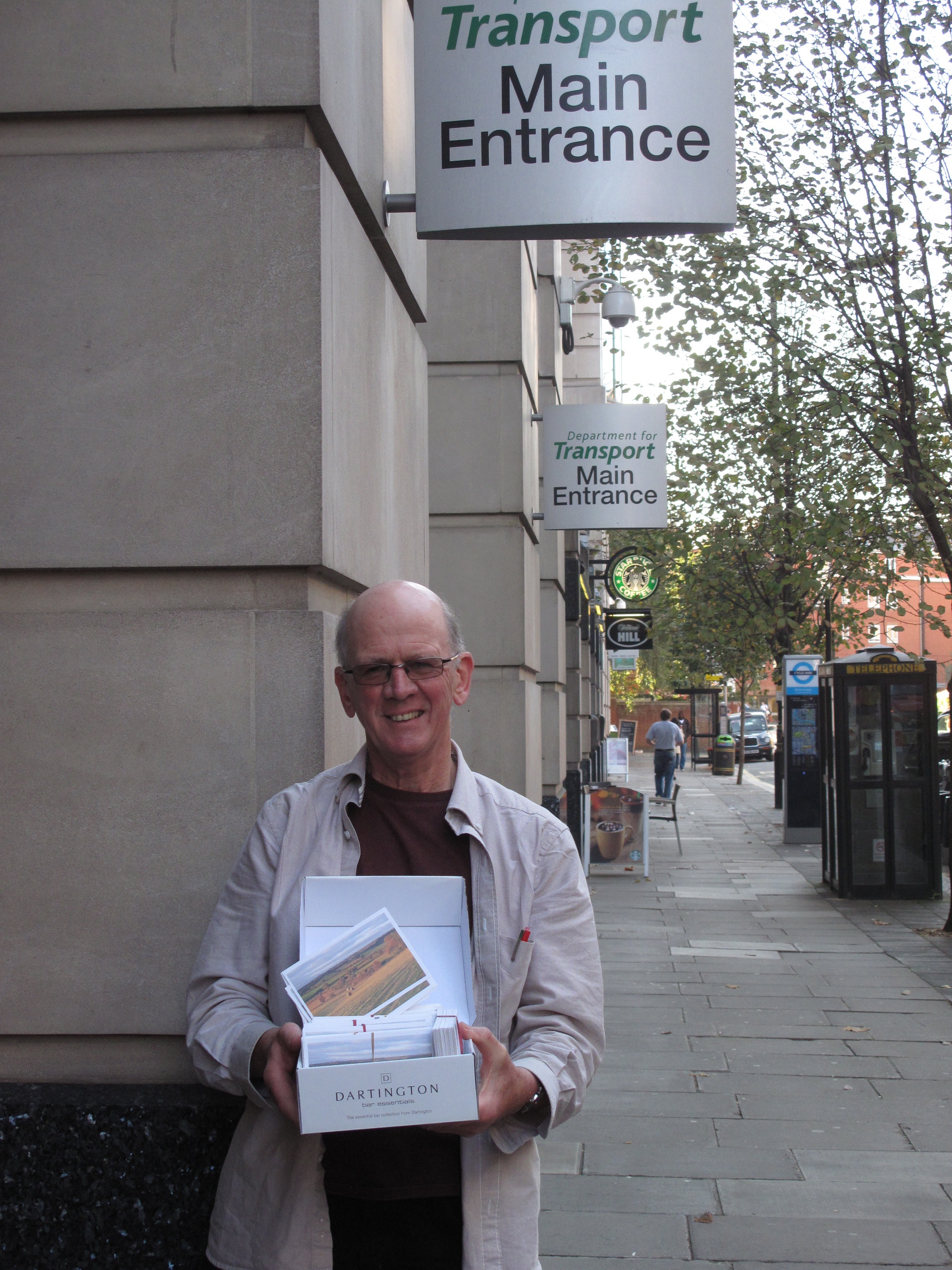
On Friday the 14th October – deadline for submissions to the Department for Transport on the East Sussex County Council ‘Best and Final Funding Bid’ to government for the Bexhill to Hastings Link Road – a box of postcards was delivered to the Department.

In the box, were 630 postcards from local residents, some from other parts of the county, and some from further afield – including from two Dutch tourists visiting Hastings. A further 20 cards had arrived by post. The cards urged Norman Baker, MP, not to grant government funding for the scheme.

Collected in just three weeks following the Rally in the Valley, the cards gave people the opportunity – eagerly grasped – to have their say on the future of their locally cherished place.

In a surprising number of cases, those signing up knew little about the BHLR, a reflection perhaps of a lack of information and consultation. The last consultation, a flawed exercise asking little more than ‘Which route do you want for the road?’, took place in February 2004, eleven and a half years ago. A number of children on the Rally in the Valley weren’t born then.

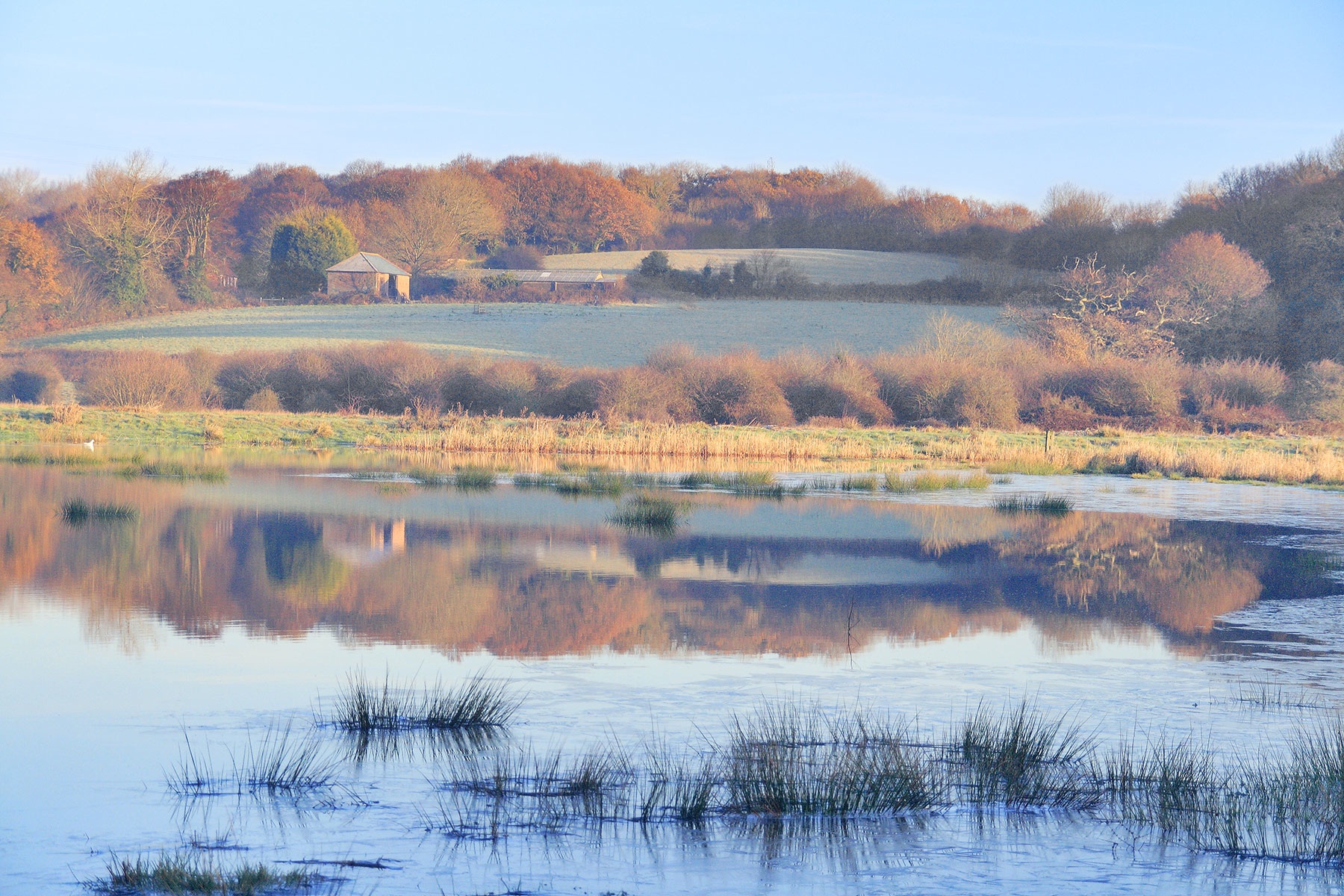
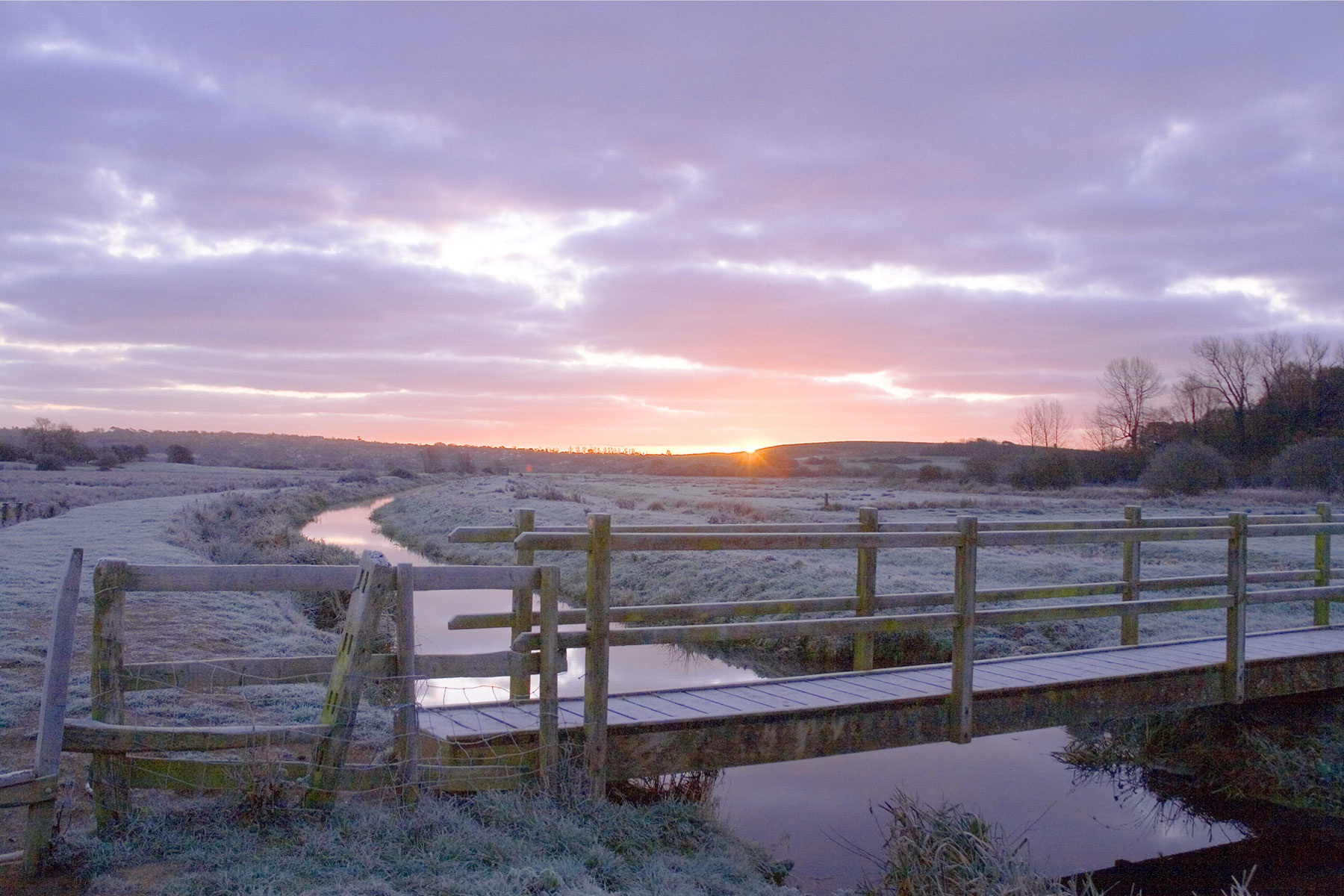
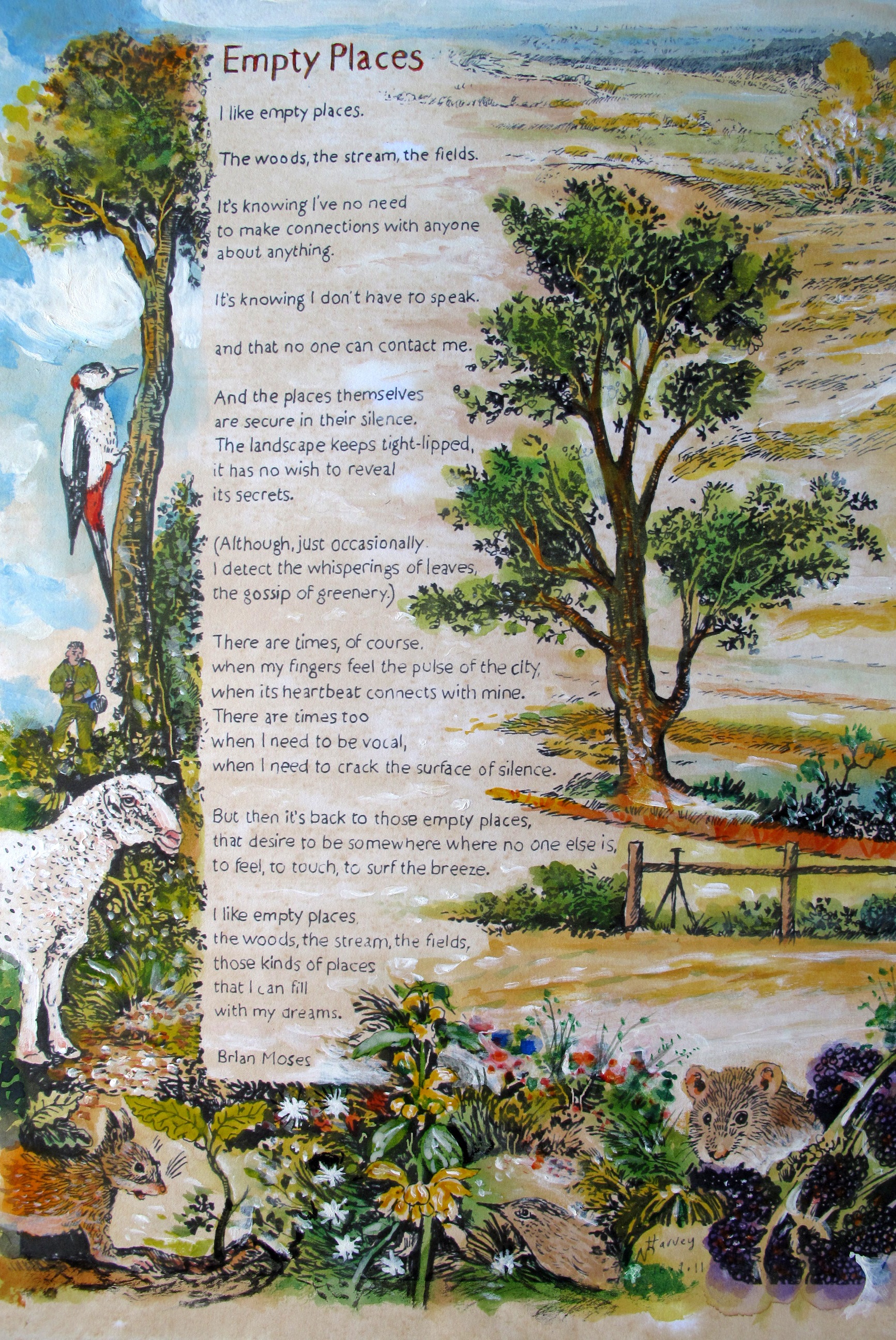
The presentation of the postcards to DfT officials was a cordial affair and they expressed their appreciation of the ‘personal delivery’. They were also presented with photos of the valley in all seasons, including an album originally put together for the 2009 Public Inquiry, and copies of Crowhurst poet Brian Moses’ poem ‘Empty Places’, illustrated by Hastings Artist Nigel Harvey. Importantly, DfT officials have themselves visited Combe Haven.

Of course, many written submissions have also been received by the DfT from Alliance individuals, organisations and Alliance members, and below is the ‘covering’ submission from the Hastings Alliance.

Posted in Uncategorized | 1 Comment

BHLR: Make Your Views Known – Deadline Approaching!

Hundreds of supporters have already made their views known on the BHLR – and if you have not yet done so, it’s not too late.
We remain convinced that the BHLR is the wrong scheme for Bexhill and Hastings, and would damage the local environment and economy and quality of life for all. It offers very poor value for money and would bring few if any benefits. In a period when public funds are scarce, it’s important that they used wisely and are not put at risk with very dubious ventures such as the BHLR.

Letters and e-mails to the minister can still be sent up until the 14th October. Our main concerns haven’t changed and we remind you of these below.

If you have time, please let the minister know your views. Here is a summary of ours:

Issues and failures of greatest concern to the Hastings Alliance:

• Sacrificing a unique asset for residents and visitors of high ecological, landscape and archeological interest – Combe Haven valley – for a road whose need has never been proven;

• Proposing the road without ever properly and fully investigating more sustainable transport and development alternatives;

• Focussing on the BHLR to the exclusion of other, easily deliverable and cheaper improvements;

• Reducing congestion in one location and shifting it to other locations;

• Claiming that the BHLR is essential for housing when it isn’t;

• Claiming that 2,000 jobs will follow the BHLR when there is no evidence that jobs will come but may instead transfer to new business parks from existing town centre locations;

• Promoting carbon emitting ‘car based’ development in a town where many have no car and which undermines sustainable modes of transport;

• Failing to attract any private sector money to pay for BHLR and other works connected to it;

• Using East Sussex County Council funds to pay part of the construction costs of the road ((£29m – £19m more than planned). No private sector contributions;

• Carrying out consultations which misled residents into choosing one road route out of 6 offered – four of which had been rejected already by government, and giving no description at all of alternative transport;

• Ignoring sustainable alternatives for 11 years while pursuing the BHLR at whatever cost in money and time;

You can e-mail your concerns to: development.pool@dft.gsi.gov.uk
You can also write to:
The Rt Hon Norman Baker,MP
Parliamentary Under Secretary of State
Department for Transport
Great Minster House
76 Marsham Street
London
SW1P 4DR

Posted in Uncategorized | Leave a comment

COMBE HAVEN RALLY IN THE VALLEY – A GREAT SUCCESS!

A wonderful sunny day on Saturday 24th September saw almost 100 people of all ages gather in Combe Haven valley for a ramble and picnic to celebrate its beauty – unbelievably and fortunately so close to two major towns.

Banners were raised as a reminder of a very real threat to the valley and its rich mix of plant and animal life. If constructed, the Bexhill to Hastings Link Road (BHLR) would destroy its remarkable tranquillity and degrade habitats and landscape. The road would carry up to 30,000 vehicles a day, shifting congestion around the towns.

Most of those who came walked into the valley from three starting points – Bexhill and Sidley, St Leonards, and Crowhurst. Transport was provided for those unable to walk. A dozen very well behaved dogs found the going easy.

The walk finished at Bynes Farm where farmers Ray and Laura Boggis greeted everyone before the picnic and live music began. Music was provided by popular local band the Cajun Dawgs.

Local poet Brian Moses read a poem inspired by the valley and dedicated to the campaign to save this wonderful asset for future generations to discover and enjoy. All children at the rally received a copy of the poem, beautifully illustrated by local artist Nigel Harvey.

The cost to public purse of the BHLR is officially £85m (£29m to be taken from East Sussex funds, the rest from government funds). Based on recent experience from recently completed similar schemes, costs are expected to increase by anything up to 13%.

Posted in Uncategorized | 1 Comment

EMPTY PLACES. POEM BY BRIAN MOSES, INSPIRED BY COMBE HAVEN. ILLUSTRATED BY NIGEL HARVEY

Inspired by the beauty and tranquillity of Combe Haven.


This poem was presented to children at the ‘Rally in the Valley’ in Combe Haven on Saturday the 24th September, 2011.

Inspired by the beauty and tranquillity of Combe Haven

Posted in Uncategorized | Leave a comment

BHLR – THE SAGA OF A SERIOUSLY FLAWED ROAD SCHEME. READ THE ORIGINAL ALLIANCE OBJECTIONS OF 2004!

This response was written by Alliance member Colin Murray in 2004. The fundamental  objections raised still stand. Take a few minutes (well OK, half an hour) to read this through and you will understand why we feel that no road scheme could be less deserving of the £100m or thereabouts of scarce public funds being sought from government and the residents of East Sussex than this one. It doesn’t deserve a penny.

LTP funding bid for Bexhill to Hastings Link Road
Hastings Alliance response

INTRODUCTION
The Bexhill to Hastings Link Road (BHLR) is a major road scheme proposed by East Sussex County Council (ESCC). In July this year, ESCC submitted a bid for funding for the scheme to the Government as part of its local transport plan annual progress report.
The Hastings Alliance was set up in 2000 to oppose the Hastings bypasses, which were rejected by the Government in July 2001. The Alliance now opposes the Bexhill to Hastings Link Road, which it regards as the son of the rejected Hastings western bypass.
National organisations in the Alliance include CPRE (Campaign to Protect Rural England), Friends of the Earth and Transport 2000. Local members include branches of the national organisations and also the Friends of the Brede Valley, Sussex Wildlife Trust and Wishing Tree Residents Association.
This document is the response of the Hastings Alliance to the BHLR funding bid. The document contains the following sections:
􀂃 Alternative options
􀂃 Environmental impacts
􀂃 Regeneration impacts
􀂃 Traffic impacts
􀂃 Involvement of the statutory environmental bodies
􀂃 Public consultation

ALTERNATIVE OPTIONS
Summary
In developing the BHLR scheme bid, ESCC has not seriously considered alternative options. This is a fundamental flaw. Transport Analysis Guidance (TAG) Unit 1.4 states that “Any major scheme for which the appraisal of alternative options is considered inadequate will not be accepted for funding” (para 2.9.1). We therefore expect the Government not to accept the BHLR.

Detailed response

Government guidance on alternative options
TAG Unit 1.1, quoting the Treasury Green Book, says the purpose of appraisal by the Government is “ensuring that no course of action is adopted without first having the answer to these questions:
• Are there better ways to achieve the objectives?
• Does it provide value for money?”
Clearly answering the first question involves coming up with different ways of achieving objectives and assessing these, and concerning the transport system this is precisely the approach set out on the TAG website. TAG Unit 1.4 covers major schemes in local transport plans and contains clear and strong guidance on the appraisal of alternatives, in paragraphs 1.1.10 and 2.5.3 and section 2.9.
This guidance makes clear:

􀂃 Alternative options must be assessed (2.9.1)
􀂃 A “wide range” of possible options should be considered (1.1.10, 2.9.3)
􀂃 Alternatives must be assessed in detail – an appraisal summary table and worksheets are required for each (2.9.1, 2.9.3, 2.5.3)

Concerning the second point above, the specific guidance on road schemes is as follows:
“For highway schemes there should be consideration of different link/junction standards and other alternatives to address the problems in the area, such as public transport provision, demand management policies, traffic management measures and strategies.” (2.9.2)
Concerning demand management policies, the draft guidance on second LTPs clearly states their potential as an alternative to roadbuilding and their importance to the Government, and provides a list of different measures:
“Local transport authorities should consider how they could manage demand for transport services through policies aimed at bringing about behavioural change. Policies of this kind could, if introduced in the context of a high-quality LTP, prove highly cost-effective and avoid the need to spend larger sums on infrastructure-based solutions [our emphasis].

There is a wide range of possible activities in this area, including road user charging and workplace car parking charging schemes, active management of the availability and cost of car parking and public transport, school and workplace travel planning, personalised marketing, and innovative use of intelligent transport technologies (such as the Transport Direct information service). Demand management measures are central to the Government’s transport strategy [our emphasis]; the Department for Transport will therefore consider authorities’ demand management proposals carefully, as part of LTP assessment.” (Part 2, para 41)

Alternatives to the Bexhill to Hastings Link Road
ESCC covers alternative options in chapter 9 of the BHLR bid main report. It is very clear from this chapter that ESCC has seriously failed to comply with the Government guidance summarised above.
Alternatives to a new road between Bexhill and Hastings are covered in section 9.2 of chapter 9. This section is less than a page long, in a bid submission of nearly 700 pages.
In this section, improving public transport is the only alternative mentioned. Demand management, smart (soft) measures, traffic management, minor road improvements, walking and cycling are all completely ignored (in fact there is not a single reference to demand management or soft measures anywhere in the bid document). And no public transport improvements were actually appraised – we are told “solutions based on improvements to public transport were considered” but it is clear that no proper appraisal – option generation and assessment – was done.

The only appraisal has been of different link road routes. Concerning these, specific guidance was given by the Department for Transport: that “environmentally designated areas, and in particular the Combe Haven SSSI, should not be directly impacted by the scheme” (BHLR report, page 90). Bafflingly this was blatantly ignored by ESCC, who developed four routes crossing the SSSI.

So summing up, ESCC has wasted precious public resources on appraising ruled-out road options while completely failing to appraise non-road options in accordance with guidance.

Some detailed comments on section 9.2 follow.
􀂃 The first sentence is oddly worded but seems to be saying that, as the Hastings and Bexhill Task Force wants the link road, non-road options are off the agenda. This is of course a complete non sequitur. The support of the Task Force or anyone else for the link road in no way obviates the need for a dispassionate appraisal of alternatives, as required by Government guidance. And, who knows, information on alternatives may change the Task Force’s views!

Lastly, for ESCC to portray the Task Force as an independent supporter of the link road is nonsense – ESCC is a key member.

􀂃 The first bullet point says “the development potential in north Bexhill is dependent on the construction of the link road”. However, the Access to Hastings multi-modal study showed that 600 houses could be built at north Bexhill without any new roads and 1660 with just the Bexhill Connection (then called the Bexhill Northern Approach Road) (draft final report, October 2000, pages 147-148). Concerning the proposed business park, we believe this would harm the regeneration of the area – see below. But in any case as alternative ways of providing access have not been properly appraised, the bullet point statement is invalid.

􀂃 The second bullet point concerns rail improvements. It says “such improvements would be at a significant cost”. However, the South Coast multi-modal study gives the capital and running costs of a turn up and go service between Bexhill and Ore with new stations at Glyne Gap and West Marina as £12m and £5m, which seem a lot less significant than the cost of the BHLR (£47m excluding optimism bias). The bullet point is also pessimistic about funding, while failing to mention several potential sources: congestion and parking charges (which would also encourage modal shift); the DfT LTP budget, as explained in the draft guidance on second LTPs (Part 4, paras 43-44); and the new DfT Transport Innovation Fund (ibid, Part 2, para 36). The bullet point concludes by saying that modal shift from car to rail would be small and so “the possibility of significantly improving bus reliability through reduced road congestion also limited”. While ESCC should prove this statement, we agree improving rail alone is unlikely to be enough. Packages of different measures should be appraised, including demand management.

􀂃 The third bullet point concerns bus improvements. It says congestion on the A259 affects the reliability of bus services and that “there is little scope to make an improvement along this important road that would, in itself, lead to such an improvement in reliability that increased patronage and modal shift occurred”. The Access to Hastings multi-modal study identified several possible minor improvements to the A259, including to Glyne Gap roundabout; we think any others should be identified and all properly assessed. But as with rail improvements, online road improvements alone are unlikely to be the solution. Packages of different measures should be appraised, including demand management. Concerning new bus services, the bullet point is pessimistic about patronage. But again the key is not seeing measures in isolation. New bus services should be tested in combination with measures to incentivise their use and also pay for services which are uncommercial but value for money.

􀂃 Section 9.2 concludes by saying the link road would reduce general traffic on the A259 Bexhill Road and so help bus journeys directly and through making space for bus priority measures. Our response is so would other measures, and ESCC should have appraised these.

The way forward
Our preferred way forward is for the Government to finally rule out roadbuilding across Combe Haven valley for environmental reasons (see below) and invite ESCC to develop alternative solutions to Hastings’ transport problems. But at the least the Government should require the proper investigation of alternatives, fully complying with its own guidance, before making a decision on the BHLR.
We believe an optimal package of the following measures would perform very well in terms of both value for money and affordability:
􀂃 Congestion charging or workplace parking charges
􀂃 Public parking measures
􀂃 School and workplace travel plans
􀂃 Personalised travel planning
􀂃 Minor online improvements to the A259
􀂃 Improved bus services, particularly along the A259
􀂃 New stations and a turn up and go train service between Bexhill and Ore

It should be noted that none of the many studies of transport in Hastings and Bexhill has properly developed and appraised packages of this sort. And this is certainly not because these measures have already been implemented in the area – the scope for introducing demand management and smart measures in particular remains huge (eg not even the largest public sector organisations have workplace travel plans and there are no school travel plans).
The above package plus the Bexhill Connection could also be tested. As already mentioned, this road alone would allow 1660 houses to be built at north Bexhill.

ENVIRONMENTAL IMPACTS

Summary
Government policy is that “for all environmentally sensitive areas or sites there will be a strong presumption against new or expanded transport infrastructure which would significantly affect such sites or important species, habitats or landscapes” (1998 and 2004 transport white papers).
The proposed Bexhill to Hastings Link Road would significantly harm the very special Combe Haven area – its landscape, heritage and wildlife – and we urge the Government to apply the above policy and reject it.
The BHLR would also:

􀂃 fail to reduce transport noise;
􀂃 worsen air quality for many residents;
􀂃 harm the townscape; and
􀂃 increase emissions of the main gas responsible for climate change.

So the environmental case for rejecting the scheme is very strong indeed.
The way forward is for East Sussex County Council to develop the best sustainable solution to Hastings’ transport problems.

Introduction
The Hastings Alliance supports the sustainable regeneration of Hastings and Bexhill, ie actions delivering economic, social and/or environmental benefits with no significant disbenefits. Our main concern is that regeneration is environmentally sustainable, ie delivers benefits while avoiding any significant environmental disbenefits.
In our view the BHLR would be environmentally unsustainable, mainly due to its impacts on the rural environment, but also its urban and global impacts. We expand on this below.

Rural impacts
Hastings Alliance position
For us the countryside between Bexhill and Hastings – the Combe Haven area – is very special.
We are referring here to the main Combe Haven valley and northern Powdermill and Watermill valleys and ridges leading to it, which form an unbroken whole – we reject ESCC’s conceptual splitting of the area (to try to hide the actual splitting it is proposing – see the next section).
Many factors contribute to this specialness – summarising these, Combe Haven is beautiful, tranquil, heritage-rich, wildlife-rich countryside.
In calling Combe Haven special, we are just reflecting the general view, as the following quotes illustrate:

􀂃 East Sussex County Council: “The Combe Haven Valley is probably the finest medium-sized valley in East Sussex, outside of areas of outstanding natural beauty. It is set within a high-quality landscape of historic and wildlife interest and contains peaceful and remote countryside.” (report on BHLR for ESCC Cabinet meeting on 8 June 2004, appendix 5)
􀂃 Rother District Council: “Extensive views are obtained across the [Combe Haven] Valley from many vantage points and in particular the views looking north from Bexhill across the Combe Haven river are quite unspoilt and the landscape character is equal to the best of the High Weald Area of Outstanding Natural Beauty.” (Rother District Local Plan, Initial Draft Deposit, para 3.86)
􀂃 Countryside Agency: “The whole area of search for the [BHLR] is very sensitive environmentally. It has high landscape quality and is rich in biodiversity.” (letter to ESCC, 9 June 2004)
􀂃 English Heritage: “English Heritage concurs with CBA’s conclusion that the [BHLR] study area contains a rich and diverse series of historic environment features, comprising a combination of archaeological and palaeo-environmental deposits, historic landscapes and built heritage features. In particular, we agree that the potential for the preservation of palaeo-environmental evidence is very high within the low-lying areas of the Combe Valley. The likelihood is that this could be of regional or national importance, while the higher ground extending into the valley also has a high potential archaeological interest.” (letter to ESCC, 10 May 2004)

The area’s specialness is also confirmed by how much is officially recognised – there are the large Combe Haven Site of Special Scientific Interest and other designated wildlife areas, several ancient woods and many listed and historic buildings.
Our position is that it is not possible to build a major road through the Combe Haven area without destroying its specialness. As advocates of sustainable transport, we therefore opposed the Bexhill and Hastings western bypass and now oppose its son, the Bexhill to Hastings Link Road. Any benefits of a new road should be delivered in other (sustainable) ways.

A major strength of Hastings and Bexhill is the tremendous environmental (and hence economic) assets on their doorstep. The Combe Haven area is one of these. But the area is underused by local people and visitors (and so undervalued), for reasons including poor accessibility within the area and no publicity. We therefore support the proposed country park, which should see these problems addressed. A fraction of the effort devoted to the bypasses and BHLR by the local authorities would deliver the park, which should have happened years ago.
It is important to note that implementation of the country park in no way depends on the BHLR and that the BHLR would indisputably damage the park. The Hastings and Bexhill Task Force’s comment that the BHLR “would form a useful northern boundary” to the park is laughable (main bid document, page 71).

Response to environmental assessment
Our position is that it is not possible to build a major road through the Combe Haven area without destroying its specialness. We think the assessment of BHLR routes, including the preferred route, proves us right.
The Government’s environmental objective for transport is “to protect the built and natural environment”. Concerning the BHLR’s impacts on Combe Haven, the key sub-objectives are

􀂃 “to protect and enhance the landscape”
􀂃 “to protect the heritage of historic resources”
􀂃 “to support biodiversity”

The assessment of the BHLR preferred route option against these shows that the landscape, historic heritage and biodiversity of Combe Haven would all be significantly damaged (as a “moderate adverse” impact is a significantly harmful one).
And in our view the damage to the Combe Haven landscape has been underestimated by ESCC – particularly as they, the scheme promoter, carried out the landscape appraisal themselves, optimism bias was inevitable (“Optimism bias is the tendency of appraisers to underestimate costs and to overestimate benefits” (TAG Unit 1.4)).
The Hastings Alliance has excellent direct knowledge of the Combe Haven area. On this basis, we are sure the BHLR preferred route option would seriously damage the landscape. So we think ESCC’s conclusion that the damage might only be slight is a ludicrous underestimate.

Our point here is supported by the South Coast multi-modal study consultants. They assessed a very similar scheme to the BHLR preferred route option – a single carriageway just north of the Combe Haven SSSI (Hastings Strategy Development Plan, paras 3.3.2 and 5.6.1). According to the appraisal summary table, the scheme would have a “large negative impact” on the landscape (ibid, page 25).

The BHLR historic heritage assessment also supports us. The worksheet for the preferred route option sets out the impacts on the “historic landscape” (as well as archaeology and the built heritage). These are consistently assessed as “moderate adverse”, ie significantly damaging.
An important point made by the historic heritage worksheet is that the environmental mitigation proposed by ESCC would itself be damaging: “The proposed tree-planting would create new linear features in the landscape affecting the grain and structure of the historic landscape”.

We referred in the previous section to ESCC’s conceptual splitting of the Combe Haven area. This splitting is the basis for their underestimation of landscape impacts.
In the landscape worksheet, appraisal summary table and main bid document (page 44), ESCC treat the Combe Haven area as two separate areas: (1) the main Combe Haven valley, where the SSSI is; and (2) the western Combe Haven valley and northern Watermill and Powdermill valleys and ridges leading to the main valley. The BHLR preferred route option would go through the latter.
This splitting of the area allows ESCC to make the following impressive-sounding claims: “the Preferred Route will retain the overall integrity of the Combe Haven valley as a tract of landscape of county/regional importance” (main report); “the Preferred Route minimises significant harm to the landscape in the Combe Haven valley” (AST). The reader may think these claims relate to the area through which the road would go. In fact, they are about area 1 above. Even if the reader realises this, they may not notice that the report and AST give absolutely no information about the impact on area 2. And without this information, the reader is less likely to question the basic approach, which is to protect area 1 by sacrificing area 2.
The landscape worksheet does refer to the impact of the BHLR on area 2 – this would be “significant”.

We completely reject ESCC’s approach, for three main reasons:

􀂃 Areas 1 and 2 are both special – we should protect both, not try to save one at the expense of the other
􀂃 Areas 1 and 2 form a single greater landscape, and it is precisely the different contribution of each that makes the whole so very special – ruining 2 (or 1) would ruin the whole

􀂃 Area 1, the main Combe Haven valley, would still suffer significant harm, as even ESCC admits: “There will be a loss of remoteness and tranquillity in the countryside section [of the BHLR], which will endure” (landscape worksheet)
To sum up, the landscape assessment was carried out by the scheme promoter and is biased as a result. In the worksheet and appraisal summary table, ESCC is clearly trying to establish that the BHLR preferred route option is acceptable in landscape terms.

Fundamental problems with the scheme that we refer to above are ignored or played down.

The historic heritage and biodiversity assessments were carried out by outside organisations and seem better, although clearly the latter is very basic. But we are concerned that the AST entries inadequately reflect the worksheets. Some examples of this are:

􀂃 Historic heritage: The worksheet says: “The route would have a large adverse impact on the setting of Adam’s Farm and adversely affect the setting of three other Grade II listed buildings and two historic buildings”. The AST says: “The Preferred Route would impact on the setting of the listed building at Upper Wilting Farm and on Adam’s Farm (Grade II)”.

􀂃 Biodiversity: The worksheet says the BHLR would have a “moderate adverse” – significantly harmful – impact on the Bexhill disused railway site of nature conservation importance. The AST does not mention the SNCI.

􀂃 Biodiversity: The worksheet says the BHLR would have a moderate adverse impact on each of three protected species – badgers, bats and dormice. The AST makes no mention of this.

􀂃 Biodiversity: The worksheet says: “Further survey and research may change the overall assessment score”. The AST makes no mention of this.
We are also concerned that the worksheet and AST say the overall impact of the BHLR on biodiversity would be “moderate to slight adverse”. In line with TAG Unit 3.3.6, section 1.5, the overall assessment should clearly be “moderate adverse”.

Government policy and action
Government policy is that “for all environmentally sensitive areas or sites there will be a strong presumption against new or expanded transport infrastructure which would significantly affect such sites or important species, habitats or landscapes”. This policy was first set out in the 1998 transport white paper and has been repeatedly reaffirmed, most recently in the 2004 transport white paper (paras 10.28 and 10.29). Importantly, the policy does not only apply to designated areas, as the decisions on the road schemes recommended by the South Coast multi-modal study show.
As a result of this policy, the Government rejected the Bexhill and Hastings western bypass, explicitly citing the damage that would be done to Combe Haven. The proposed BHLR is not identical to the rejected bypass scheme. However, the link road would undoubtedly significantly harm the very special Combe Haven area – its landscape, heritage and wildlife – and we urge the Government to again apply the above policy and reject it.

Urban impacts
Noise
The BHLR noise assessment is concerned with the number of residents in “front-line” houses in the Hastings and Bexhill area who would be “annoyed” (= “highly bothered”) by road traffic noise in 2023 (the design year). The assessment shows that more residents would be annoyed by traffic noise with the BHLR (1087) than without it (1062).
The Government’s objective is to reduce transport noise. Clearly the BHLR would completely fail to do this.

We think alternative options to deliver the BHLR local objectives (main bid document, table 2.1) would also perform well against the noise objective.

Local air quality
Clearly the main local air quality problem in Hastings and Bexhill is particulate emissions at Glyne Gap. In 2003 Hastings Borough Council declared an air quality management area for PM10 there, along the A259.
Strangely, the sources of the PM10 are not stated in the BHLR bid submission. The local transport plan annual progress report says these include road traffic but that “there is also a particularly high background level of PM10 pollutants in this location arising from sea salt and a number of other factors, which need to be taken into consideration before an action plan to tackle the problem is developed” (page 26).

With the BHLR, “the need for the AQMA along the A259 could be removed” (appraisal summary table), due to traffic shifting from the A259 to the new road. The Hastings Alliance of course agrees that the PM10 problem at Glyne Gap should be tackled. But looking at the AST, we are not impressed by the overall performance of the BHLR against the local air quality objective, for the following reasons:

􀂃 The overall assessment scores for both PM10 and NO2 are low
􀂃 Approximately 37% of houses would experience worse air quality
􀂃 Approximately 44% of road links would have higher levels of both PM10 and NO2

We think alternative options to deliver the BHLR local objectives (main bid document, table 2.1) would perform better against the local air quality objective.

Townscape
Like the BHLR landscape assessment, the townscape assessment was carried out by ESCC themselves and is biased as a result. So ESCC’s conclusion that the BHLR would be slightly beneficial should be rejected. We think the BHLR would harm the townscape. We note that the South Coast multi-modal study consultants concluded a scheme very like the BHLR preferred option would have a “moderate negative impact” (Hastings Strategy Development Plan, page 25).
We think alternative options to deliver the BHLR local objectives (main bid document, table 2.1) would also perform well against the townscape objective.
ESCC’s bias is clear from the following – we show they have ignored obvious disbenefits of the BHLR and obvious problems with assumptions.
ESCC claims the BHLR would have a “slight beneficial” impact on the townscape of Hastings and Bexhill. Two key impacts contributing to this overall assessment are that the scheme would “enable significant relief of traffic in local communities in the towns and Crowhurst village” and “facilitate major new townscape development in north Bexhill” (appraisal summary table). However, the inclusion of these impacts in the assessment involves basic flaws, as explained below.
Concerning traffic and townscape, the townscape worksheet repeatedly makes the point that the townscape in some areas – London Road in Bexhill, Bulverhythe and Harley Shute in Hastings, and Crowhurst village – would be improved by the BHLR, as it would attract traffic away from them.
However, the worksheet makes no mention of those roads where the BHLR would cause significant traffic increases and so damage the townscape. These roads are identified in section 4.2 of the main bid document, and include A21 The Ridge West, B2093 The Ridge, B2092 Queensway, B2092 Crowhurst Road, Gillsmans Hill and Napier Road.
Concerning new development and townscape, ESCC is arguing that (1) the BHLR would facilitate new development and (2) therefore new townscapes which (3) would be of good quality and so (4) enhance the Hastings and Bexhill townscape. The new development would be housing and business uses on greenfield sites in north Bexhill, to which the BHLR would provide access.

We accept the second point above, because new development will inevitably generate new townscapes, but not the others, as they involve the following crucial but very unsafe assumptions:
– that providing access to the land will result in the development occurring
– that the new development is bound to generate good rather than poor-quality townscapes
– that the existing urban areas will not suffer townscape disbenefits, eg through the relocation of residents and businesses to the new sites

Two other problems with ESCC’s approach here are that the “facilitates new townscape development” claim crops up repeatedly in the townscape worksheet, ie has been multiple-counted, and that the new development would certainly have landscape disbenefits, which ESCC has completely ignored.

Finally, we are concerned that in making the “facilitates new townscape development” claim ESCC has both gone beyond TAG Unit 3.3.8 and counted an impact also counted in the wider economic impacts and land-use policy assessments.

Global impacts
The Government is committed to tackling climate change – “the world’s greatest environmental challenge” (the Prime Minister in September).
Climate change or global warming is of course caused by the carbon dioxide and other greenhouse gases arising from human activities. The Government has a target under the Kyoto Protocol to cut greenhouse gas emissions by 12.5% below 1990 levels by 2008-12 and domestic target to cut CO2 emissions by 20% below 1990 levels by 2010.
Transport is a major source of greenhouse gas emissions and so the Department for Transport public service agreement includes helping to achieve the two targets above. In line with this, the New Approach to Appraisal requires assessment of transport options against the objective “to reduce greenhouse gases”.
The draft guidance on second local transport plans says local authorities should consider climate change “in all their LTP policy and scheme proposals” (Part 3, para 78). It goes on to say (paras 92 and 93):

“Road transport is estimated to produce about 20% of total UK CO2 emissions and is the fastest-growing source of CO2; measures to reduce emissions from transport are therefore vital if the UK is to meet its climate change objectives.
“LTPs should take account of the UK’s CO2 targets and should complement the wider aims of Local Agenda 21. Strategies for reducing congestion and improving air quality, in particular, will themselves contribute to CO2 targets. The Department is however also keen for authorities to lead by example and demonstrate through LTPs how wider local transport policies would contribute to the achievement of CO2 targets.”

The assessment of the BHLR shows that in the assumed opening year, 2008, the preferred route option would increase local road transport CO2 emissions by 7% above 2004 levels.
The BHLR main report wrongly states that, without the BHLR, CO2 levels in 2008 would be 5% higher than in 2004 (page 43) – it can be calculated from the worksheet that the correct figure is 2%. So in 2008, there would be 5% more CO2 with the scheme than without it.

Apart from the wrong information just referred to, the main report adds nothing to the information on greenhouse gases in the appraisal summary table. There is no comment on the significance of the results. Neither climate change nor the Government’s CO2 targets are referred to. In the environment section of the executive summary (pages xv-xvi), not even the greenhouse gas assessment is referred to. The impression given is that, for ESCC, the performance of the BHLR in relation to climate change is simply not an issue.
In our view, the Government should only consider funding transport measures which would help deliver its CO2 targets. As the BHLR would clearly not do this, we urge the Government to reject it.

We think alternative options to deliver the BHLR local objectives (main bid document, table 2.1) would also perform well against the greenhouse gases objective.

REGENERATION IMPACTS

The Hastings Alliance thinks the BHLR should be rejected on environmental grounds (see above). But ESCC is claiming the scheme is essential to the regeneration of Hastings and Bexhill, and we know the Government will consider this. So an Alliance member, with the financial help of other members, engaged the consultancy Urban & Regional Policy to review the claim. The report of Urban & Regional Policy is attached. We ask the Government to take the report into account as it assesses the BHLR bid.
A key paragraph in the report is 3.6:

“The main reason put forward for the regeneration benefit of the BHLR is that it is essential to the development of the North Bexhill Business Park, and this would provide around 2000 jobs. This is only superficially convincing, for the following reasons:

a) The large-scale, high-spec accommodation specified in the Rother Local Plan (necessary to justify greenfield development in this sensitive location) would only be implemented by inward investment from elsewhere in the region, country or Europe. The BHLR does not improve regional accessibility, only local access. As pointed out by both the Access to Hastings multi-modal study and DTZ Pieda, even with good local access Hastings-Bexhill is not a competitive location for such projects compared with other parts of the South East, either in terms of regional accessibility or skills in the labour market. This point is not rebutted by the BHLR Economic Impact Report – see Appendix 2.

b) In any case, the type of jobs provided by such uses would not respond to the skills present in the local labour market. This is not to say that higher-skilled, better-paid jobs should not be sought for Hastings-Bexhill: but if local people are to benefit, skills and opportunities must develop in tandem, in a more organic fashion. Large-scale imports, driven by development imperatives, would merely generate in-commuting from further afield (and mainly by car).

c) If the BHLR is provided and substantial (public) resources also expended on site assembly, preparation and enticement of investors, weak external demand will lead to pressure to develop piecemeal in response to more local demand. In this case the effect will be simply to displace to the Business Park demand which could have been met by the wide range of existing sites within the urban areas, with no net gain of jobs. The quality aspirations of the Local Plan would be unlikely to be met, but the level of car-dependency would be increased.”
The report concludes that the BHLR and associated business park “are at best irrelevant and at worst highly damaging” to the regeneration of the area.

TRAFFIC IMPACTS

Traffic and congestion impacts
In the BHLR main report, section 2.1.3 is about Bexhill and Hastings’ transport problems. According to this, there is really only one – high traffic levels and congestion on the A259 and Bexhill Road in particular. The other problems referred to (mostly also on the A259) all stem from these.
ESCC’s proposed solution to this problem is of course the BHLR. And the assessment of the BHLR shows it would reduce traffic and congestion on the A259 (at least for a while).
However, the assessment also shows that traffic and congestion on other roads in the towns would get significantly worse – or in other words that the BHLR would simply shift traffic and congestion around.
This important information is in the BHLR main report, but buried away – to our knowledge, ESCC has never drawn attention to it. We set out the details briefly below.

Traffic assessment
The results of the BHLR traffic assessment are set out in section 4.2 of the main bid document. As expected, the BHLR would result in less traffic on the A259 and particularly the Bexhill Road in both forecast years – 2008 (the assumed scheme opening year) and 2023 (design year).
The section also states that “traffic is increased significantly” at other “key points in the network” – all the roads in the table below plus St Helen’s Road (north).
The table shows the percentage increases in 2-way vehicle flows that would occur if the BHLR preferred route option were built. The increases relate to flows in 2008 and 2023 without the BHLR (not current flows). The percentages are copied from figures 4.1 and 4.2 in the main bid document.

TRAFFIC INCREASES WITH THE BEXHILL TO HASTINGS LINK ROAD
2008 (opening year)
2023 (design year)
AM peak hour
PM peak hour
AM peak hour
PM peak hour
A2100 The Ridge West
+ 29%
+ 40%
+ 22%
+ 35%
B2093 The Ridge
+ 26%
+ 23%
+ 16%
+ 20%
B2092 Queensway
+ 35%
+ 91%
+ 24%
+ 78%
B2092 Crowhurst Road
+ 2%
+ 52%
+ 7%
+ 51%
Gillsman’s Hill
+ 22%
+ 30%
+ 26%
+ 38%
Napier Road
+ 57%
+ 48%
+ 66%
+ 43%

Congestion assessment
As required by the Government, ESCC has assessed the contribution of the BHLR to the achievement of the transport 10-year plan targets. The results are set out in table 6.2 of the main bid document.
One of the eight targets is “to reduce road congestion on the inter-urban network and in large urban areas below current levels by 2010”. Assessment of the BHLR against this target shows the following:

In 2023 with the BHLR,
􀂃 congestion on the A259 in Hastings and Bexhill would be 17% less than in 2003
􀂃 congestion on all other roads in the area would be 39% worse than in 2003
􀂃 congestion on all other roads would be 25% worse than in 2023 without the BHLR

Impact on journey time reliability
As required by the Government, ESCC has assessed the impact of the BHLR on the reliability of road journey times. For private road users, the reliability of a journey time refers to how much the average journey time varies unpredictably. Road users often say they would rather have more reliable journey times than quicker ones.
The BHLR appraisal summary table states that in 2008 the scheme would result in a “Slight improvement to travel reliability on the local road network. The improvement will result from the redistribution of traffic following the opening of the Link Road and the subsequent congestion relief on the main existing roads in the area.”
So looking at the whole road network, the BHLR would hardly improve reliability. For us this finding is more evidence that the traffic benefits of the BHLR are largely cancelled out by the disbenefits.

The way forward on congestion
ESCC’s own assessment of the BHLR shows it is a poor solution to congestion in Hastings and Bexhill. We are sure a better solution could be developed based on managing demand, which would reduce congestion on the A259 without increasing it on other roads.
The draft guidance on second local transport plans states as follows on tackling congestion:
“The causes, nature and patterns of congestion are different in every area, and there is no single solution to congestion. The right balance between demand-side solutions (eg road pricing / congestion charging, parking pricing and restraints, travel planning, provision of services in a way that reduces demand for travel) and supply-side solutions (eg intelligent transport systems, other traffic management measures, public transport support) will be different from area to area. But LTPs should provide evidence that authorities have considered and assessed the potential of all parts of the toolkit – not just capital projects – and an assessment of what the impact of these measures will be.” (Part 3, para 13)
The way forward in Hastings and Bexhill is for ESCC to follow this guidance.

Impacts on non-car modes
The car and non-car modes are in competition with each other and so providing the BHLR, which mainly helps the former, would undermine the latter.
The BHLR bid submission should include a proper assessment of the impact of the BHLR on the use of existing and proposed public transport services and walking and cycling facilities.
But the main report merely describes proposed public transport, walking and cycling schemes (in sections 3.1 and 3.3) – no information is provided on outcomes, ie the impact of the BHLR on modal shares.

The Access to Hastings multi-modal study showed the Hastings bypasses would undermine the proposed metro rail service between Bexhill and Ore (referred to in section 3.3), so the issue we are raising here is very real.

Comments on traffic impacts by Urban & Regional Policy
The report by consultancy Urban & Regional Policy submitted with this response also contains comments on the traffic impacts of the BHLR. These are in appendix 2 of the report.

INVOLVEMENT OF STATUTORY ENVIRONMENTAL BODIES
In the first section above, we highlight the key flaw in the process of developing the BHLR scheme bid – alternative options were not properly considered. As we say, we expect this flaw to result in the Government not accepting the BHLR.

In this section and the next, we highlight flaws in the narrow process ESCC did carry out – deciding on their preferred route for the BHLR across Combe Haven. These flaws are of less concern than failing to appraise alternatives but still serious.

Concerning the involvement of the statutory environmental bodies, ESCC failed to work “closely” with the SEBs on the BHLR as requested by the Government in its response to the South Coast multi-modal study. The clearest evidence for this is that ESCC developed six alternative road routes for public consultation of which four were unacceptable to the SEBs.

The BHLR routes for public consultation are called the red, blue, brown, orange, purple and pink routes. The SEBs’ formal responses to these routes are included in appendix G of the bid submission. It can be seen from these that all four SEBs rule out the orange, purple and pink routes, and that English Nature and the Environment Agency also rule out the brown route. A main factor is that all these routes cross Combe Haven Site of Special Scientific Interest.
So why did ESCC carry out public consultation on four BHLR routes which are non-starters for the SEBs? Either ESCC did not know the SEBs’ views before the consultation (in February) or did know them and ignored them – whichever is true, ESCC was certainly not working closely with the SEBs.

It seems from English Nature’s response that ESCC did know the SEBs’ views beforehand:
“Our initial response to the options was laid out in the email of 15 January 2004 and this letter is to mainly confirm our position. Therefore, our comments are largely the same.”
English Nature goes on to say:
“We strongly believe that the study should not be re-examining decisions already taken on the principle and nature of the proposed scheme. We would argue that twice already the Secretary of State has quite clearly not accepted proposals for a dual carriageway and a new road across Combe Haven SSSI.”
Presumably English Nature also said the above on 15 January.

Of course, whatever the SEBs’ views, ESCC should not have developed routes across Combe Haven SSSI, as the Department for Transport told them not to (BHLR main report, page 90).
It can also be seen from the SEBs’ formal responses to the BHLR consultation routes that ESCC did not give the SEBs the results of the relevant environmental assessments when asking them to respond (in February). Reports on the historic heritage assessment at least were available in February but only provided to English Heritage in April and at EH’s request. This is further clear evidence of ESCC’s failure to work closely with the SEBs. The outcome was that three SEBs responded to the consultation routes without any detailed environmental assessment information on them and at no stage commented on the quality of the relevant environmental assessment.

PUBLIC CONSULTATION
The BHLR public consultation was riddled with major and minor flaws, and only a small unrepresentative group responded to the (flawed) consultation document. In our view the exercise was worthless and should be disregarded by the Government.

The most fundamental flaw was that no non-road alternatives were presented to the public. The next biggest flaw was that four of the six road routes presented had already been ruled out by the Department for Transport and statutory environmental bodies. The consultation document of course reflects these flaws but in addition is biased and misleading about the road scheme. Finally, the consultation period was too short.
Below are specific comments on the consultation document and consultation period and also the consultation responses.

Consultation document
Title: The consultation document is called “Bexhill and Hastings Future Travel Options” with the sub-title “Your 4-page guide to transport choices”. As the only options/choices are different BHLR routes, the document is immediately highly misleading.

Leading article (on front page):
􀂃 The headline is “Transport links around Bexhill and Hastings need improvement” rather than, say, “Transport around Bexhill and Hastings needs improvement” or “Travel around Bexhill and Hastings needs improvement” or “Accessibility around Bexhill and Hastings needs improvement”. The focus is immediately on road infrastructure.
􀂃 The article states emphatically that “Doing nothing is not an option”. The misleading implication is that the only alternative to the BHLR is doing nothing, ie that there are no non-road alternatives.
􀂃 The article states that ESCC “worked closely” with the statutory environmental bodies to develop the BHLR route options. As we have shown above, this is not true.
Second article on front page:
􀂃 The article sets out the “common benefits” of the BHLR route options but completely ignores the common disbenefits.
􀂃 Concerning economic benefits, the article is grossly misleading in implying that the BHLR is sure to result in new development which is sure to result in “much-needed investment and economic activity”, “new jobs” and “increased training opportunities”.
􀂃 Concerning environmental impacts, the article gives the highly inaccurate message that the BHLR would help the environment without harming it. This is done by only referring to benefits in the article – better air quality – and having a prominent quote from the Hastings MP alongside that the BHLR will help the towns “without cost to the surrounding countryside”.
􀂃 Concerning traffic and congestion, the article states the BHLR would cut these on the A259 but makes no mention of the many roads where they would be increased.
􀂃 The article states the BHLR “will be complemented” by improvements to the non-car modes. This is misleadingly definite, particularly in relation to “new trains and stations” and “more [train] services”, and completely denies the reality that the car and other modes are in competition – the BHLR would undermine these “complementary” improvements.
Detailed information about BHLR routes (middle pages):
􀂃 ESCC includes information on four routes already ruled out on environmental grounds – why? We think to create the illusion of choice and to encourage acceptance of the other two as less bad in comparison.
􀂃 The map and text assume far too much local and technical knowledge on the part of the reader, and fail to give comprehensive, precise and clear information on environmental impacts.
Questionnaire (on back page):
􀂃 The basic problem with the questionnaire was inevitable – it only asks about different road routes. However, following on from question 2 – “If you do NOT support the development of a new link road, please tick this box” – people could at least have been asked about the alternative measures they do support, with a list of these provided (including demand management measures).
􀂃 Also following on from question 2, people could have been asked why they don’t support a new road.

Consultation period
The Government’s “Code of Practice on Consultation” was published in January 2004. The introduction states that “local authorities are encouraged to follow this code”. It sets out six consultation criteria, including the following:
“Consult widely throughout the process, allowing a minimum of 12 weeks for written consultation at least once during the development of the policy.”
The BHLR consultation document was published in February 2004 and asks people to respond by 12 March, ie the BHLR consultation period was less than six weeks. So ESCC has seriously breached the Government’s code.

Consultation responses
As the public consultation on the BHLR was so flawed, the response to it is of little significance. However, we make some points below anyway. Our information sources are the BHLR consultation “Raw Data Report” published by ESCC and ONS Census 2001.
How many responded: ESCC delivered consultation documents – the 4-page “newspaper” – to about 65,000 households in Bexhill, Hastings and Crowhurst (BHLR main report, page 69). In response they received 1425 questionnaires, ie just 2% of households responded. In addition, 1133 people attending the mobile exhibition filled in questionnaires, making the total received 2558. In terms of the population of Hastings and Bexhill, this is a 2% response rate.

Who responded: In terms of age, gender and car ownership, the respondents were unrepresentative of Hastings and Bexhill people:

􀂃 Age: 60% of the respondents were 55 or older, compared to 28% of the Hastings population and 46% of the Bexhill population
􀂃 Gender: 59% of the respondents were male, compared to 48% of the Hastings population and 45% of the Bexhill population
􀂃 Car ownership: 88% of the respondents were car owners, compared to 66% of Hastings households and 73% of Bexhill households

Support for BHLR: The consultation questionnaire asks people to tick a box “if you do NOT support the development of a new link road”. 419 respondents ticked the box, and so by implication the remainder – 2139 or 84% – support a new road. However, this response says nothing about how much of a priority a new road is for supporters. Question 10 asks “where you would most like to see future investment in local transport”. For more than half the respondents – 52% – investment in the non-car modes is the priority (the other 48% chose “roads”).

Colin Murray, Hastings Alliance
E-mail colmurray@onetel.com, phone 01293 883015
10 November 2004

Posted in Uncategorized | Leave a comment

RALLY IN THE VALLEY – COMBE HAVEN EVENT

Saturday the 24th September will give everyone who cares about the valley’s future a chance to get together to celebrate its beauty, and to let local and national politicians know that the unnecessary wrecking of the valley by construction of a major road with its daily tides of thousands of vehicles will not be tolerated. Join us for the event – details of which are contained in the press release below, and in the public transport section which follows:

HASTINGS ALLIANCE
for sustainable transport solutions

Court Lodge Oast
Udimore, East Sussex
TN33 6BB
13th September 2011
01424 883319/01323 646866

PRESS RELEASE – IMMEDIATE
RALLY IN THE VALLEY – CELEBRATING COMBE HAVEN

SAY ‘NO’ TO THE LINK ROAD: AFTERNOON EVENT!
Saturday the 24th September will be a special day in the history of Combe Haven valley – under threat from a major road carrying 30,000 vehicles a day.

Help us save its history, its landscape, its wildlife!
Come and join walkers from Bexhill, Hastings and Crowhurst and gather in the valley to let local politicians and national government know that local people don’t want £100m wasted on an unnecessary road scheme that will ruin a very special place forever.

Just half of that sum could transform bus and rail services in Bexhill and Hastings as well as creating safe, pleasant and inspiring routes for pedestrians and cyclists – reducing dependence on the car. That means more space to make our town centres beautiful and attractive places to live – and they need all the help they can get!

So, come along and:
Help unfurl banners below Adams Farm
Enjoy a picnic at Bynes Farm (bring your own food and drink!)
Listen and dance to popular local band the Cajun Dawgs
Hear well known local childrens’ poet Brian Moses read his poem inspired by the valley. Free high quality printed copies for children – illustrated by local artist Nigel Harvey.

Guides will leave Bexhill station at 1.30pm. There will also be guides from Bulverhythe (Combe Haven stream bridge) at 1.30pm. Guides at Crowhurst station will meet the 1.50pm train from Hastings. They will return with walkers.

Well behaved dogs are welcome. On a lead near livestock please and especially at Bynes Farm.

Nick Bingham, Chairman.

Follow the campaign at: http://www.hastingsalliance.com
END.

PUBLIC TRANSPORT INFO – AND HOW TO GET GOING………

RALLY IN THE VALLEY – TRAVEL ARRANGEMENTS FOR WALKERS
There are 3 starting points: Bexhill Station, Crowhurst Station, Bulverhythe – the entrance to St Leonards playing fields. This is close to Combe Haven stream bridge.

1) BEXHILL STATION a) Trains to Bexhill from Victoria/Haywards Heath/Lewes/Brighton/Eastbourne, eg the 11.17 from Victoria calls at Haywards Heath 12.07, Lewes 12.23, Eastbourne 12.48 arrives Bexhill 13.12. b) From Brighton the 12.32 arrives at 13.24 c) From Rye the 12.55 arrives at 13.23 The walk to Combe Haven sets off at 13.30. NB this is the longest walk with a stiff uphill section which can be avoided by joining it at the New Inn, Sidley at 2pm Sidley is served by bus route 98, operated by Stagecoach ( an hourly service from Eastbourne/Hailsham/Herstmonceux -www.stagecoachbus.com/eastsussex or half hourly from Bexhill train station at 15 and 45 minutes past the hour). There is also a free public car park in Sidley.

2) CROWHURST STATION a) Trains to Crowhurst from Charing Cross/Tunbridge Wells/Battle eg the 12.15 from Charing Cross calls at Tunbridge Wells 13.10, Battle 13.43, arrives Crowhurst 13.46 b) From Hastings The 13.50 arrives 14.02 The walk from Crowhurst sets off at 14.02

3) BULVERHYTHE Served by bus routes 98 and 99. Journey time 20 minutes approx. a) 98 – Leaves Hastings station at 04 and 34 minutes past the hour b) 99 – Leaves Hastings station at 09, 29 and 49 minutes past the hour All go in the direction of Bexhill and can also be picked up along the seafront. Alight at the Harley Shute/ Bexhill Road junction (by the Combe Haven Holiday Park) There is a small free public car park at the playing fields. Guides will be at the stream bridge AND at the bus stop. The walk sets off from Bulverhythe at 13.30

Please note the event will finish in time for your journey home – if in doubt, please ask your guides. Bus and train times are as advertised.
There is a small area for parking at Bynes Farm for those unable to walk.

Please follow the campaign at: hastingsalliance.com

AND FINALLY……….East Sussex County Council has published its ‘best and final’ bid to government for funds to build the road. Members of the Hastings Alliance – and anyone with views on the bid have 5 weeks to respond with their views to Under Secretary of State for Transport, Norman Baker MP. First of course we have the daunting task of making sense of the documents that make up the bid. We’ve started. Anyone wishing to see the bid documents please follow the link:

http://www.eastsussex.gov.uk/roadsandtransport/bexhillhastingslinkroad/fundingbids.htm

If the link doesn’t work, copy into your browser or, go to East Sussex County Council website, click on ‘Roads and Transport’, then ‘New transport schemes’, then ‘Bexhill to Hastings Link Road’. If you have any comments on the bid documents, please feel free to send them to: derrick.coffee@talk21.com

Posted in Uncategorized | Leave a comment